
Before you choose
Choose the direction and scale of the spikes
A short pointed top, a wide fan and a narrow tall crest are different choices. These photographs focus on clearly separated tips, with side and rear views that help explain more than the front height. Use them to compare the finished shape rather than infer exact cutting lengths or the styling method.
The hairstyle gallery
17 spiky hairstyles for men ideas to compare
Compare the visible length, shape, texture, and finish before choosing a salon reference.
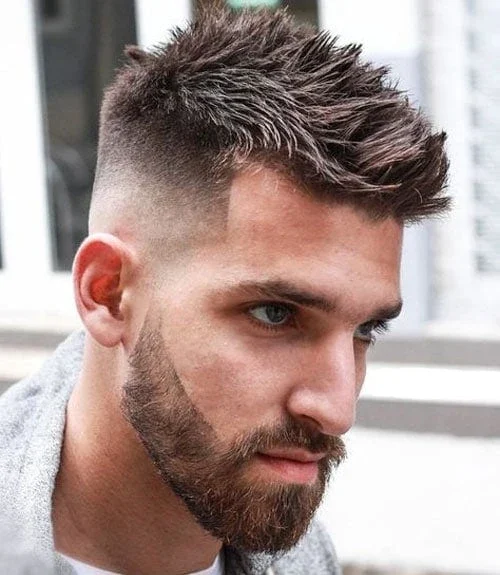
Idea 01
Short Spikes With a Lifted Front
Separated spikes lift the front without forming a very tall crest. The brown top changes direction slightly across the head, giving the outline more variation than a smooth brush-up.
- Shape
- Separated short spikes
- Detail
- Faded sides
Closely faded sides keep most of the visible width above the temples. The front corner stays defined beneath the textured tips.
Wearability note: Choose the modest height and separation as two distinct preferences. This is a useful starting point if you want visible spikes without the long, high front used in several later examples.
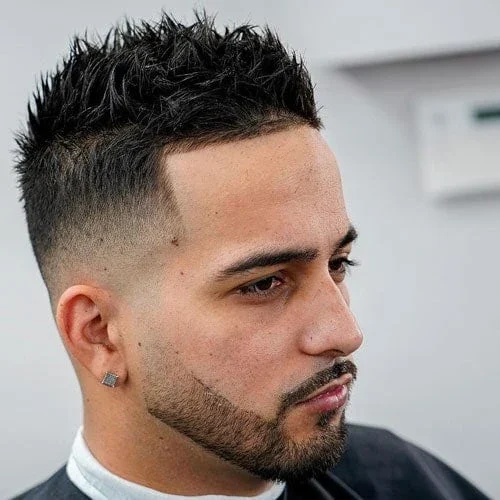
Idea 02
Dark Spikes Above a Smooth Fade
Dark pointed sections rise across the top above closely faded sides. The spikes are spread through the upper surface rather than concentrated in a single narrow center strip.
- Shape
- Pointed dark top
- Detail
- Close side fade
A squared front corner gives the hairline a clear edge beneath the irregular tips. The side transition stays smooth around the upper ear.
Wearability note: Compare this even spread of spikes with a front-only lift. Bring both the top texture and side transition into the discussion, since changing either one will alter how strong the finished contrast appears.
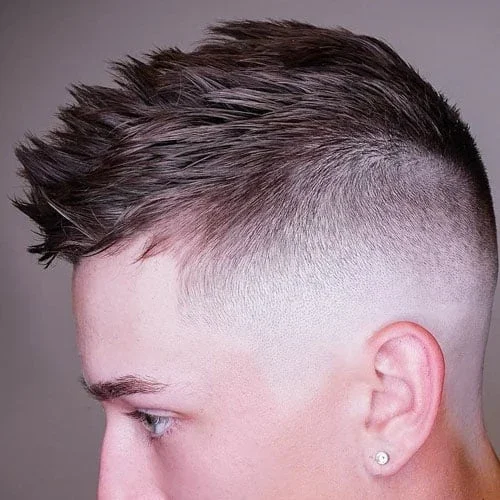
Idea 03
Forward Texture With Short Pointed Ends
Short pointed ends lean forward over a closely cut side. The top stays relatively low, making the direction of the texture more noticeable than its height.
- Shape
- Forward top direction
- Detail
- Very short sides
The close side profile exposes a sharp transition into the longer upper hair. Small sections break up the front edge instead of forming a straight fringe.
Wearability note: Save this if a forward outline appeals more than upright spikes. The angle explains the side and front well; a rear view would help show whether you want the same short transition around the back.
Choose your direction
Pick the direction
Compare upright, outward and forward-pointing sections.
Pick the scale
Look at short fine tips beside larger separated spikes.
Compare the sides
Choose the visible contrast and any optional shaved accents separately.
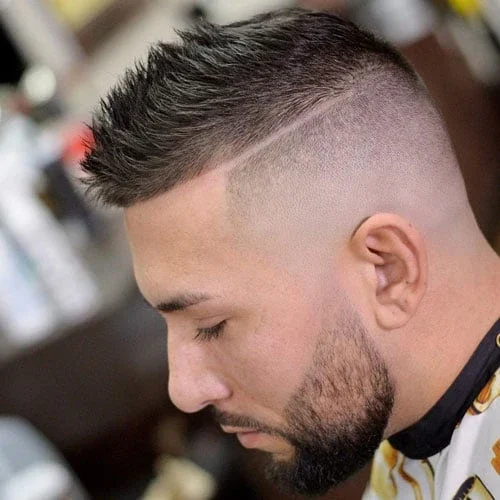
Idea 04
A Narrow Spiked Crest With a Shaved Line
A narrow raised crest sits above very short sides, with a shaved line adding a separate side detail. The top points upward and slightly forward near the front.
- Shape
- Narrow raised crest
- Detail
- Single side line
Less hair extends across the sides than in the broader spiky cuts. The visible line follows the upper side beneath the longer strip.
Wearability note: Compare the narrow crest with a wider textured top before choosing the line detail. You can use the photograph to explain the width you like without treating the shaved accent as essential to the haircut.
Idea 05
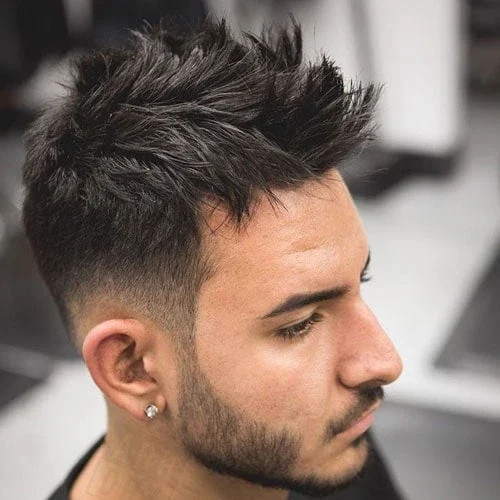
Loose Spikes With an Uneven Front
Loose dark spikes point in several directions above faded sides. A few shorter pieces lean forward, leaving an uneven front edge beneath the taller sections.
- Shape
- Irregular dark spikes
- Detail
- Soft front edge
The upper outline is broad rather than gathered into one central peak. The side view shows a gradual change from the clipped lower area into the textured top.
Wearability note: Choose this when variation across the whole top matters more than matching spikes. Compare the shorter front pieces with a fully lifted hairline, especially if you prefer a little hair to remain above the forehead.
Idea 06
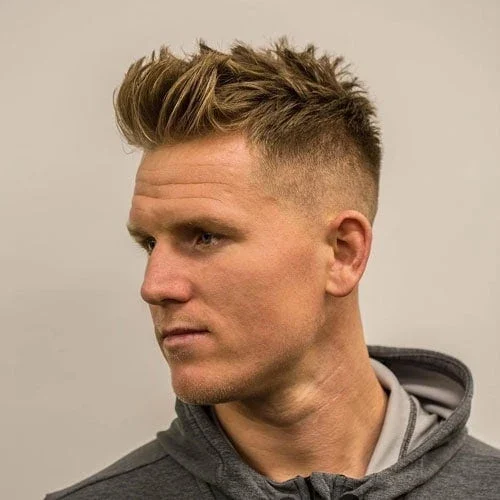
Light-Tipped Spikes With a Raised Front
Light tips make the separated front sections especially visible above the darker roots. The spikes stand higher at the front, then settle into a shorter textured area farther back.
- Shape
- Light upper tips
- Detail
- Raised front sections
The sides remain close and plain, keeping attention on the top. The front-side view also makes the difference in height easy to see.
Wearability note: Compare the shape independently of the lighter color. Save this for the raised front and shorter rear texture, then decide whether color contrast is part of the look you actually want to maintain.
Idea 07
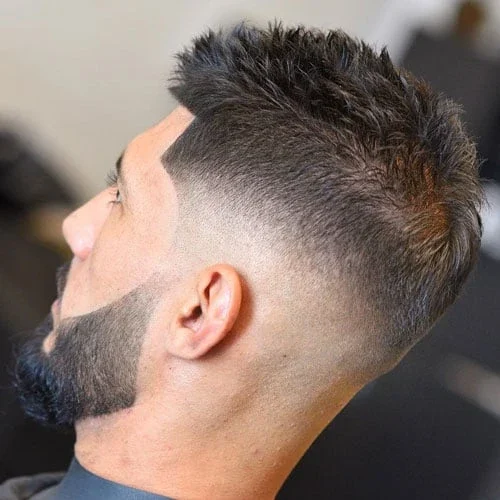
Compact Spikes Seen From the Back
Compact spikes continue across the back of the top instead of stopping at the front. This rear-side angle makes their direction around the crown easy to compare.
- Shape
- Short rear texture
- Detail
- Close side transition
The upper hair remains short enough to form small pointed groups. A close side transition exposes the ear and separates the textured top from the lower outline.
Wearability note: Keep this as a useful second angle when another photograph only shows the forehead. It explains how a short spiky cut can look from behind, without requiring the much taller front found in quiff-like versions.
Idea 08
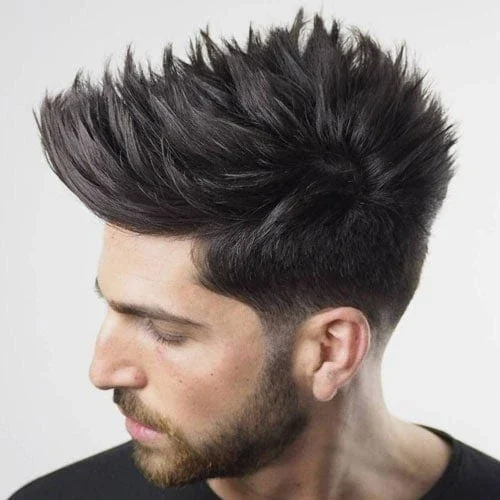
Long Spikes With a Broad Upper Shape
Long dark sections rise into pronounced individual spikes across a broad upper shape. The sides retain more visible hair than the very close fades elsewhere in the gallery.
- Shape
- Long separated spikes
- Detail
- Broader upper sides
Several tips lean outward rather than forming a single smooth front wall. The overall width is as noticeable as the height.
Wearability note: Compare both dimensions before choosing this bolder outline. A shorter version may preserve the separated texture while changing how much space the hairstyle occupies above and beside the head, so point out which feature matters most.
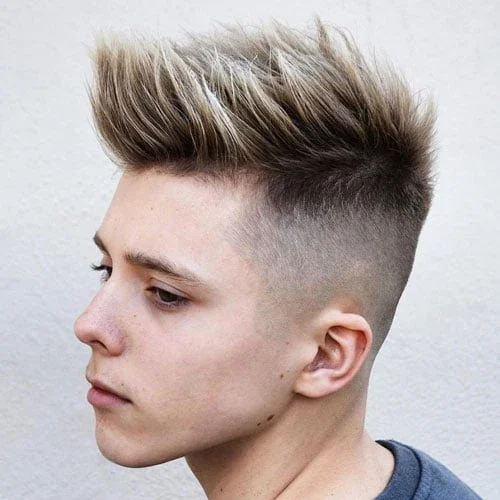
Idea 09
Pale Spikes Above Very Short Sides
Pale blonde spikes stand above very short sides, with the tallest sections gathered near the front. The light color makes the pointed ends readable against the darker background.
- Shape
- Pale raised spikes
- Detail
- Very short side hair
The side profile exposes a large difference between upper and lower length. The top stays separated rather than forming one smooth swept-back section.
Wearability note: Save this for the height and pointed outline before deciding on color. The photograph cannot establish a coloring method, and the cut can be discussed separately from the pale finish shown here.
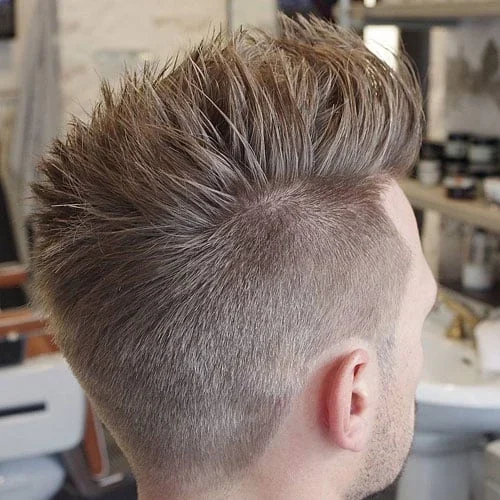
Idea 10
Fine Upright Texture From a Rear Angle
Fine upright sections spread across the top in this rear-side view. The crown transition remains visible, making the smaller changes in direction easier to compare than in a front portrait.
- Shape
- Fine upright sections
- Detail
- Visible crown transition
The sides are clipped close but retain visible texture. The top forms many narrow points instead of a few large, widely separated spikes.
Wearability note: Use this when the size of the individual sections is your main preference. Pair it with a front view to explain the hairline, because the rear angle says much more about the crown and side transition.
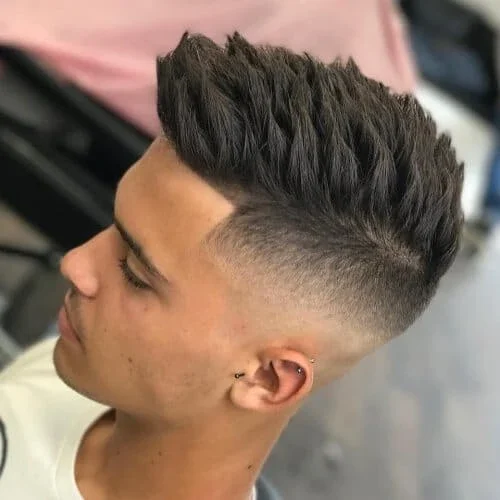
Idea 11
Tall Spikes With a Rounded Rear Outline
Tall dark sections stand above closely faded sides, then curve into a rounded upper outline at the back. The front rises strongly without narrowing the entire top into a mohawk strip.
- Shape
- Tall dark sections
- Detail
- Rounded upper back
The high side angle shows the pointed tips and the fuller upper width together. Small differences between the sections keep the silhouette from looking like one solid block.
Wearability note: Compare this taller version with the compact spikes near the start. Choose the amount of height first, then explain whether you prefer broad separated sections or smaller points across the same outline.
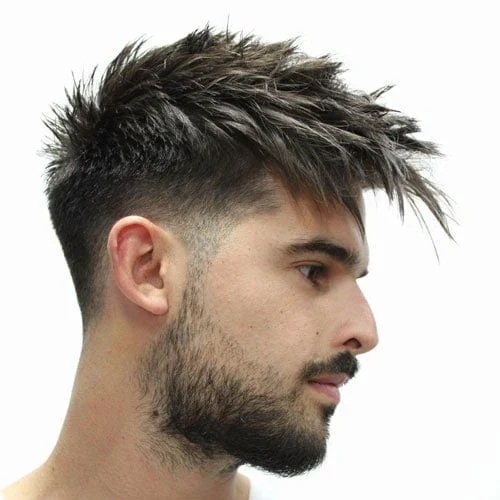
Idea 12
Long Forward Spikes With Shorter Sides
Long pointed sections lean forward, extending beyond the forehead line. The shorter sides make the direction of the upper hair particularly clear in profile.
- Shape
- Forward-pointing top
- Detail
- Long pointed fringe
The tips vary in length, with some dropping lower than the rest. That irregular front is a different choice from lifting every section away from the face.
Wearability note: Save this if you want the spikes to project forward rather than straight up. Compare the longest front pieces with your preferred forehead coverage, and keep the side length separate from that decision.
Idea 13
A Wide Fan of Dark Spikes
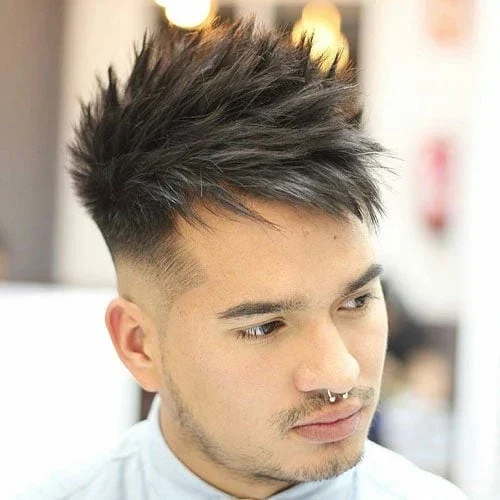
Dark spikes fan upward and outward across the top. The visible height increases toward the upper center, while a few front pieces point more horizontally.
- Shape
- Wide fanned texture
- Detail
- Closely faded sides
The sides are closely faded beneath the wider upper hair. This creates a strong difference between the narrow lower profile and the broad, separated top.
Wearability note: Compare the fan shape with a narrow central crest if you want a different balance. Bring this angled view when the outward direction matters, since a straight-on portrait may hide how far the front sections project.
Idea 14
Short Pale Spikes With a Softer Front
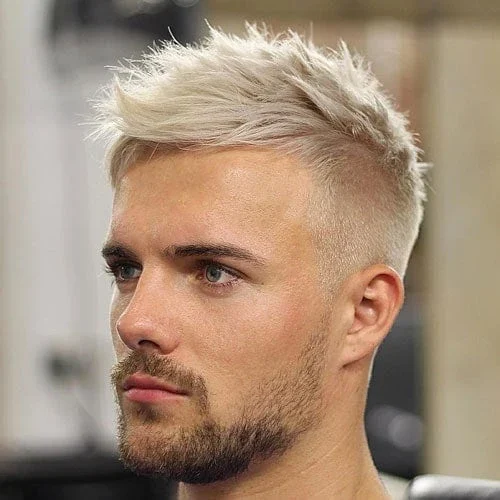
Short pale sections lift above close sides without reaching the tall height of the longer blonde examples. The front angles gently across the forehead rather than standing in one straight row.
- Shape
- Short pale texture
- Detail
- Softly angled front
Small points remain visible near the crown. The upper surface looks more lightly separated than the large dark spikes in the bolder references.
Wearability note: Choose this for a smaller-scale interpretation of spiky texture. Compare the front direction with your usual parting and treat the pale shade as a separate preference from the short, softly pointed shape.
Idea 15
A Long Central Crest With Side Linework
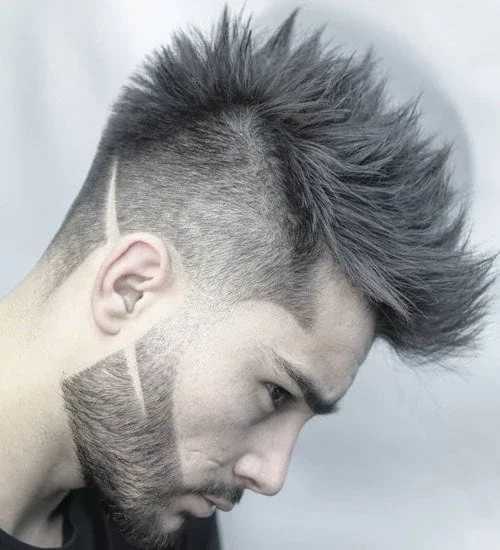
Long central spikes rise above a very short side, with shaved line accents continuing toward the beard. The side profile makes the crest much more prominent than the lower hair.
- Shape
- Long central spikes
- Detail
- Shaved side accents
The upper points extend along the top rather than forming only one lifted front section. The decorative lines add a second pattern below them.
Wearability note: Compare this narrow, dramatic outline with the broader spiky cuts. If the crest is your main preference, save its shape independently of the beard and linework rather than assuming every photographed detail belongs in your own version.
Idea 16
Uneven Light-Brown Spikes From Above
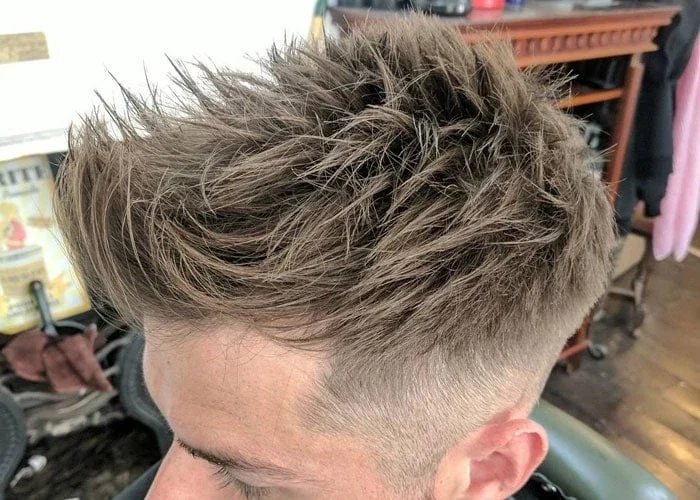
Uneven light-brown spikes cross the top in several directions. The overhead side angle shows their broken pattern clearly, including shorter pieces near the front.
- Shape
- Uneven pointed texture
- Detail
- Short faded sides
The upper hair keeps a rounded overall outline despite the individual points. A shorter side transition reduces width below the textured area.
Wearability note: Save this when you like small irregular sections instead of a tall front wall. Compare the top view with a profile before choosing, because the apparent height changes considerably with the angle used in the photograph.
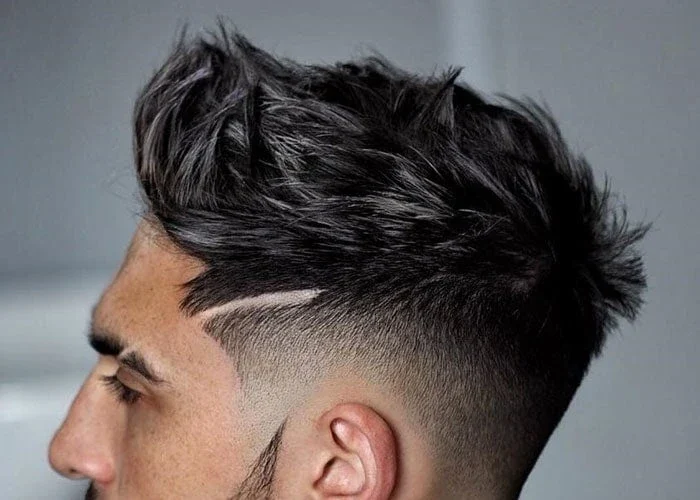
Idea 17
A Dark Textured Top With a Side Accent
Dark separated sections lift above a close side with one diagonal shaved accent. The front rises into short points while the upper rear keeps a little extra texture.
- Shape
- Pointed dark top
- Detail
- Single shaved side accent
The side line sits beneath the longer top, so it remains a distinct decorative choice. The photograph crops much of the face to keep attention on the cut.
Wearability note: Compare the pointed texture with the plain-sided styles before deciding on the accent. This close view explains the side well; use another angle if the back shape or full front outline is equally important.
Bring a rear angle when the crown matters
A front portrait can exaggerate the tallest spikes while hiding the shorter rear texture. A second angle makes the desired crown and side transition much clearer.
Choose shape before copying the lighter color or shaved decoration. Those details can be discussed separately from the amount of height, separation and width you want in the haircut.

About the author
Bella Ross
Bella Ross is the hairstyle editor behind Latest Easy Hairstyles. She curates practical haircut, braid, color, and styling ideas with a focus on looks that are easy to browse, realistic to recreate, and useful for everyday hair decisions.