Before you choose
Choose where you want the movement
A tousled quiff opens the forehead, while a longer fringe brings pieces toward the eyes. Fuller layers add movement around the ears and neck. These are finished photographic looks; a loose surface does not prove that a style took no effort to arrange.
The hairstyle gallery
18 messy hairstyles for men ideas to compare
Compare the visible length, shape, texture, and finish before choosing a salon reference.
Idea 01
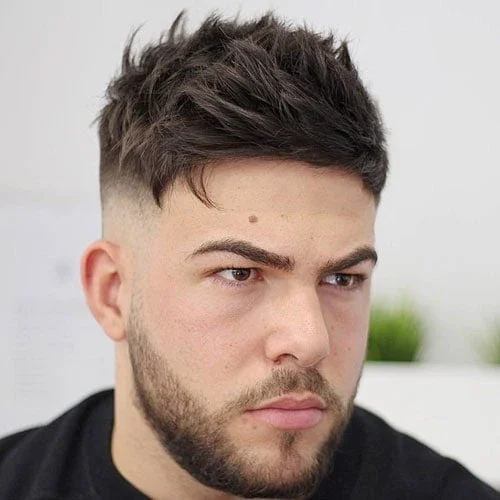
Broken Texture With a Short Fade
Broken upper pieces give this short style a tousled surface. A small strand falls toward the forehead, interrupting the otherwise lifted front.
- Shape
- Broken top texture
- Detail
- Short fade
The sides fade close above the ear, keeping the width controlled beneath the fuller top. The texture is concentrated in the longer upper section rather than spread evenly around the head.
Wearability note: Compare the small loose front piece with the more open-forehead examples. Choose how much movement you want near your face, and treat the close side upkeep as a separate decision.
Idea 02
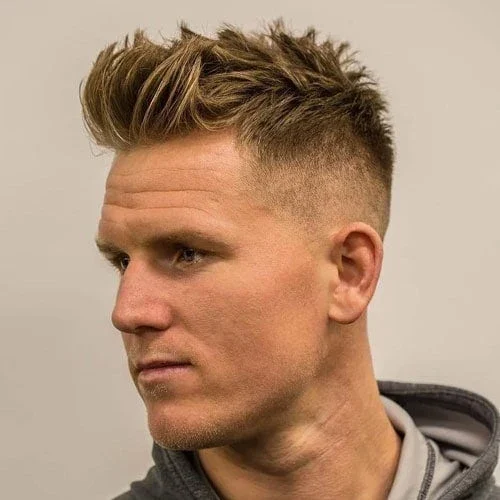
Light-Tipped Tousled Quiff
Lighter tips highlight the separated pieces in this tousled quiff. The front rises and bends back, while smaller ends project across the crown.
- Shape
- Light-tipped top
- Detail
- Tousled quiff
The sides remain close and neat, creating a contrast between a tidy outline and irregular upper texture. The height is concentrated toward the front instead of being even across the head.
Wearability note: Choose this for the broken quiff shape if you like a lifted forehead. The same idea does not require matching the lighter color, so decide on silhouette and shade separately.
Idea 03
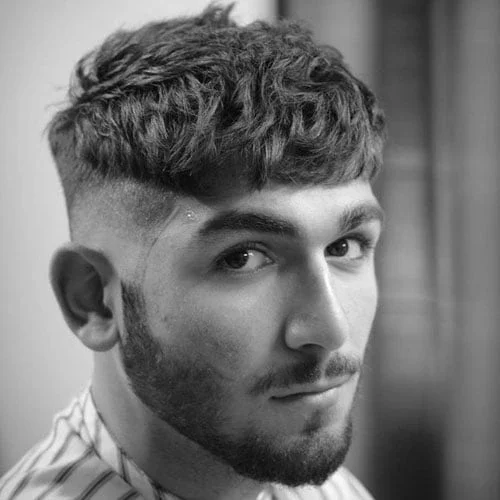
Wavy Crop With a Broken Fringe
Wavy pieces gather across the front in a softly broken fringe. The upper hair has small bends rather than sharply upright spikes.
- Shape
- Wavy crop
- Detail
- Broken fringe
The sides fade shorter around the ear, giving the fuller top a clear outline. The monochrome view makes the variation in the fringe easy to see without color distracting from the shape.
Wearability note: This is useful if you prefer texture that comes forward rather than a high quiff. Compare the dry fringe length with your own comfort, especially where the longest pieces approach the eyebrows.
Choose your direction
Keep it short
Compare compact textured crops and short raised pieces.
Keep a loose front
Look at side fringes and curly forward sections.
Keep more fullness
Compare medium layers and neck-length waves.
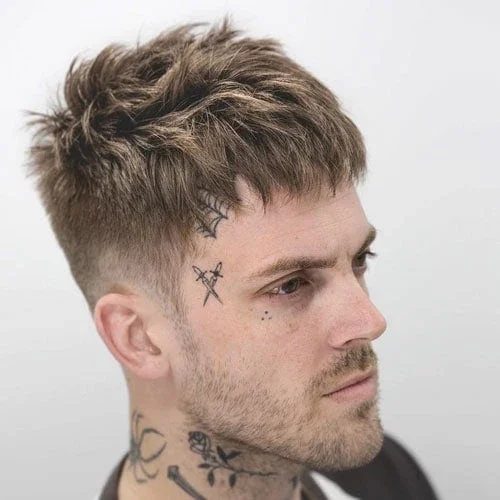
Idea 04
Soft Tousled Crop With a Low Fringe
Soft pieces spread across the top of this compact crop. The fringe remains low and irregular, with several fine ends pointing toward the forehead.
- Shape
- Soft upper texture
- Detail
- Short low fringe
The sides are shortened without removing all visible hair. This creates a gentler contrast than the high skin fades, while keeping the upper movement easy to distinguish.
Wearability note: Choose this if you like a short front with some softness. The photographed separation is a finished look, so compare it with the way your own hair behaves before assuming the same surface will appear automatically.
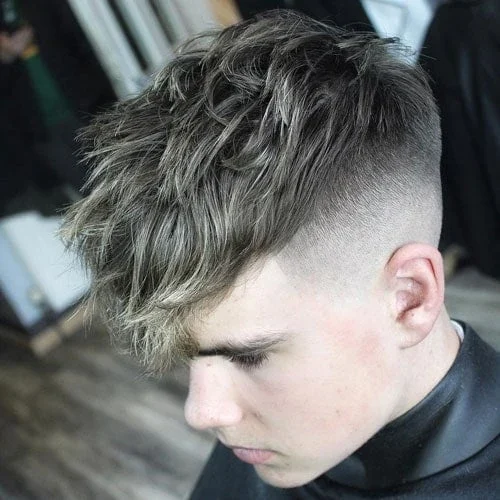
Idea 05
Long Tousled Fringe With a Close Side
A long diagonal fringe carries most of the movement in this cut. The upper pieces fall forward and sideways, while the side is faded close around the ear.
- Shape
- Long loose fringe
- Detail
- Close side fade
The top has visible bends and overlapping ends instead of a smooth curtain. The contrast is strongest between the loose front and the tightly narrowed temple area.
Wearability note: Consider how comfortable you are with hair near the eyes. Save this for its length and direction, then compare a shorter fringe if you prefer less movement across the forehead.
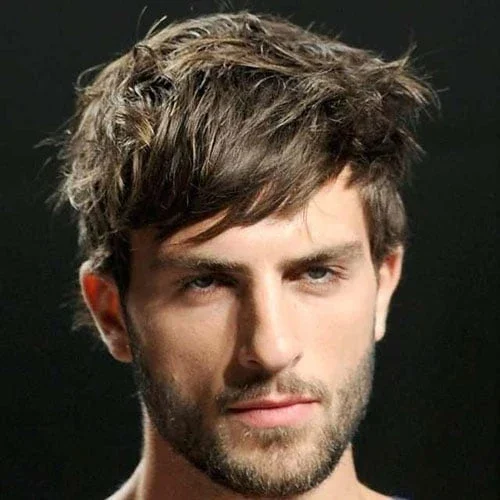
Idea 06
Loose Side Fringe With Full Sides
A loose side fringe gives this style a relaxed front without a sharply defined part. The sides retain visible fullness, keeping the outline softer than an undercut.
- Shape
- Loose side fringe
- Detail
- Fuller sides
The upper pieces overlap in different directions, with some ends lifting away from the crown. The result has movement without requiring a tall central crest.
Wearability note: This reference helps compare a fuller-sided cut with the faded examples. Decide how much temple and ear coverage you like, and keep that choice separate from the amount of front texture.
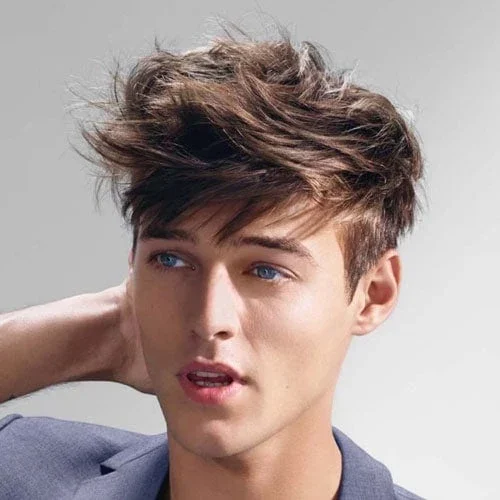
Idea 07
Airy Fringe With a Raised Crown
Airy pieces lift across the top while a loose fringe falls toward one side. The upper outline is irregular, with a few fine ends projecting above the main shape.
- Shape
- Airy fringe
- Detail
- Raised upper texture
The sides stay softer and less closely exposed than the faded cuts. This makes the style feel fuller overall, with texture carrying through the front and crown.
Wearability note: Compare the volume around the temples as well as the height above them. This is a useful reference for a fuller tousled cut, but your own hair density will affect how open the gaps appear.
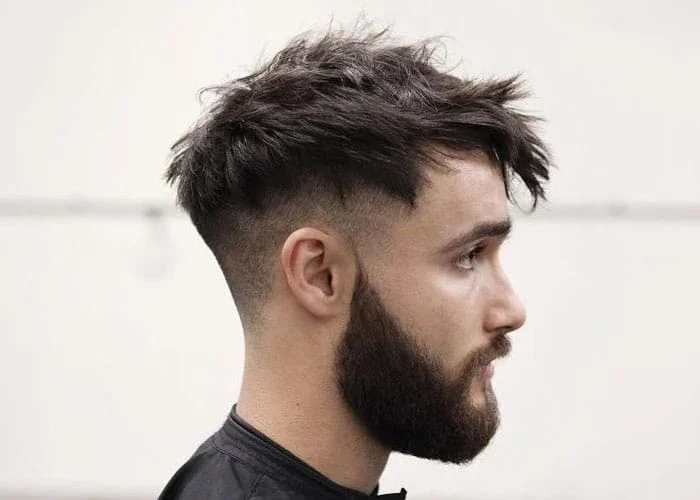
Idea 08
Short Disconnected Texture
A short loose top sits above closely shortened sides. The front pieces point in slightly different directions, with one small section dropping toward the forehead.
- Shape
- Short loose top
- Detail
- Disconnected sides
The side profile makes the difference in length clear above the ear. The top stays compact rather than rising into the tall quiffs shown elsewhere in the gallery.
Wearability note: Choose this for the combination of a short outline and uneven upper movement. Compare the side boundary with a more softly blended version if you prefer less obvious separation.
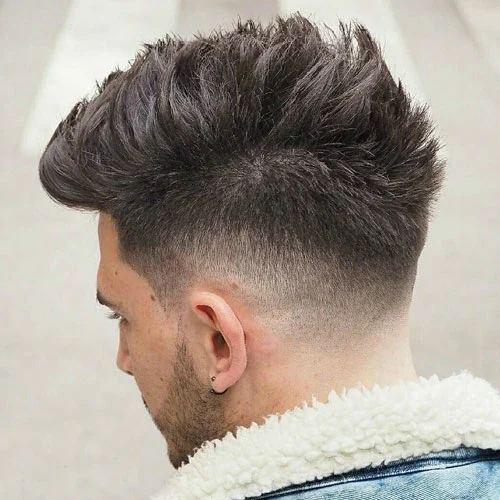
Idea 09
Tall Texture From the Back
Tall separated pieces extend across the top in this rear three-quarter view. The crown remains full, while the back fades down toward the neck.
- Shape
- Tall separated top
- Detail
- Faded back
The ends point in several directions instead of following a single smooth sweep. The angle is useful for showing that the texture continues behind the front section.
Wearability note: Save this if back shape matters as much as the quiff. Compare how much height you want at the crown, since keeping the same front with a flatter back would create a different profile.
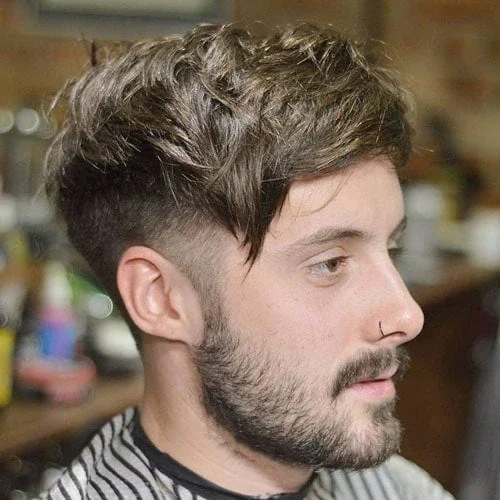
Idea 10
Long Side Fringe With a Soft Taper
A long side fringe forms the main diagonal line across this cut. Smaller pieces rise through the top, giving the surface an uneven finish without a single central spike.
- Shape
- Long side fringe
- Detail
- Softly tapered side
The side narrows gradually near the ear rather than showing a broad shaved panel. That softer outline leaves attention on the longer moving front.
Wearability note: Compare the longest fringe point with your preferred eye clearance. This is a useful direction if you like a loose front, but choose the amount of side contrast independently.
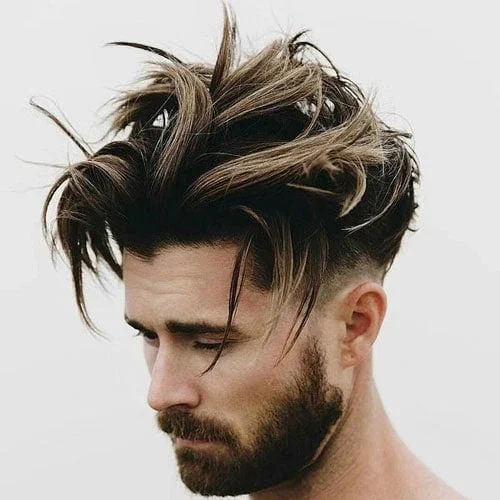
Idea 11
Long Pieces With Strong Separation
Long upper pieces separate into sweeping strands and pointed ends. Some lift away from the head while others fall toward the forehead, creating a strongly tousled outline.
- Shape
- Long separated top
- Detail
- Close side contrast
The sides stay much shorter, making the moving top stand out. Darker inner sections and lighter tips add visible contrast between the overlapping pieces.
Wearability note: This is one of the more deliberately arranged messy finishes. Choose the length and movement you like, then compare a quieter version if maintaining this degree of separation would feel excessive.
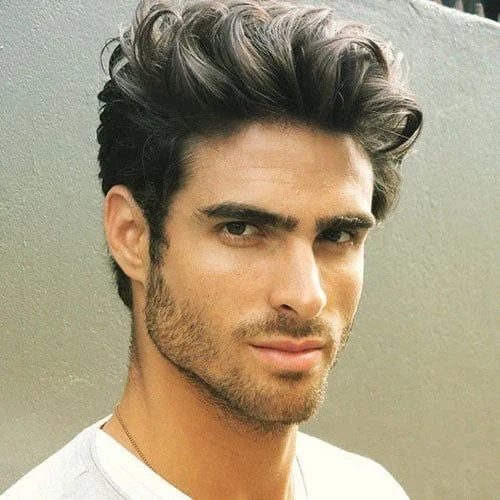
Idea 12
Full Waves With a Loose Front
Full waves create a rounded upper shape with a loose opening at the front. The sides retain coverage rather than exposing a sharply shaved panel.
- Shape
- Full wavy top
- Detail
- Loose front sweep
The front bends back in broad sections, with smaller ends lifting near the crown. This gives a softer kind of messiness than the pointed and heavily disconnected styles.
Wearability note: Use it to compare fuller sides with a more closely cut outline. Your own wave pattern will influence the amount of lift, so focus on the proportions you like rather than expecting identical bends.
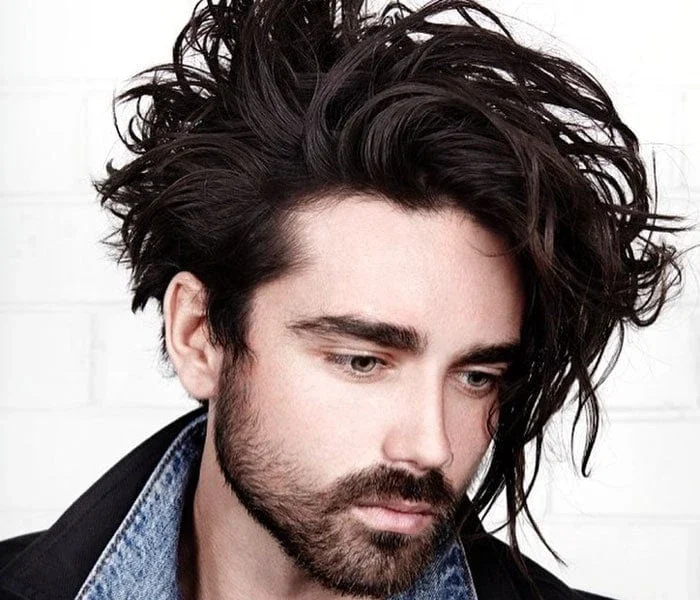
Idea 13
Loose Waves With an Open Part
Loose waves fall around an open side part in this longer reference. Several pieces lift away from the top, while a longer section drops toward one side of the face.
- Shape
- Long loose waves
- Detail
- Open side part
The hair retains length around the ears and neck, creating a fuller outline than a faded cut. The irregular ends make the movement especially visible against the plain background.
Wearability note: Compare the face-framing length with the shorter fringes before choosing. This shape gives more loose movement, which also means more hair near the cheeks and collar during everyday wear.

Idea 14
Neck-Length Waves With Lighter Ends
Neck-length waves spread outward around a loose center opening. The lighter ends make the lower layers easier to distinguish from the darker inner hair.
- Shape
- Neck-length waves
- Detail
- Lighter ends
The top has fine projecting pieces instead of a smooth flattened surface. Length remains around the ears and back, giving the style movement on all sides rather than only through a long top.
Wearability note: Choose this if you want a fuller grown-out outline. Compare the lower ends with your collar and decide whether you want them to rest near the neck or extend farther toward the shoulders.
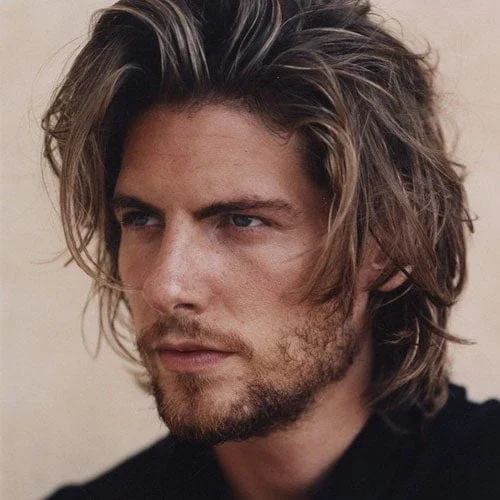
Idea 15
Loose Layers Around the Ears
Loose layers frame the ears and neck while the front lifts away from the forehead. The upper hair separates into broad bends rather than defined spikes.
- Shape
- Medium loose layers
- Detail
- Ear-length movement
The fuller lower outline makes this different from a long-top undercut. Fine ends project around the sides, giving the whole cut a soft, slightly unruly silhouette.
Wearability note: Compare how much ear coverage you want to keep. A photo can explain the layered shape, but the way those ends turn outward will depend on your own texture and usual finish.
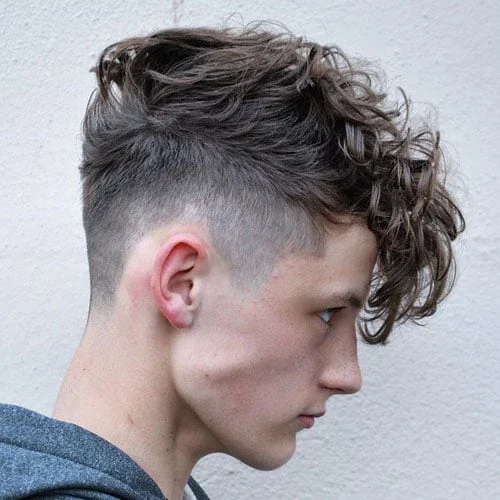
Idea 16
Curly Fringe With a Close Fade
A curly fringe hangs forward while the side fades close. The upper hair has loose loops and bends, with the longest pieces extending toward the eyebrow area.
- Shape
- Long curly fringe
- Detail
- Close fade
The side profile shows the contrast between the moving front and the exposed temple. The back of the top remains full rather than narrowing into a thin strip.
Wearability note: Compare the dry fringe length with how much eye clearance you prefer. A similar cut can look shorter when curls sit more tightly, so use your own curl behavior when discussing the front.
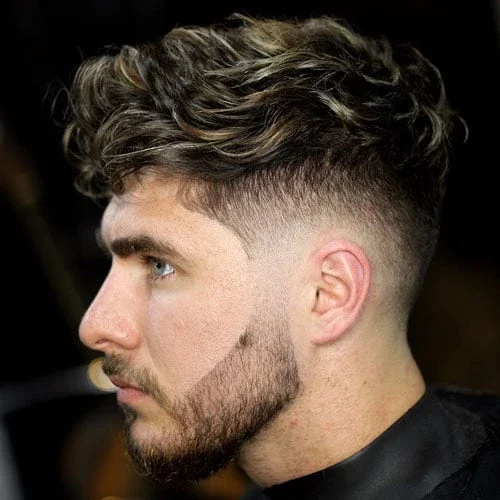
Idea 17
Short Waves With Highlighted Pieces
Short waves create a broken upper surface with lighter pieces catching the bends. The front remains compact, with a little forward movement rather than a tall lifted sweep.
- Shape
- Short upper waves
- Detail
- Tapered sides
The sides taper close above the ear, keeping the upper texture as the main feature. This profile shows a softer surface than the sharper spiked and quiffed examples.
Wearability note: Choose the wave shape separately from the highlighted color. Compare the amount of upper fullness with a shorter crop if you prefer a tighter outline around the crown.
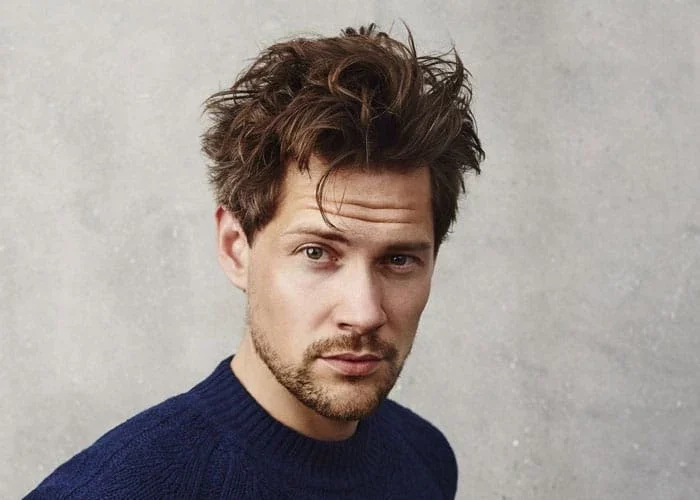
Idea 18
Loose High Texture With Soft Sides
Loose upper pieces rise in different directions, creating an irregular high outline. A small strand drops toward the forehead, keeping the front from looking completely swept back.
- Shape
- High loose texture
- Detail
- Soft side coverage
The sides retain visible coverage and connect softly to the top. The movement comes from the longer upper sections rather than a shaved design or sharply edged fringe.
Wearability note: Save this for a fuller tousled silhouette with an open forehead. It is still a finished look, so compare the height with what you are comfortable arranging in your normal routine.
Choose the length beneath the texture
Identify the outline you like before focusing on individual strands. The same loose texture can sit over a close undercut or fuller sides, and those cuts feel different as they grow.
Bring a reference that matches your preferred forehead clearance. If you like the movement but dislike hair near the eyes, a shorter fringe or more open front may explain your preference better.

About the author
Bella Ross
Bella Ross is the hairstyle editor behind Latest Easy Hairstyles. She curates practical haircut, braid, color, and styling ideas with a focus on looks that are easy to browse, realistic to recreate, and useful for everyday hair decisions.