
Before you choose
Choose the outline that fits your goal
This gallery brings together several haircut directions commonly sought by Black men: compact crops, visible waves, taller textured shapes and retained braids or locs above closer sides. The references compare length and outline rather than prescribe one texture or style for everyone. Start with the amount of height and width you want, then look at the temple, nape and optional shaved details.
The hairstyle gallery
18 haircuts for black men ideas to compare
Compare the visible length, shape, texture, and finish before choosing a salon reference.
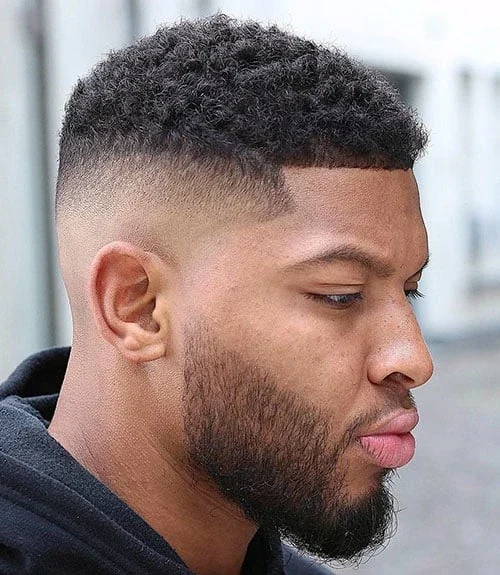
Idea 01
Short Coils With a Close Side Blend
Short coils form a compact upper shape above a close side blend. The temple corner is sharply defined, giving the front a firmer boundary than the soft texture across the top.
- Shape
- Short upper coils
- Detail
- Close side blend
The fade becomes lighter around the ear while darker coverage remains beneath the coils. A full beard adds substantial length below the cheek, separate from the relatively short haircut above it.
Wearability note: Compare the upper height and side exposure independently of the beard. This reference is useful for a compact textured top, but a shorter beard would change the balance of the overall portrait.
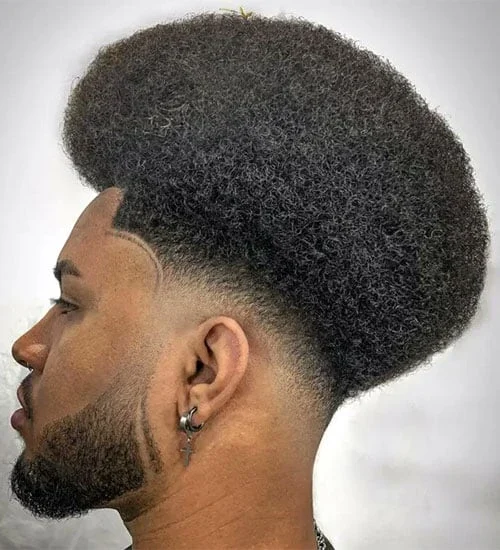
Idea 02
Tall Rounded Afro With a Tapered Lower Edge
The tall rounded afro retains substantial height and rear fullness. A closer lower edge contains the area around the ear without removing the broad upper silhouette.
- Shape
- Tall rounded afro
- Detail
- Tapered lower edge
The side profile makes the contrast between the large rounded back and the narrow lower section especially clear. The front lifts in a continuous curve rather than forming a flat horizontal upper surface.
Wearability note: Choose the amount of rear fullness as deliberately as the front height. A similar-looking front could sit above a much smaller back, so keep this profile when discussing the proportions you want to retain.
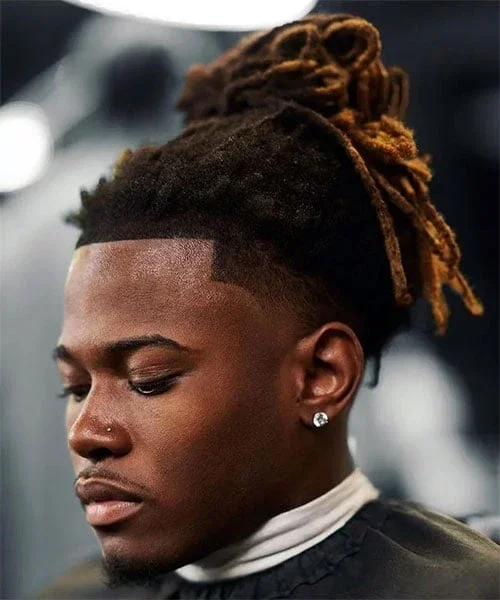
Idea 03
Gathered Locs Above a Shaped Side
The locs gather behind the upper head while the side stays close. Lighter ends add contrast above the dark base, and a squared temple gives the front a defined boundary.
- Shape
- Gathered upper locs
- Detail
- Shaped close side
The gathered shape sits behind the crown rather than directly over the forehead. The lower side removes width near the ear, leaving most of the length in the retained upper locs.
Wearability note: Use this for the relationship between the side cut and gathered length. If the bun itself is your priority, bring a rear view too so the exact placement is clear beyond the visible profile.
Choose your direction
Compare upper height
Look at close crops, compact coils and taller rounded or level shapes.
Choose the front edge
Compare soft boundaries with more defined temple corners.
Check retained length
Decide between loose texture, waves and longer braided or loc sections.
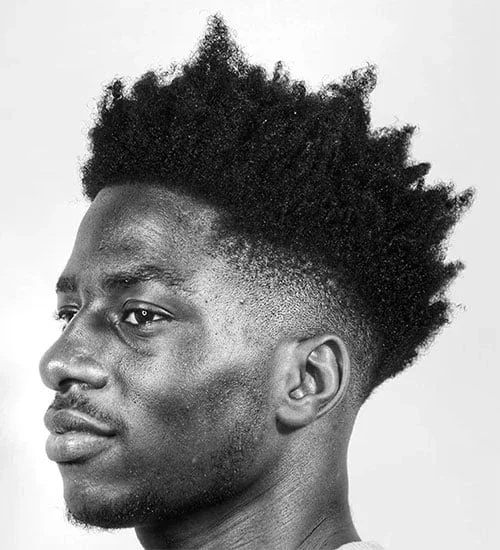
Idea 04
Raised Coiled Shape With Irregular Tips
The coiled top rises in an irregular outline instead of a uniformly rounded dome. Shorter lower sides contain the silhouette while several upper tips project outward at different heights.
- Shape
- Raised coiled top
- Detail
- Irregular outer tips
The side portrait shows more height at the center and rear than close to the temple. The surface stays visibly textured, contrasting with the more level flat-top examples in the gallery.
Wearability note: Choose the irregular outer shape if that movement appeals to you. A more evenly rounded or squared finish would look different even at similar overall height, so the outline deserves its own reference.
Idea 05
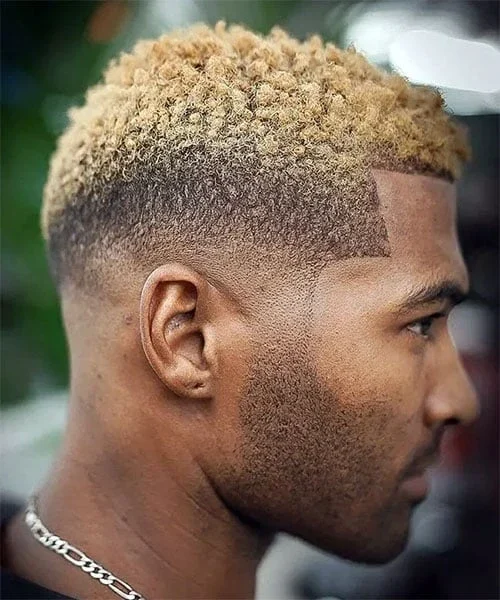
Light Short Coils With Darker Side Shading
Light coils sit above darker side shading, making the upper texture prominent. The lower area becomes closer around the ear, while the squared temple forms a clear front corner.
- Shape
- Light upper coils
- Detail
- Darker side shading
The top remains relatively compact rather than rising into a tall crest. Lighter ends create much of the visible contrast, with darker coverage still present beneath the coiled surface.
Wearability note: Compare the shape separately from the light color. A darker version could retain the same compact outline, so bring an uncolored reference too if haircut length and side placement are the main decisions.
Idea 06
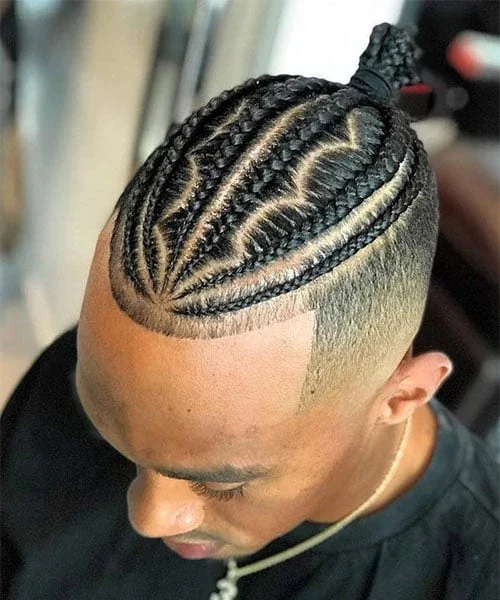
Curved Cornrows With a Small Rear Knot
Curved cornrows travel back toward a small knot above closely cut sides. The overhead view makes the parting pattern and the different paths of the rows particularly clear.
- Shape
- Curved upper cornrows
- Detail
- Small rear knot
The front boundary stays squared, while the braided lengths remain above the exposed lower side. The knot holds the ends behind the crown rather than leaving a long loose tail down the back.
Wearability note: Choose the row direction and the side exposure separately. This angle is useful for the pattern, but a profile would help explain how high the knot should sit and how much length it contains.
Idea 07
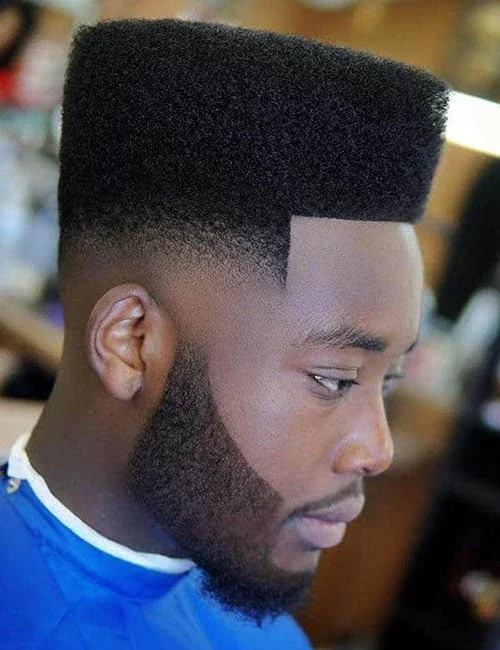
Tall Flat Top With a Close Lower Blend
The tall flat top has a broad level upper surface above a close lower blend. The front and side edges are more geometric than the rounded afro and irregular coiled shapes.
- Shape
- Tall level flat top
- Detail
- Close lower-side blend
The upper hair retains substantial vertical height, while the area around the ear becomes much shorter. A squared temple adds another precise boundary beneath the taller top.
Wearability note: Compare the level surface and the upper width before choosing this reference. Lowering the top or rounding its corners would change the silhouette considerably, even if the side fade remained at a similar height.
Idea 08
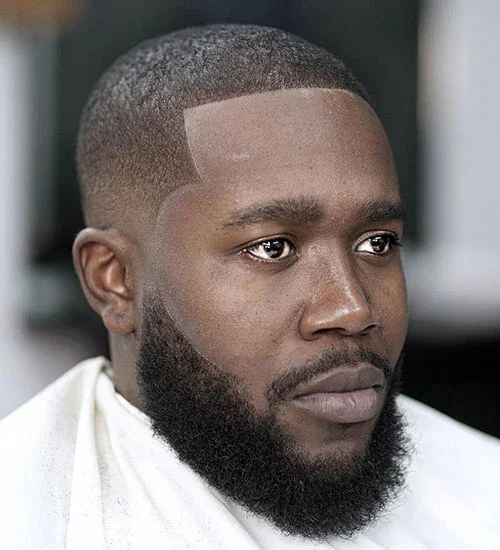
Very Short Top With a Defined Front Corner
The very short top stays close to the head beside a defined front corner. Most of the portrait’s lower fullness comes from the beard rather than substantial length above the forehead.
- Shape
- Very short top
- Detail
- Defined front corner
A little surface texture remains visible across the crown. The side is close around the ear, while the full beard curves below the jaw and adds a separate rounded shape.
Wearability note: Use this as a comparison for keeping the haircut compact. If you wear less facial hair, focus on the crown and temple proportions so the beard does not overstate how much height the top actually has.

Idea 09
Side-Falling Rope-Like Lengths With a Close Side
Rope-like sections fall to one side and partly cover the forehead. The close lower side keeps the outline narrow near the ear while retaining the longer upper lengths.
- Shape
- Rope-like hanging sections
- Detail
- Close lower-side coverage
The angled portrait shows textured sections with a twisted appearance and individual ends beside the face. Their exact formation is not established by this view; the useful comparison is the loose front length against the shorter lower side.
Wearability note: Choose how much face coverage you want from the hanging pieces. A similar length can be directed away from the forehead, so bring this angle if the side-falling arrangement is the detail you want to keep.
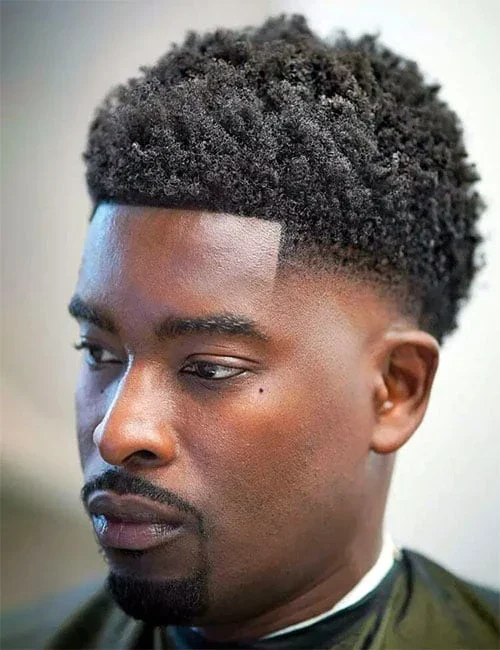
Idea 10
Rounded Coils With a Soft Temple Transition
Rounded coils give the top a soft upper outline above a shaded temple transition. The front corner stays defined without a pale shaved line separating the top from the side.
- Shape
- Rounded upper coils
- Detail
- Soft temple transition
The upper height is moderate, with small coils continuing toward the back. Shorter coverage near the ear reduces width beneath the fuller texture rather than exposing the entire side at one level.
Wearability note: Compare this softer connection with a more closely exposed example. The upper shape could remain similar with a stronger fade, so decide how much lower-side contrast you want before choosing the final reference.
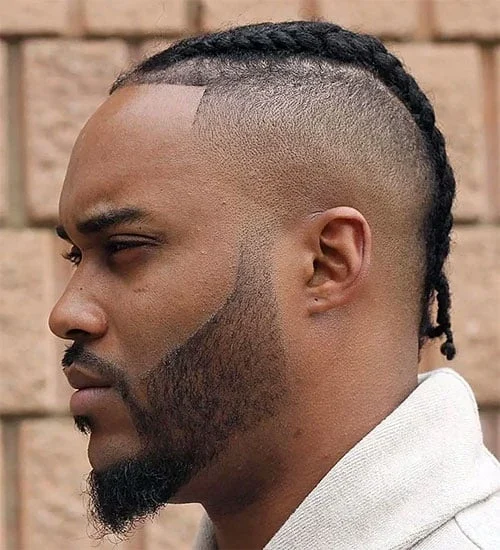
Idea 11
Narrow Braided Ridge With Exposed Sides
A narrow braided ridge runs along the upper head above broadly exposed sides. The contrast concentrates the retained length near the center instead of leaving equal coverage all around.
- Shape
- Narrow braided ridge
- Detail
- Broad exposed sides
The side profile shows a clear front edge and a short tail behind the upper section. A shaped beard adds another dark outline below the cheek, while the ear area stays relatively bare.
Wearability note: Choose the narrow retained strip deliberately. A wider braided section would change the haircut outline even with a similar side finish, so show the profile rather than relying only on a close-up of the braid.
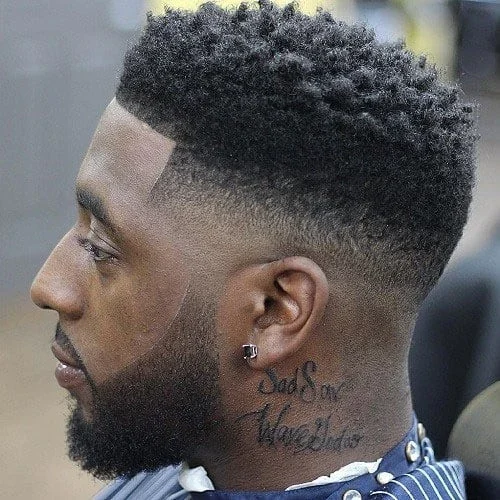
Idea 12
Compact Coils With a Soft Lower Fade
Compact coils sit above a softly shaded lower fade. The top retains texture without a tall crest, giving this a more restrained silhouette than the larger afro and flat-top shapes.
- Shape
- Compact upper coils
- Detail
- Soft lower fade
The front corner is squared, with darker coverage remaining along the upper side. The fade becomes closer around the ear, while the short beard follows a separate cheek boundary.
Wearability note: Compare the retained upper-side shading with a more exposed version if you prefer subtle contrast. The photograph is especially useful for discussing a modest top height without removing all visible coiled texture.
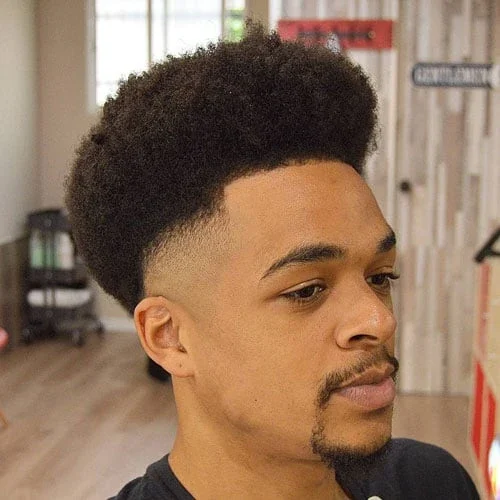
Idea 13
Rounded High Top With Lower Side Exposure
The high top keeps a rounded upper edge above a pale lower-side opening. Its silhouette carries substantial height but avoids the sharply level surface of the flat-top example.
- Shape
- Rounded high top
- Detail
- Pale lower-side opening
The front rises smoothly while the fuller upper section continues toward the rear. Near the ear, the hair is much shorter, giving the taller shape a clear base without equal fullness down the side.
Wearability note: Choose between rounded and level upper edges before deciding on the fade. Those two finishes can look quite different at similar height, so point to the curvature if it is what attracts you here.
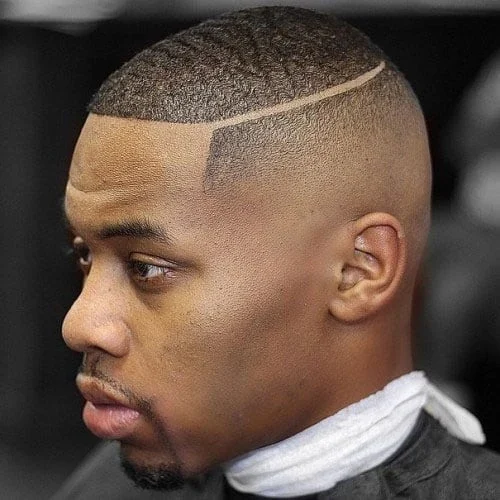
Idea 14
Close Top With a Long Curved Side Line
The close top follows the head shape while a long pale line curves around the side. The exposed lower area makes the decoration conspicuous without requiring much upper length.
- Shape
- Close upper top
- Detail
- Long curved side line
The front edge remains defined, and fine texture stays visible across the short top. The line sits beneath that retained coverage rather than acting as a part through a longer swept section.
Wearability note: Decide whether you want the line or simply the close haircut. A plain-side version would keep a similarly compact outline, so use a second undecorated reference if the underlying length is your main priority.
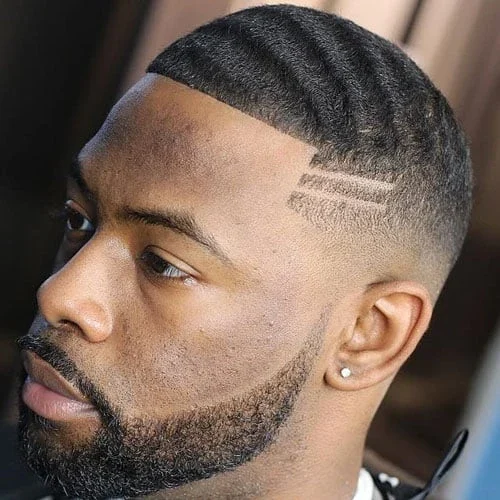
Idea 15
Close Waves With Two Temple Accents
Close waves create a low patterned surface above a shaded fade. Two pale accents near the temple add detail beneath the upper texture without changing the overall compact height.
- Shape
- Close wave pattern
- Detail
- Two temple accents
The front edge stays squared, and the side becomes lighter around the ear. A short beard gives the lower face its own outline, separate from the wave pattern across the crown.
Wearability note: Compare the plain wave examples before deciding on the accents. Keep the desired upper length and lower shading clear, since a decorative line alone does not explain how much side coverage you want retained.
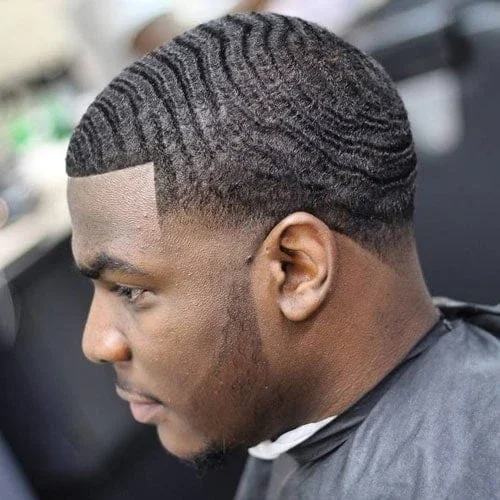
Idea 16
Full Wave Pattern With a Defined Temple
The short top carries a visible wave pattern across the crown. A defined temple corner gives the front a precise boundary while the side remains connected above the ear.
- Shape
- Visible wave pattern
- Detail
- Defined temple corner
The elevated angle shows the pattern more clearly than a level portrait would. The upper surface stays close rather than rising into a quiff, with the short beard adding a separate darker shape below.
Wearability note: Use this view for the wave appearance and add a level profile for the fade. Pattern and side placement should be discussed separately, especially because this angle reveals only part of the lower perimeter.
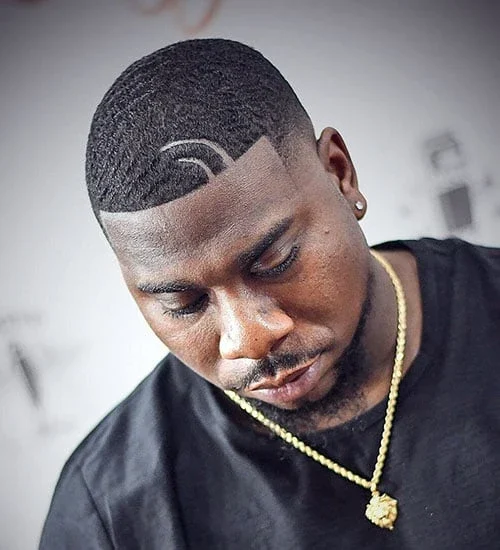
Idea 17
Short Top With a Small Curved Front Accent
A small curved accent interrupts the short textured top near the front. The rest of the upper surface stays low, giving the design a more noticeable role than it would on a taller shape.
- Shape
- Short textured top
- Detail
- Small curved accent
The downward angle reveals fine surface texture and the precise front boundary. Shorter side coverage keeps the lower outline contained, while the pale accent remains a distinct decorative feature.
Wearability note: Choose the compact haircut separately from the accent. If you prefer a simpler finish, the short upper length can remain similar without the curve, so keep an undecorated example beside this one.
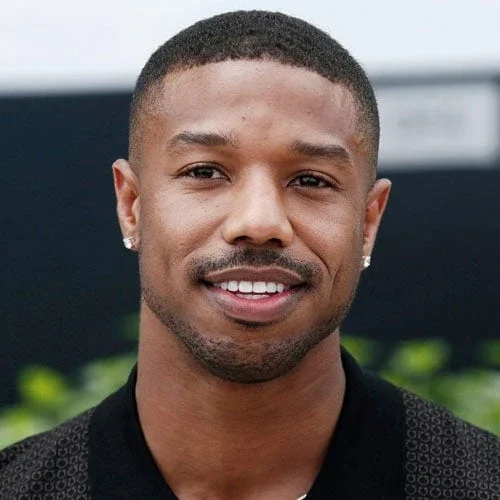
Idea 18
Close Crop With a Soft Front Edge
The close crop stays low with a softer front boundary than the sharply squared line-ups. Short sides keep the silhouette compact without relying on a tall upper shape or shaved design.
- Shape
- Close dark crop
- Detail
- Soft front boundary
Fine texture remains visible across the crown. The front edge has small irregularities rather than a perfectly drawn straight line, while the short facial hair adds only modest contrast below the cheek.
Wearability note: Compare the front edge with a sharper line-up if that detail matters to you. Both can sit above a similarly short cut, but they create a different impression around the forehead and temple.
Keep the reference specific to your haircut
A beard, a pale color or a shaved design can make a portrait look more dramatic. Point to the upper shape and side coverage first so those extra details do not replace the haircut brief.
Use front and side photographs together when possible. A crown view can explain a wave pattern or braided arrangement, while a level profile shows temple exposure and the connection toward the nape.

About the author
Bella Ross
Bella Ross is the hairstyle editor behind Latest Easy Hairstyles. She curates practical haircut, braid, color, and styling ideas with a focus on looks that are easy to browse, realistic to recreate, and useful for everyday hair decisions.