
Before you choose
Compare the bare area before the top
Bald fades share a closely exposed lower finish, but they do not all have the same height or outline. These photographs compare how much hair stays above the ear, how wide the darker transition is, and how the fade meets a crop, quiff, waves or tied length. Shaved lines and beard shapes are separate choices, not requirements of the fade.
The hairstyle gallery
22 bald fade haircuts ideas to compare
Compare the visible length, shape, texture, and finish before choosing a salon reference.
Idea 01
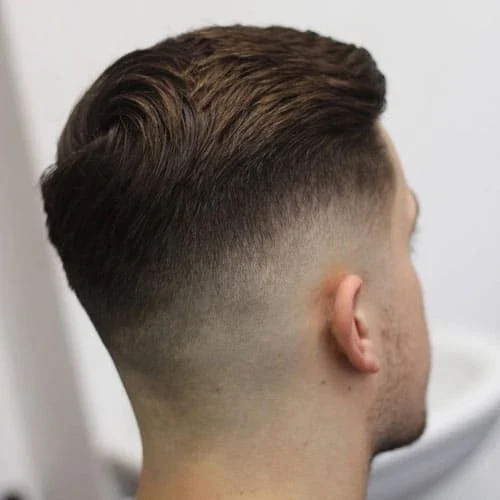
Back-Swept Top With a Bare Nape
The rear angle makes the fade the main feature. A dark band beneath the swept-back top gradually gives way to an almost bare lower nape.
- Shape
- Swept-back top
- Detail
- Exposed lower nape
The longer hair still reaches toward the back of the head, creating a rounded upper outline. Below it, the change in shade is spread over several levels rather than ending at one abrupt shaved edge.
Wearability note: Save the rear view alongside any front portrait you like. It explains where the short finish should end and how much dark hair you want retained below the crown, which a front photograph cannot show.
Idea 02
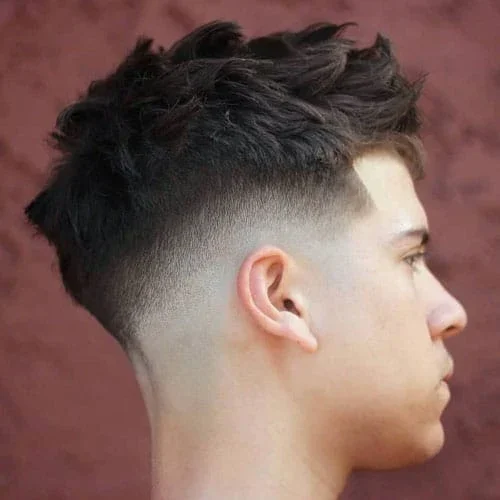
Tousled Top Above a High Skin Finish
The broken-up top provides movement above a very close side. The exposed area reaches noticeably above the ear, leaving a narrower strip of darker hair under the longer section.
- Shape
- Broken top texture
- Detail
- High exposed side
Small tips point in several directions rather than forming one combed ridge. The temple edge is sharply defined, while the transition farther back curves downward with the shape of the head.
Wearability note: Compare the height of that pale area before choosing the top texture. A lower fade could retain more side coverage while keeping a similarly tousled front, so those are two separate choices to discuss.
Idea 03
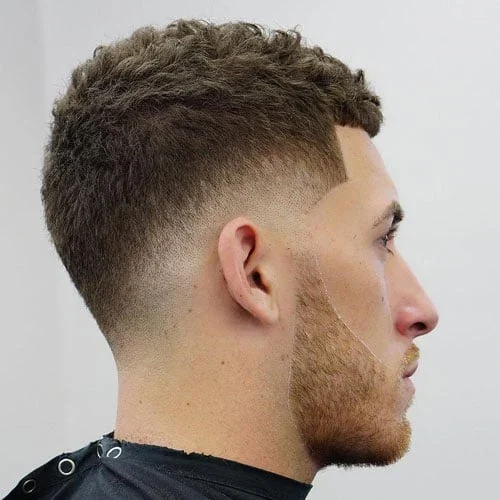
Short Curls With a Squared Temple
A compact curly top sits above a close fade, with a squared front corner giving the side a clear boundary. The curls retain a rounded surface without a tall front ridge.
- Shape
- Compact curled top
- Detail
- Squared front corner
The side view shows the darkest hair concentrated along the upper edge. The area around the ear becomes much lighter, and the beard begins below a small open gap at the sideburn.
Wearability note: Use the corner shape as a separate reference from the curl length. You can prefer the rounded top without wanting such a sharply drawn temple, and the photograph helps make that difference easy to explain.
Choose your direction
Locate the shortest finish
Compare the exposed area around the temple, ear and nape.
Compare the transition
A narrow dark band creates a different contrast from a broad gradual blend.
Choose the upper outline
Look at forward crops, compact waves, raised quiffs and retained tied length.
Idea 04
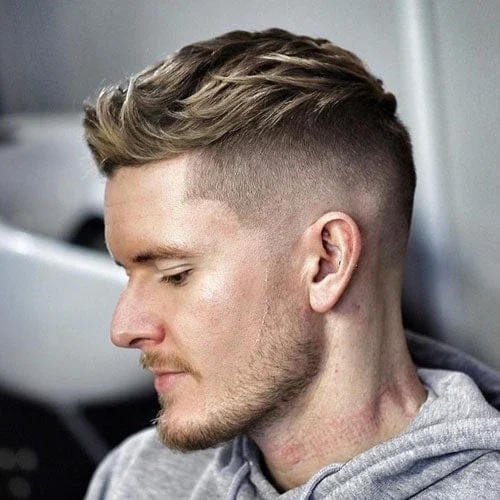
Highlighted Waves With a Broad Blend
Light strands emphasize the wave sweeping across the top. Underneath, the side changes gradually from dark upper hair to a much closer finish around the ear.
- Shape
- Wavy swept top
- Detail
- Gradual side transition
There is more visible shading through the side than in the examples with a large bare panel. The front rises gently, and the beard remains a separate darker shape below the fade.
Wearability note: This is useful if you want a close lower finish without an especially abrupt upper boundary. Ask to compare the width of the transition as well as its height; both affect how strongly the fade stands out.
Idea 05
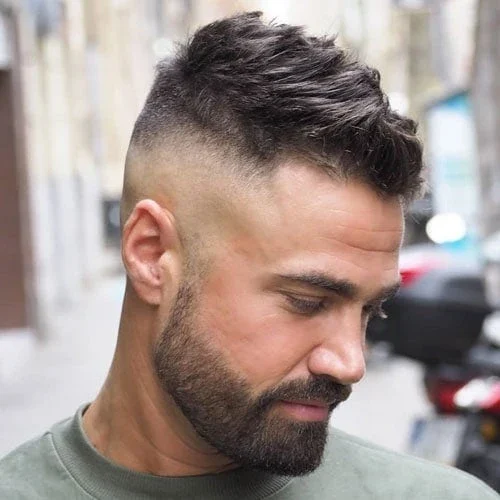
Low Textured Top With a Close Temple
Short pieces lift along the upper head while the side stays close. The top has small irregular peaks rather than the much taller sweep seen in the quiff photographs.
- Shape
- Short lifted texture
- Detail
- Close temple finish
The temple fades toward exposed skin near the front of the ear. Darker hair remains above that opening, connecting the compact top to the back without a broad overhanging section.
Wearability note: Choose this to discuss a smaller overall outline, then show how close you want the temple. The photograph gives a clear front-side comparison, but an additional nape view would still help explain the back.
Idea 06
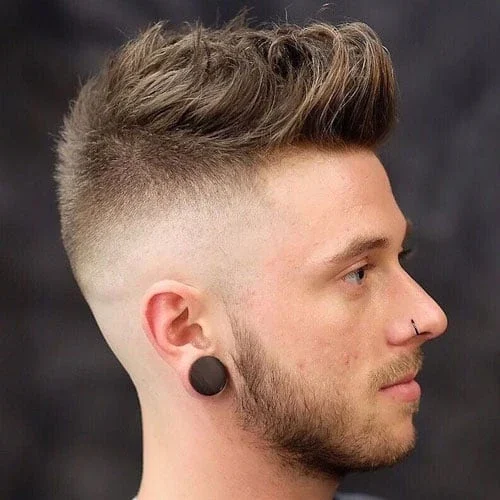
Tall Quiff With an Open Side
The raised front is the tallest part of this cut, while the exposed side removes width below it. That pairing creates a strongly upward silhouette from the profile.
- Shape
- Raised front crest
- Detail
- Exposed lower side
The hair behind the front crest is shorter and less elevated. A dark transition remains beneath the top before fading toward the ear, with the beard tracing a separate line along the jaw.
Wearability note: Decide whether you like the height, the close side, or both. A shorter front would change the balance substantially even with the same fade, so use the profile to explain the amount of lift you actually want.
Idea 07
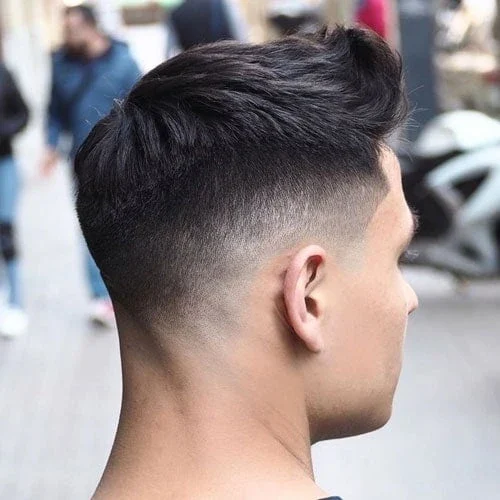
Rear Quiff With a Dropping Fade
From behind, the longer top keeps a raised, textured outline while the fade curves lower toward the back. The exposed area around the ear is more visible than the lower nape in this angle.
- Shape
- Rear upper volume
- Detail
- Curved lower fade
A band of darker hair connects the upper side to the crown. The blend follows the head rather than forming a completely level ring, which changes how much coverage remains at the rear.
Wearability note: Bring this angle when the back shape matters as much as the front. Point to the darker area you want retained; describing the cut only as a skin fade leaves that upper connection open to interpretation.
Idea 08
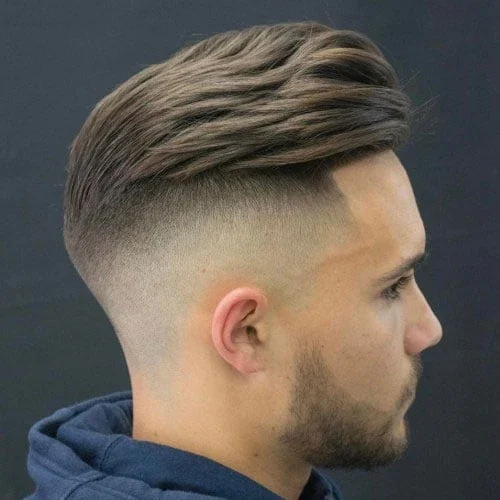
Ash-Brown Sweep With a Narrow Dark Band
A long diagonal sweep crosses the upper head above a narrow darker band. Most of the side below that transition is closely exposed, making the top appear distinctly separate.
- Shape
- Long diagonal sweep
- Detail
- Narrow upper transition
The longer strands lie in visible layers rather than standing as a single upright crest. Near the temple, the front edge stays squared while the lighter lower area continues toward the ear.
Wearability note: Compare the amount of side exposure with a wider, softer blend before choosing. The top length can remain similar in either version, but the narrower transition produces a stronger separation in the outline.
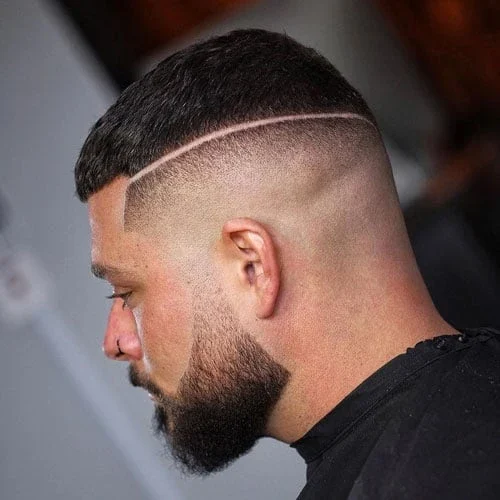
Idea 09
Close Crop With a Curved Shaved Line
A pale curved line follows the upper edge of the close side. The short crop above it stays compact, so the line and fade provide most of the contrast.
- Shape
- Short flat crop
- Detail
- Curved shaved detail
The front is cut into a straight, defined edge. Below the design, the side has little visible hair, while the beard remains dark and sharply outlined around the cheek and jaw.
Wearability note: Treat the shaved detail as an optional addition rather than part of every bald fade. Save a plain close-side example too if you want to compare how the same short top looks without the curved line.
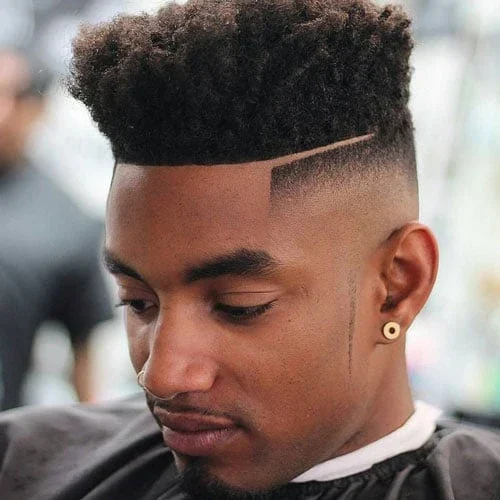
Idea 10
High Coiled Top With a Pale Side Line
The raised coiled top keeps considerable height above the close side. A fine pale line extends backward from the temple, adding a clear horizontal detail near the transition.
- Shape
- Raised coiled top
- Detail
- Side line detail
The front hairline is squared and the upper outline remains softly textured. Below the line, the hair lightens toward the ear, creating a contrast between the fuller upper shape and the exposed lower area.
Wearability note: Use the side view to compare top height with fade placement. The shaved line can be omitted, and a different upper height would change the proportions even if the lower finish stayed equally close.
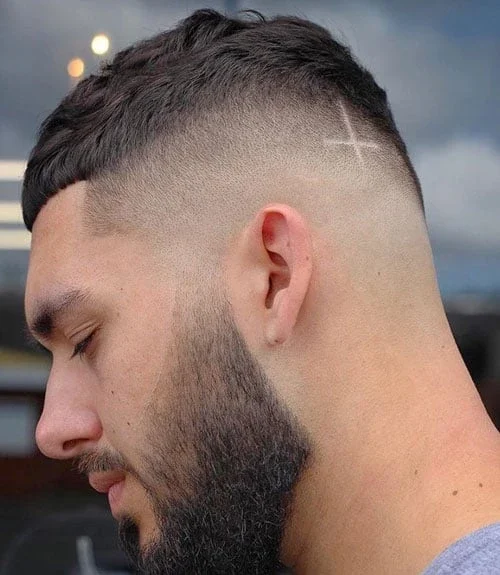
Idea 11
Short Fringe With a Small Cross Detail
A short forward fringe keeps the top low, while a small shaved cross adds detail high on the side. The lower area around the ear is closely exposed.
- Shape
- Short forward fringe
- Detail
- Small shaved cross
The dark top forms a compact cap above the fade. The design sits within the lighter transition rather than taking up the whole side, and the beard stays fuller below the cheek.
Wearability note: This photograph is most useful for the scale and position of the side detail. If you prefer a plain fade, discuss the top and transition independently rather than copying the decorative mark by default.
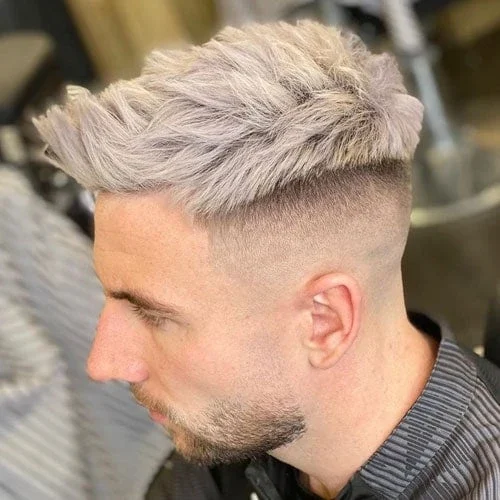
Idea 12
Pale Textured Top With a Darker Root Band
Pale tips make the short top texture easy to distinguish from the darker side. The fade opens into an exposed lower area while leaving a darker band beneath the upper length.
- Shape
- Pale separated tips
- Detail
- Dark upper-side band
The front is raised slightly, with individual pieces pointing upward and forward. The darker root area follows the upper outline, giving the cut contrast even before the side reaches its shortest point.
Wearability note: Compare the cut shape separately from the color. The same length arrangement would look less contrasted without the pale tips, so bring a second uncolored example if the fade itself is your main priority.
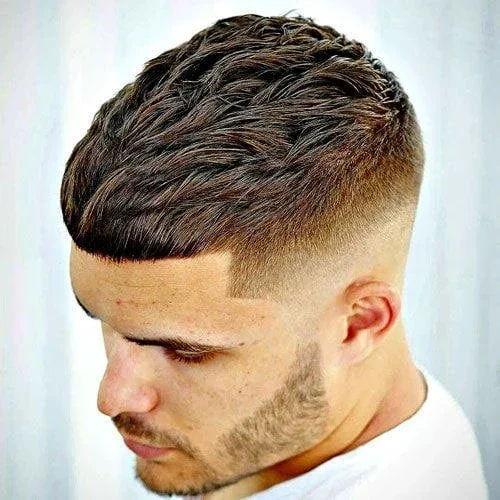
Idea 13
Forward Texture With a Straight Fringe
The top moves forward into a straight fringe rather than rising into a quiff. Beneath it, the side becomes closely exposed, leaving the upper texture as the fullest part of the cut.
- Shape
- Forward top texture
- Detail
- Straight front edge
Small ridges run through the brown hair, and the front edge sits low across the forehead. The squared temple connects that blunt edge to the close side, making the front corner especially noticeable.
Wearability note: Choose this when you prefer a forward outline over added height. Compare the fringe length against your own brow position, because a small change there can alter the front view more than the fade does.
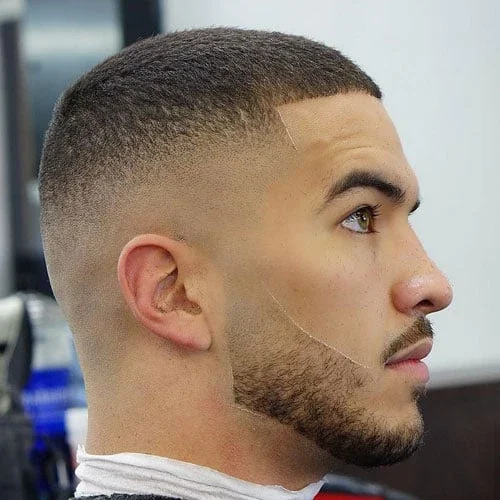
Idea 14
Even Short Top With a Soft Side Fade
The evenly short top creates a quiet outline above the fade. There is no long fringe or tall crest competing with the gradual change in shade along the side.
- Shape
- Even close top
- Detail
- Soft side shading
A fine darker area remains above the ear before the hair becomes almost bare below it. The beard has a stronger edge than the upper fade, showing how facial hair can change the overall contrast.
Wearability note: Use this to compare a compact top with the taller styles in the gallery. Ask about the visible top length and beard connection separately; the photograph does not establish a universal clipper setting for either.
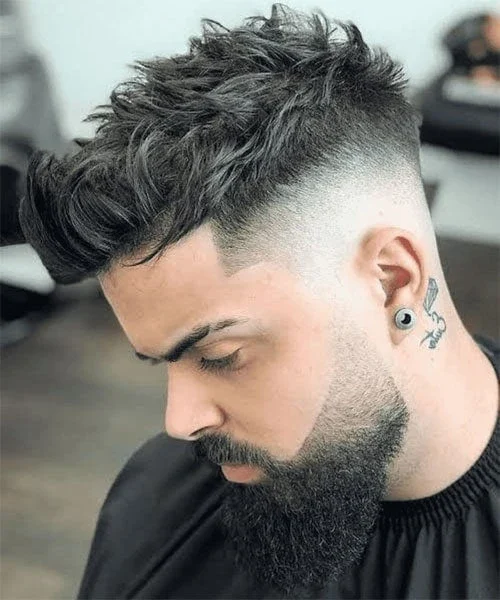
Idea 15
Loose Upper Waves With a Full Beard
Loose waves create height above the exposed side, while the full beard adds weight below the jaw. The close area around the ear separates those two fuller shapes.
- Shape
- Loose raised waves
- Detail
- Full beard contrast
The top has broken, lifted ends rather than a polished continuous sweep. A sharply defined front corner contrasts with that softer texture, and the lower side fades into a much lighter finish.
Wearability note: Cover the beard briefly when comparing this photograph with other cuts. It helps distinguish the haircut outline from the facial-hair shape, especially if you want the upper waves with a much shorter beard or none.
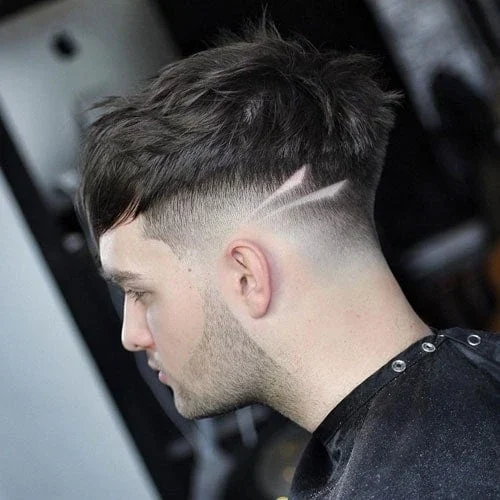
Idea 16
Side-Swept Crop With Two Shaved Strokes
Two short pale strokes interrupt the darker band above the fade. The top lies mostly forward and sideways, creating a lower profile than the raised quiffs.
- Shape
- Short side-swept fringe
- Detail
- Paired shaved marks
The longer fringe crosses the front corner, while the side below the design becomes almost bare near the ear. The photograph shows a contained upper shape with the decoration concentrated in one small area.
Wearability note: Decide whether the marks are the feature you want to keep. A plain version can preserve the same fringe direction and lower side exposure, so avoid letting the design distract from your preferred everyday outline.
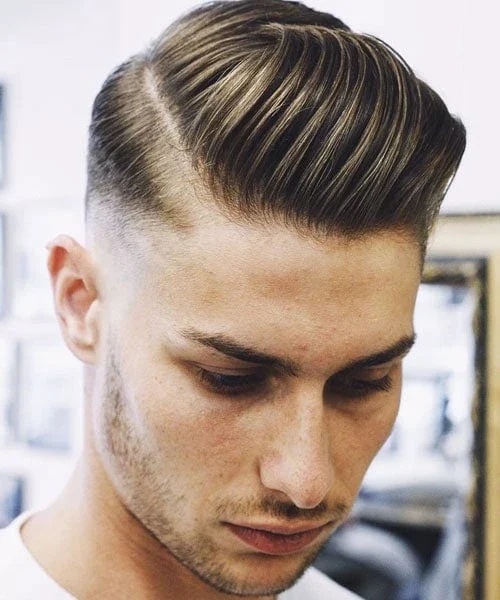
Idea 17
Highlighted Comb-Over With a Wide Part
A wide visible part separates the combed top from the close side. Light strands trace the swept ridges, making their direction easy to follow from the front.
- Shape
- Defined side part
- Detail
- Highlighted combed ridges
The longer section stays smooth and organized rather than breaking into scattered tips. Below the part, the side darkens near the top and becomes very light toward the ear.
Wearability note: Show the part width as well as the fade when discussing this version. A narrower part would look quieter, and the visible ridges are a styling finish rather than a guarantee of how the cut will sit unstyled.
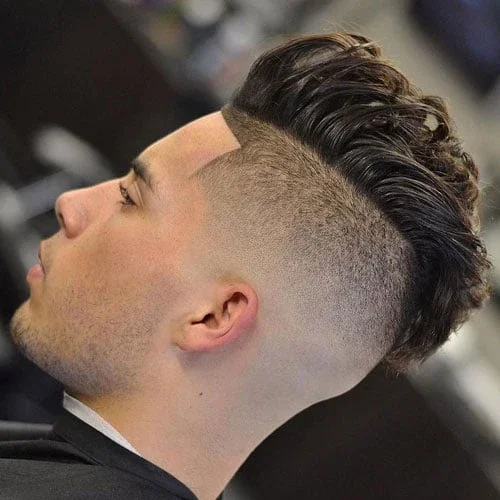
Idea 18
Raised Central Ridge With Bare Sides
The long upper section forms a raised central ridge above a widely exposed side. The height continues backward instead of being concentrated only at the front.
- Shape
- Central lifted ridge
- Detail
- High bare side
From this profile, the lighter lower area occupies much of the side of the head. The darker transition sits close to the longer ridge, creating a much stronger separation than the softer blended examples.
Wearability note: Compare a rear view before deciding on this shape. The profile explains the height but not the exact width of the central section, which is essential when distinguishing a broad quiff from a narrower ridge.
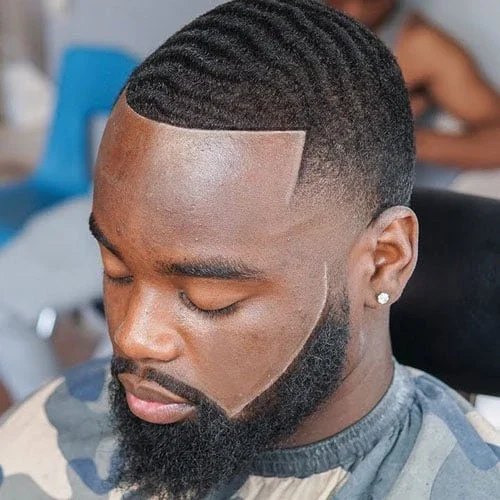
Idea 19
Close Waves With a Squared Hairline
Close waves create a ripple pattern across the top without adding a tall silhouette. The front edge is squared, and the side becomes lighter toward the ear.
- Shape
- Close ripple pattern
- Detail
- Squared front line
The waves stay close to the head, making the fade and hairline particularly visible. The beard begins with a narrow side connection before widening lower down, adding another distinct change in density.
Wearability note: Save the front-side angle if the hairline and wave pattern are your priorities. The image shows the finished appearance, but your own growth pattern will affect how readily a similarly close top displays those ripples.
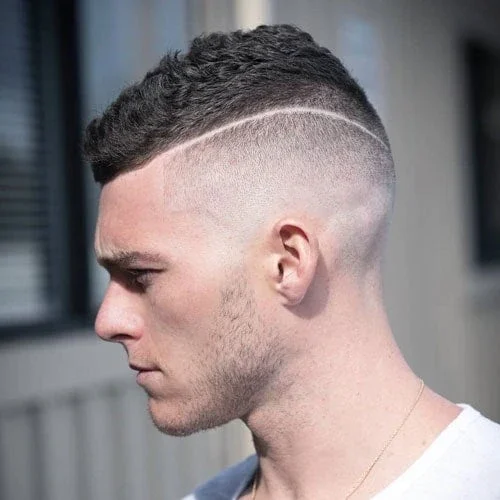
Idea 20
Compact Crop With a Long Pale Arc
A long pale arc follows the side of the compact crop. The fade beneath it is very close, making the line stand out against the darker upper hair.
- Shape
- Compact cropped top
- Detail
- Long curved line
The front stays short and neatly contained, with only small pieces visible along its edge. Unlike the fuller tops nearby, this cut keeps its height low and concentrates visual detail along the side.
Wearability note: Use this as a comparison for line placement rather than a requirement to add a design. A plain transition would produce a simpler outline while retaining the low top and broadly exposed lower side.
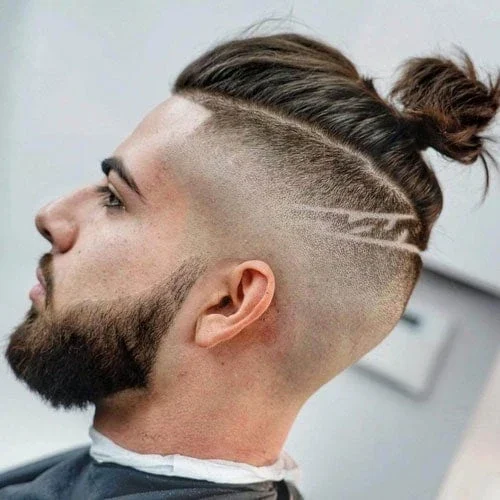
Idea 21
Small Bun Above a Designed Skin Fade
The long upper hair is gathered into a small bun, while the side stays closely exposed. Several shaved strokes add a pattern beneath the longer upper section.
- Shape
- Small rear bun
- Detail
- Shaved side pattern
The profile shows a strong contrast between the tied length and the short lower area. The beard extends below the jaw, creating a second long shape that is separate from the bun itself.
Wearability note: Keep this reference for the division between retained length and shaved side. The pattern and beard are optional choices, and a rear view would help explain how wide you want the longer tied section to remain.
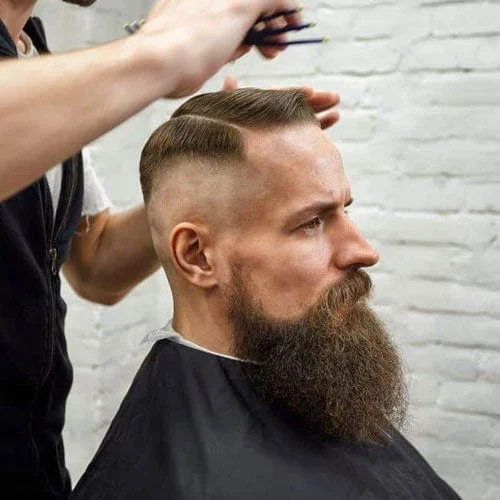
Idea 22
Small Side Part With a Long Beard
The upper hair remains compact beside a small side part, while the lower side is closely exposed. Most of the length in this profile comes from the beard rather than the haircut.
- Shape
- Compact parted top
- Detail
- Long beard balance
The top has a modest raised edge at the front and lies flatter toward the back. The side transition creates a light gap above the ear before the darker facial hair starts below it.
Wearability note: This is useful for comparing a restrained top with a more substantial beard. If you do not wear similar facial hair, focus on the crown and temple first so the overall portrait does not overstate the haircut height.
Bring the angle that explains the fade
A front portrait can explain fringe direction and hairline shape, but it often hides the back. Pair it with a side or rear photograph when nape coverage and the route around the ear matter to your choice.
Ask to compare the fade placement, the width of its darker transition and the retained top length separately. A photograph shows their combined appearance; it does not establish one clipper setting or maintenance interval that suits everyone.

About the author
Bella Ross
Bella Ross is the hairstyle editor behind Latest Easy Hairstyles. She curates practical haircut, braid, color, and styling ideas with a focus on looks that are easy to browse, realistic to recreate, and useful for everyday hair decisions.