Before you choose
Choose the detail behind the mood
Decide whether you want the long length, a braid, a gathered top or a close undercut. Some photographs include screen costumes or prominent beards, but those are separate from the hairstyle. These are contemporary inspiration references, not a record of historically verified Viking hair.
The hairstyle gallery
15 viking hairstyles for men ideas to compare
Compare the visible length, shape, texture, and finish before choosing a salon reference.
Idea 01
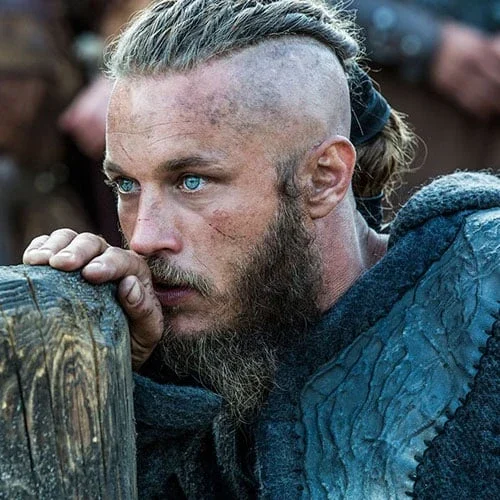
Pulled-Back Top With Shaved Sides
A long pulled-back top sits above closely shaved sides in this screen-inspired look. The exposed temple makes the separation between the upper length and the short side especially clear.
- Shape
- Long pulled-back top
- Detail
- Shaved sides
The gathered back is partly obscured, so the photograph is more useful for the front and side than for explaining an exact tie. The beard adds another long shape below the face.
Wearability note: Choose the visible haircut details separately from the costume or facial hair. This is a modern Viking-inspired reference; a back view would be needed to specify how the longer section should finish.
Idea 02
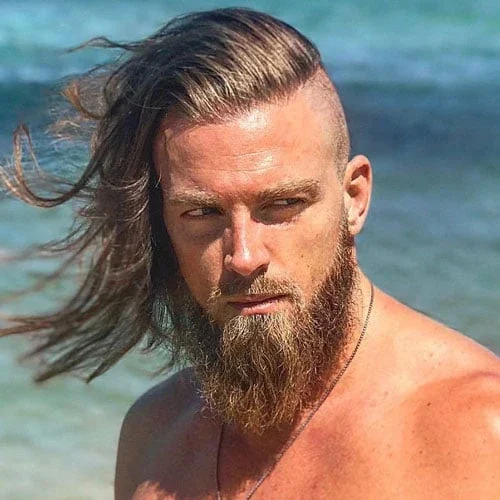
Long Side Sweep Over an Undercut
Long hair sweeps across one side of the face while the opposite side is cut close. The moving lengths give this undercut a much looser outline than a tied-back version.
- Shape
- Long side sweep
- Detail
- Shaved side
The top is long enough to fall well past the temple. The side contrast remains visible even with the hair blowing outward, which is the main feature this front angle explains.
Wearability note: Consider how much loose hair you want near your face. Save this for its asymmetric length and undercut, then compare a tied version if you also want a more contained everyday option.
Idea 03
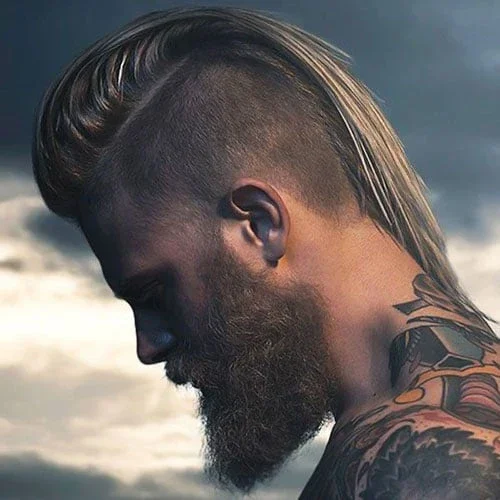
Long Back Sweep With Close Sides
A long upper section sweeps backward and continues past the crown. The sides are shaved close, exposing the ear area and making the longer strip stand out.
- Shape
- Long back sweep
- Detail
- Close sides
The front has a smooth curved lift, while the ends fall behind the head. This profile shows the transition from raised front to loose back more clearly than a frontal portrait would.
Wearability note: Compare the length behind the crown with the shorter knot examples. Leaving it loose creates a different amount of movement and neck contact even when the side cut is similar.
Choose your direction
Choose braided detail
Compare twin braids, a narrow side braid and a long wrapped tail.
Keep loose movement
Look at long waves and undercut side sweeps.
Gather the top
Compare small undercut knots with fuller-sided buns.
Idea 04
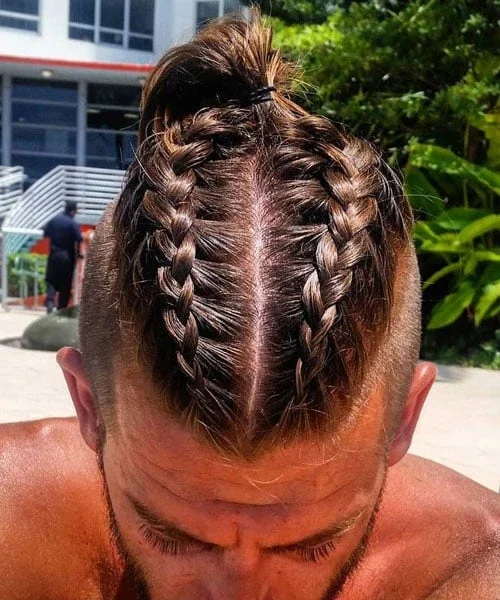
Twin Braids Into a Small Knot
Two broad braids run along the upper head on either side of a straight center part. Their lengths meet near a small knot, with the sides cut much shorter.
- Shape
- Twin scalp braids
- Detail
- Small upper knot
The overhead angle makes the sectioning and braid direction easy to see. It is particularly useful for explaining the paired pattern, which a front portrait could hide.
Wearability note: Choose the braid layout and the size of the final gather separately. This has more detailed handling than a simple knot, so consider comfort and the amount of time you want to spend on a finished look.
Idea 05
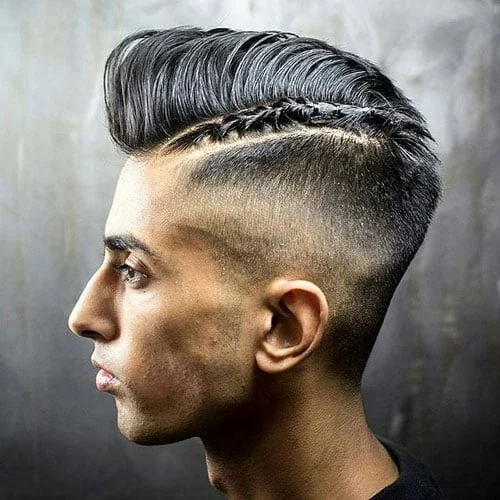
Small Side Braid Beside a High Sweep
A narrow braid sits beside a raised backward sweep. The close undercut exposes the side of the head, making the small braided accent distinct from the larger upper section.
- Shape
- Narrow side braid
- Detail
- Raised upper sweep
The top stays smooth and full, while the braid follows a line above the temple. The contrast between these two textures creates the main detail in this profile.
Wearability note: This reference suits someone who wants a small braid rather than a fully braided top. Be clear about which side should carry the accent and whether the high front fits your preferred finish.
Idea 06
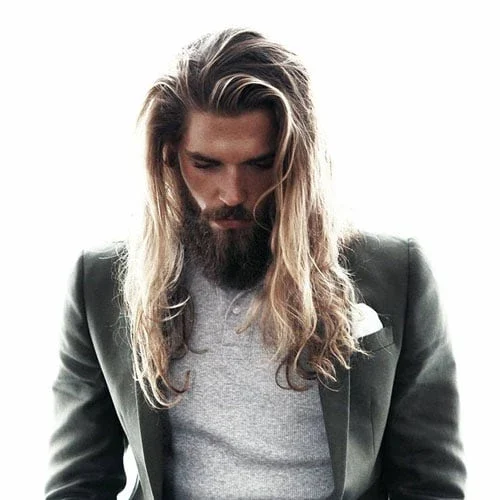
Loose Long Hair With Light Ends
Long loose hair falls on both sides of the neck, with a swept opening at the front. The lighter ends make the lower length stand out against the darker beard.
- Shape
- Loose long length
- Detail
- Lighter ends
This is a softer modern Viking-inspired option without visible scalp braids. The ends stay loose rather than gathering into a knot or a narrow tail.
Wearability note: Choose it for the length and open movement rather than treating color or beard as requirements. Compare how much hair rests on the shoulders with the more contained half-up references.
Idea 07
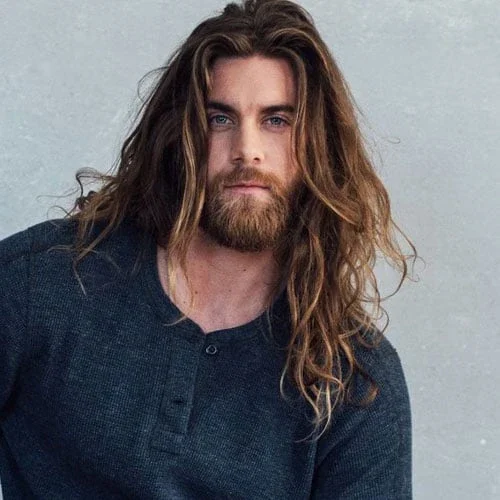
Long Waves With a Center Opening
A center opening lets the long waves fall to either side of the face. The upper outline stays full, and no closely shaved side is visible in this front view.
- Shape
- Long loose waves
- Detail
- Center opening
The lengths extend below the shoulders in broad bends, with some lighter pieces near the ends. This gives the gallery an all-over long alternative to the undercut styles.
Wearability note: Use this if keeping side length matters more to you than shaved contrast. It is a modern mood reference; the image does not establish historical authenticity or show how the back is arranged.
Idea 08
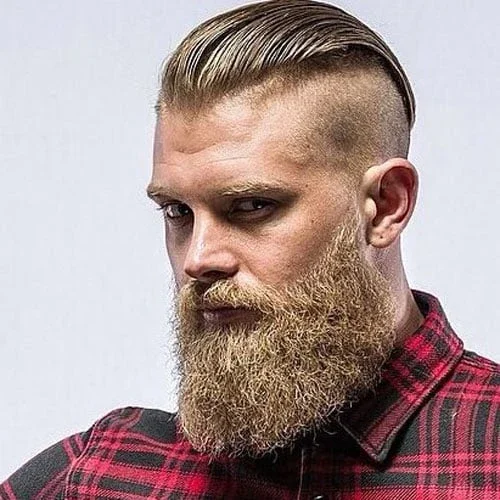
Sleek Top Over a High Undercut
A sleek upper section moves back from the forehead above a high undercut. The short side exposes most of the temple area, creating a strong horizontal contrast.
- Shape
- Sleek long top
- Detail
- High undercut
The longer top sits low and smooth rather than rising into a tall crest. The beard creates another substantial shape, but it is independent of the haircut itself.
Wearability note: Compare the high side boundary with the softer-sided examples before committing to that contrast. Save a rear reference too if you want to specify whether the upper length stays loose or becomes gathered.
Idea 09
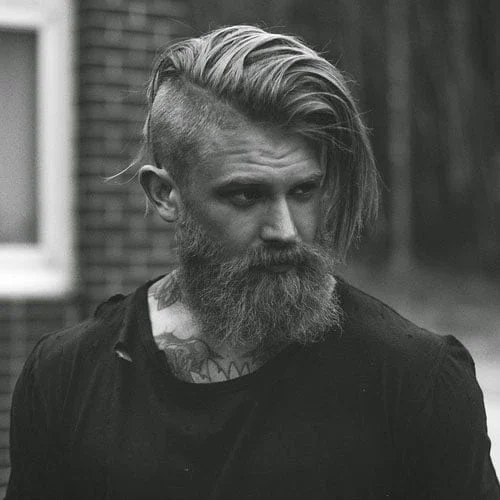
Asymmetric Long Top With a Close Side
Long upper hair falls across one side while the other side remains closely cut. The front sweep and exposed temple give this monochrome portrait a distinctly asymmetric outline.
- Shape
- Asymmetric long top
- Detail
- Close side
The upper section has enough length to reach toward the cheek. It is less contained than a back sweep and creates a stronger face-framing effect on the longer side.
Wearability note: Think about whether you like hair falling toward the eye and cheek. The black-and-white photograph is useful for shape and contrast, while the precise color is not something it can show.
Idea 10
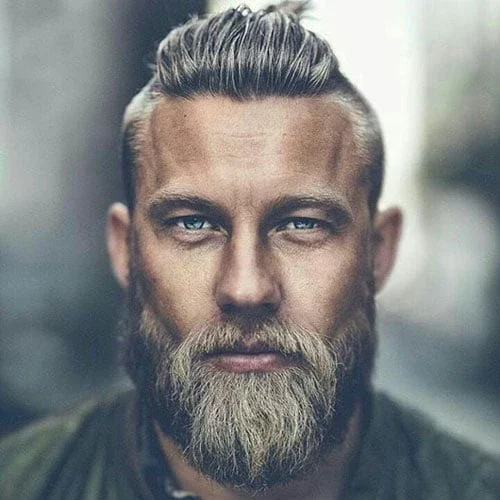
Small Knot With a Swept Front
A small knot gathers the longer upper section behind a swept front. The sides remain close, exposing the temples and emphasizing the narrow amount of hair left on top.
- Shape
- Small upper knot
- Detail
- Close sides
The front has a little lift without falling across the face. The knot is compact, offering a contained alternative to the long loose undercut lengths elsewhere in the gallery.
Wearability note: Compare knot size with the amount of upper length you want to keep. The full beard changes the overall portrait, but you can use the haircut reference without matching that separate feature.
Idea 11
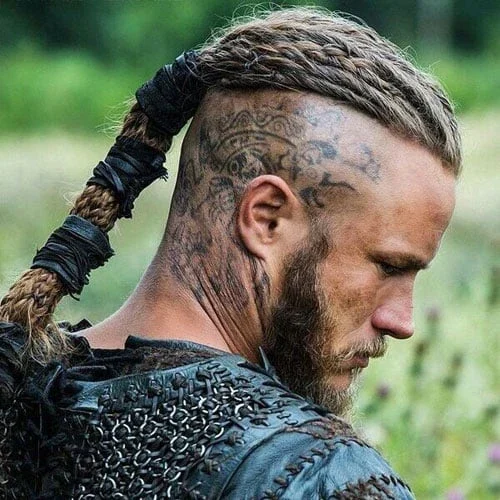
Long Wrapped Braid With Shaved Sides
Braided upper hair continues into a long tail with several dark wraps. Shaved sides leave the ear and temple exposed, making the braid the dominant line in the profile.
- Shape
- Long wrapped braid
- Detail
- Shaved sides
The length extends behind the head rather than folding into a bun. This costume reference shows both the braided upper surface and the way the tail hangs away from the nape.
Wearability note: Use it as a modern screen-inspired shape, not a historical claim. Consider the weight and hanging length you want, and separate the wrapped detail from the underlying braid when discussing a wearable version.
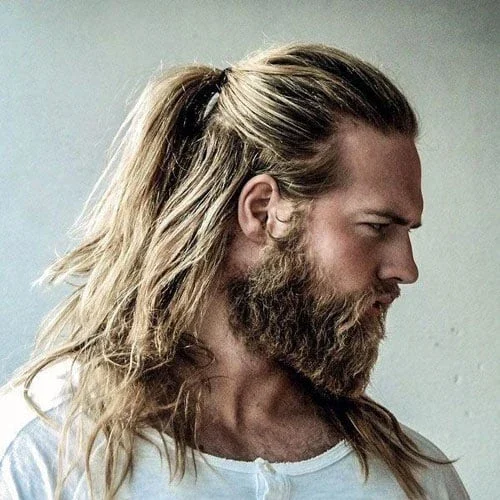
Idea 12
Half-Up Tie With Loose Lengths
A half-up tie draws the upper hair away from the face while leaving a generous lower section loose. The gathered point sits behind the crown instead of at the nape.
- Shape
- Half-up tie
- Detail
- Loose lower length
The loose lengths retain movement around the neck and shoulders. The fuller sides make this softer than the closely shaved versions, with no strong undercut visible from this angle.
Wearability note: Choose this if you want an open front without containing every strand. Compare the amount left loose with your own comfort around collars and straps, especially if you prefer a more contained back.
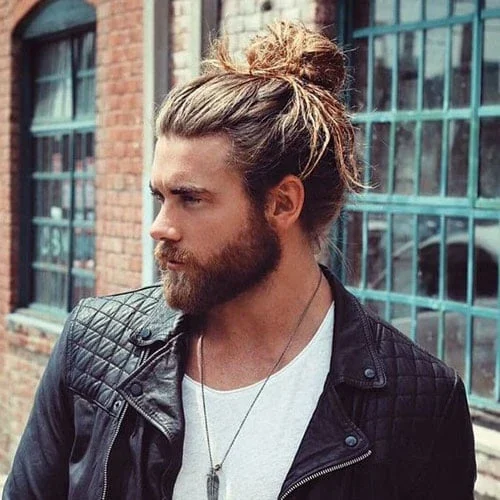
Idea 13
Loose High Bun With Full Sides
A loose high bun gathers the long lengths above the back of the head. The sides retain visible hair rather than showing a wide shaved section.
- Shape
- Loose high bun
- Detail
- Fuller sides
The front moves backward with a little lift, and the bun has projecting ends instead of a perfectly compact surface. This gives the gathered style a relaxed outline.
Wearability note: This is a useful comparison if you want to retain the side length. The position and size of a bun affect how it feels against a seat or headrest, so consider the setting as well as the photograph.
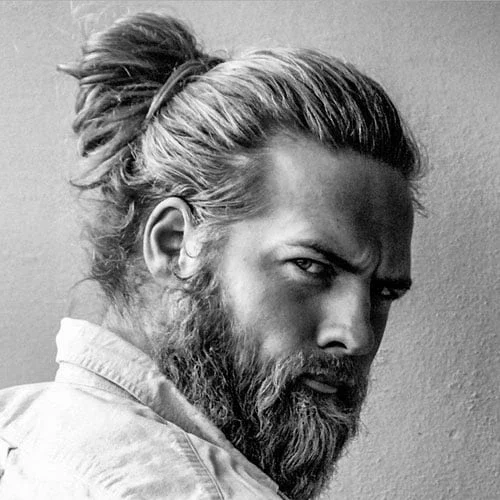
Idea 14
Full Bun With a Soft Front Sweep
A full bun sits high behind a softly swept front. The upper hair moves away from the forehead with visible separation rather than a very flat surface.
- Shape
- Full upper bun
- Detail
- Soft front sweep
The sides retain coverage, and the bun projects behind the head. The monochrome view makes the contrast between the smooth sweep and loose gathered ends easy to compare.
Wearability note: Compare the bun position with a lower gather if you spend time against a headrest. Use this photograph for the overall shape, while treating its beard and dramatic lighting as separate choices.
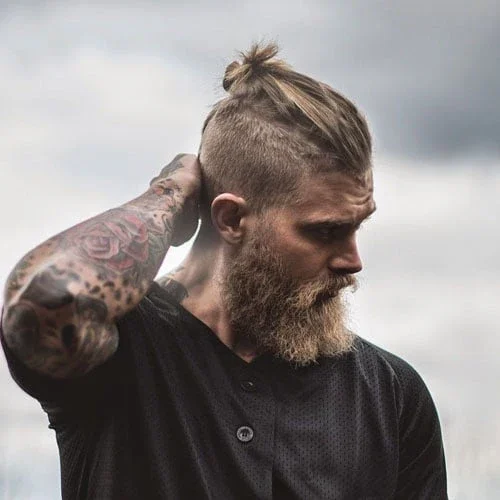
Idea 15
Small Top Knot With an Undercut
A small knot gathers the long upper section while the sides stay closely cut. The narrow gather leaves much of the side of the head exposed.
- Shape
- Small top knot
- Detail
- Close undercut
The front sweeps back in loose lines, and the knot itself remains compact. This profile is useful for comparing the point where the longer section begins against the shorter side.
Wearability note: Choose the degree of side contrast before deciding on knot size. A similar gathered top can look very different with fuller sides, so bring both preferences into the discussion rather than focusing on the tie alone.
Translate the reference into a wearable choice
Identify the hairstyle detail you would actually like to keep. A dramatic costume portrait can still be useful for its braid direction or undercut height without copying the rest of the image.
Consider the amount of length left loose and where a knot or tail sits. Those visible choices affect neck contact and how the gathered shape feels against a seat or headrest.
About the author
Bella Ross
Bella Ross is the hairstyle editor behind Latest Easy Hairstyles. She curates practical haircut, braid, color, and styling ideas with a focus on looks that are easy to browse, realistic to recreate, and useful for everyday hair decisions.