
Before you choose
Compare the outline, not just the length
Start with the outline you want to keep, then compare the amount of layering. A blunt edge can preserve the look of weight, while a soft pixie removes length around the neck and ears. For options beyond short cuts, compare thin hairstyles for older women.
The hairstyle gallery
18 short haircuts for older women with fine hair ideas to compare
Compare the visible length, shape, texture, and finish before choosing a salon reference.
Idea 01
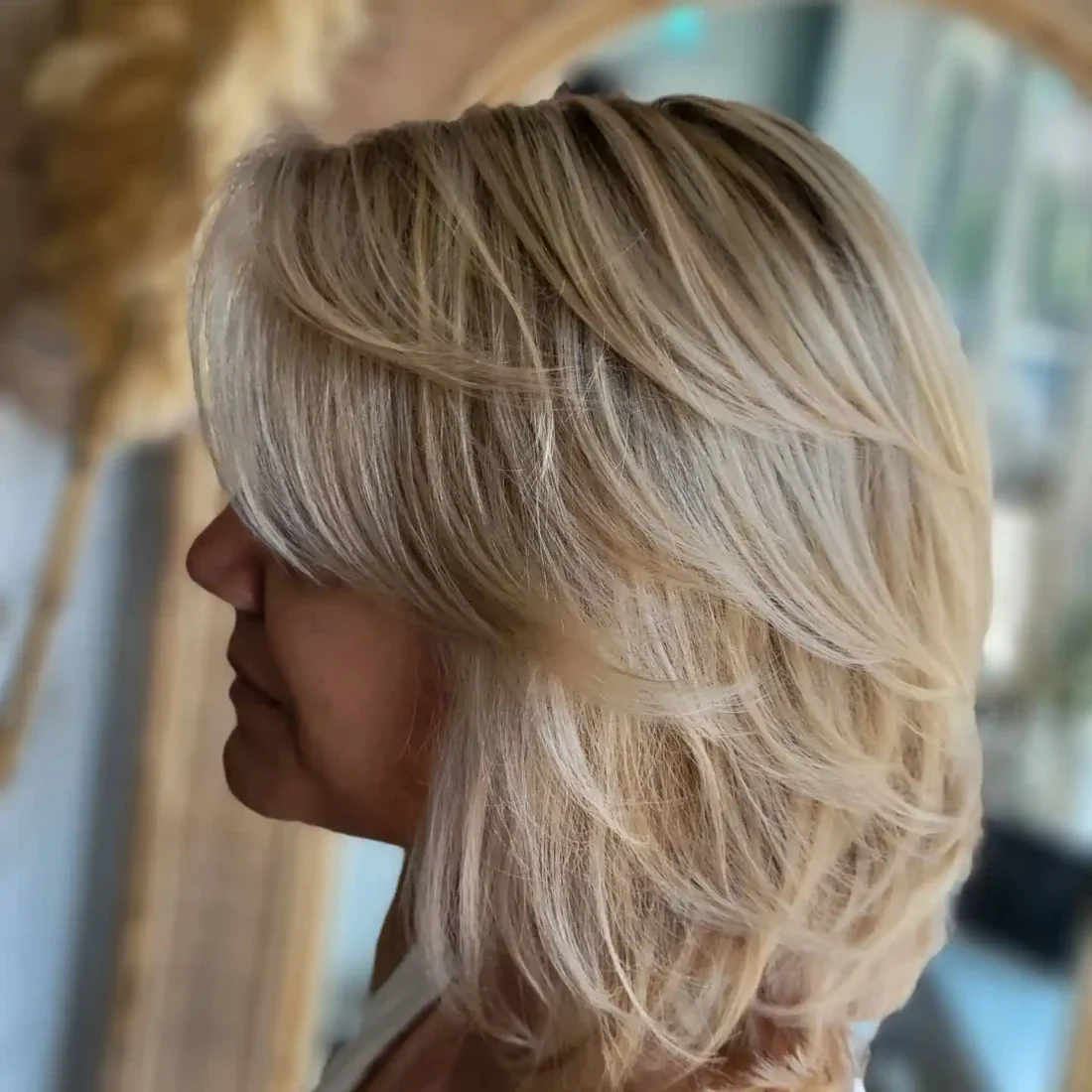
Feathered Blonde Bob
Long, airy layers give this bob movement without turning the lower edge into a very wispy line. The fringe sweeps across the forehead and joins the side rather than forming a separate block.
- Length
- Neck length
- Front
- Swept fringe
- Shape
- Feathered ends
Most of the lift sits behind the crown, with small outward bends through the lower layers. This is a useful comparison if a one-length bob feels too flat but you still want hair covering the ears.
Wearability note: Keep enough weight at the perimeter when adapting this for fine hair. The photographed curves are styled, so discuss how the same layers will lie when you leave them to dry naturally.
Idea 02
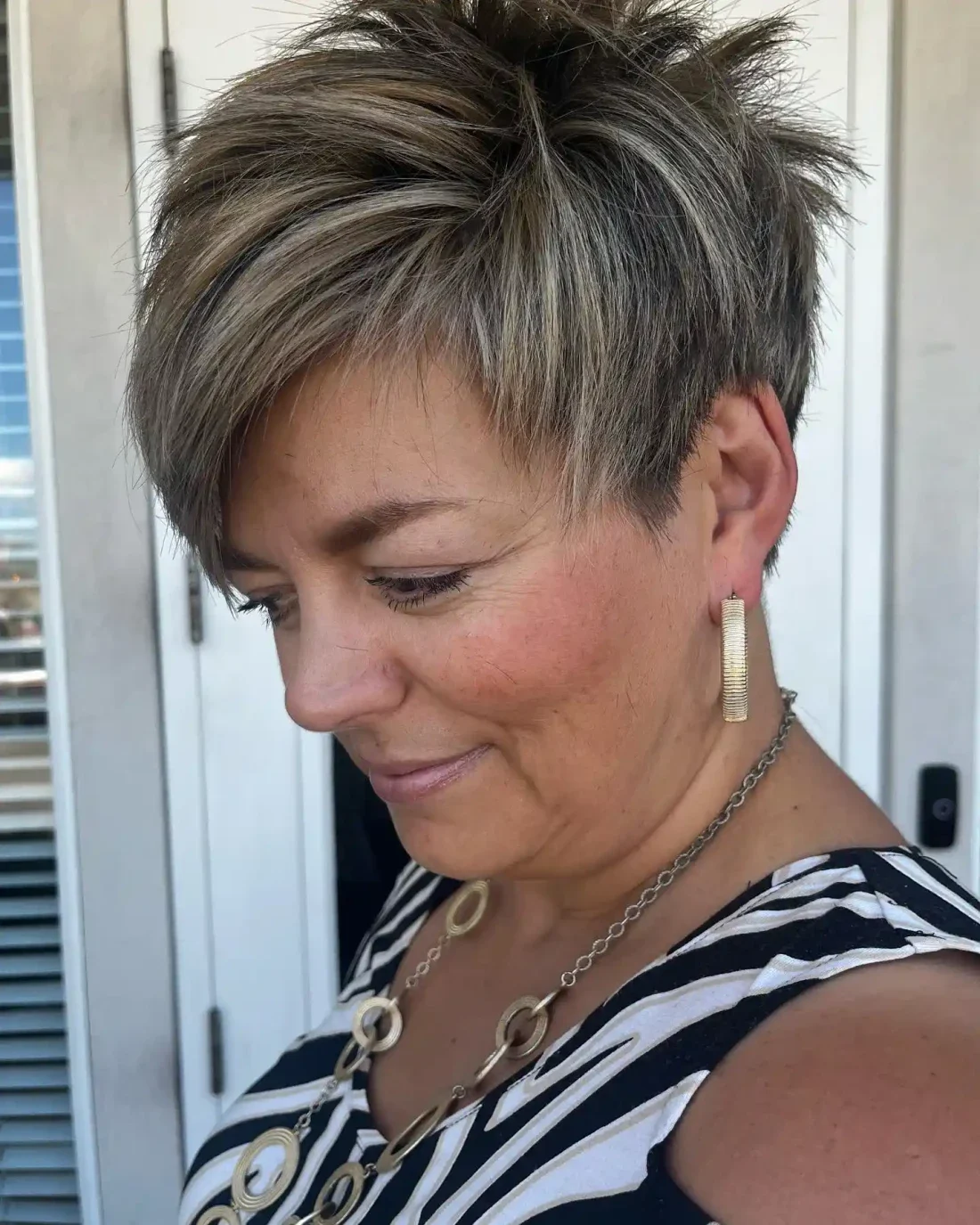
Choppy Pixie With a Long Fringe
The longer fringe and close sides do different jobs here: one gives softness across the forehead, while the other keeps the cut compact around the ear.
- Length
- Pixie
- Front
- Diagonal fringe
- Shape
- Spiky crown
Short pieces stand up at the crown and separate into small points. Brown and pale highlights make those layers easier to see, but the shape comes from the difference in length rather than needing the same color.
Wearability note: Ask how much of the top can stay lifted without daily reshaping. A very short crown can expose more scalp on low-density hair, so the photographed height is a direction to adapt, not a thickness guarantee.
Idea 03
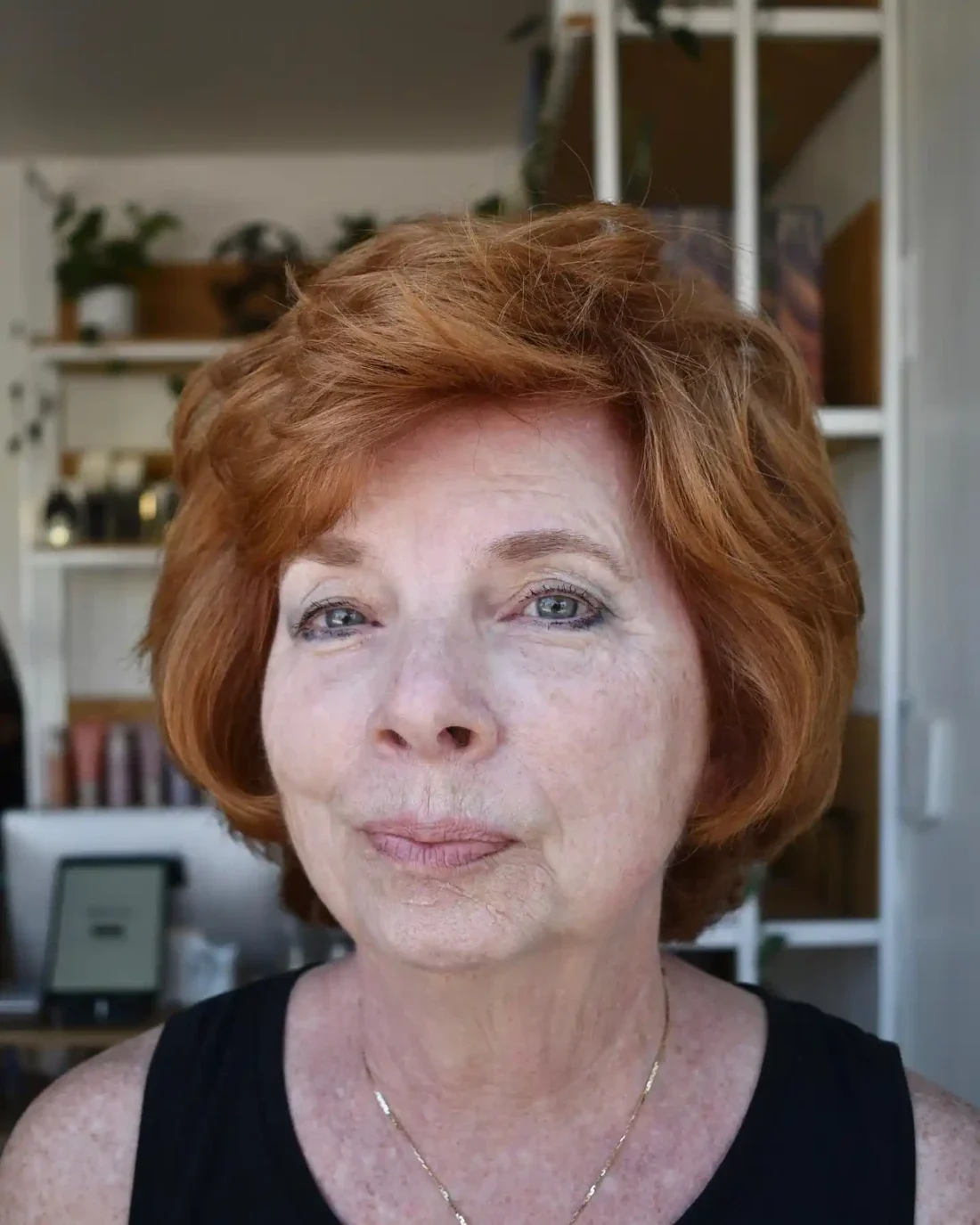
Rounded Copper Bob
This bob keeps a rounded lower outline while a light side fringe opens a small space above one eye. It offers a softer alternative to a sharply angled perimeter.
- Length
- Jaw length
- Front
- Side fringe
- Shape
- Rounded outline
The side sections turn toward the jaw, and the crown has gentle lift rather than a high set. Small changes in direction through the top stop the copper surface from looking like one solid helmet.
Wearability note: Choose this if you want coverage around both ears and prefer a fuller edge. Fine hair may need fewer layers than this photograph suggests, especially if the ends already separate easily.
Choose your direction
Keep a fuller edge
Compare the clean silver bob and full-edged bob before choosing heavy texturizing.
Clear the neck
Look at the tapered pixies and bixies, then decide how much ear coverage you want.
Wear glasses comfortably
Compare the fringe and temple lengths with your frame in place.
Idea 04
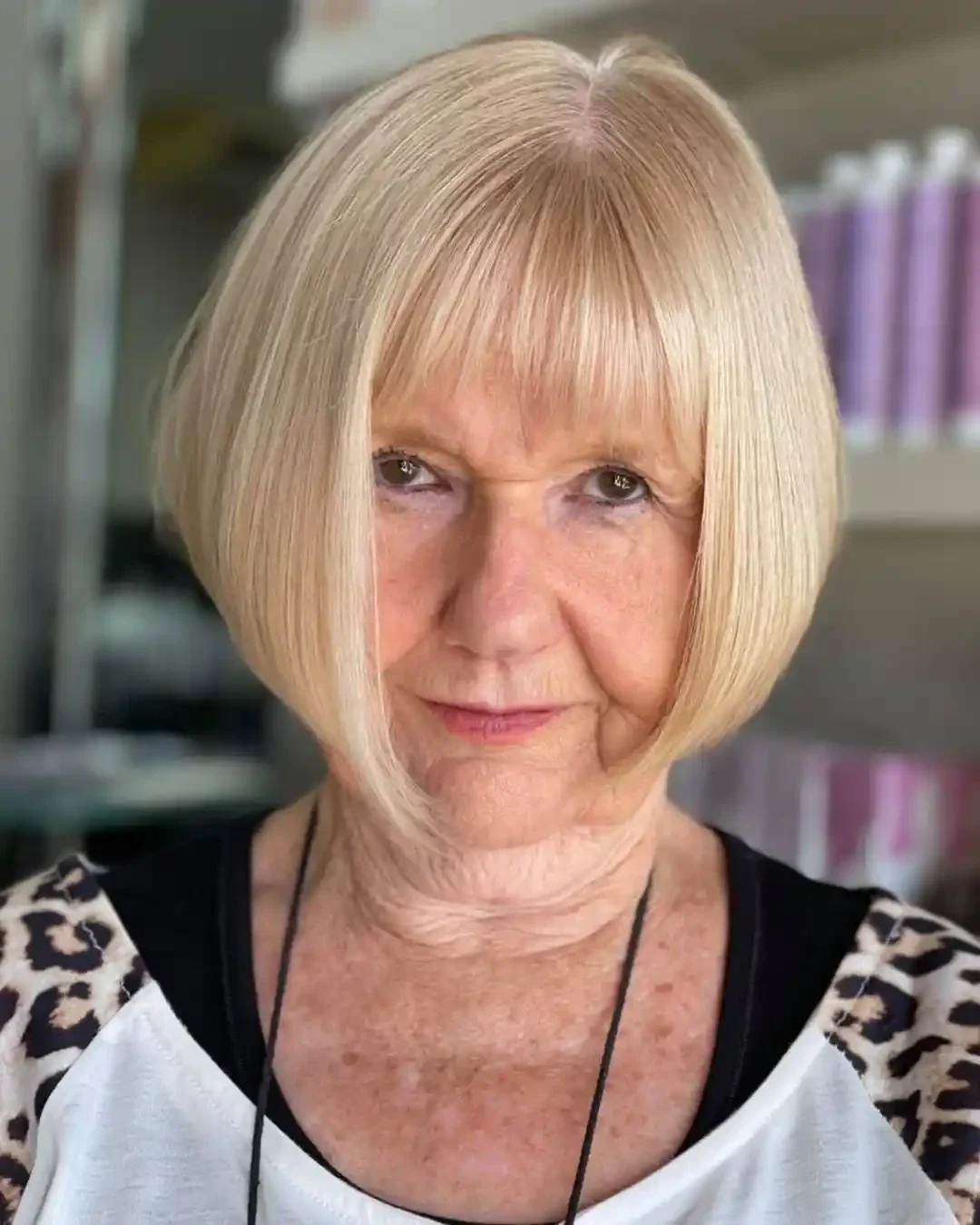
Blonde Bob With Wispy Bangs
A clean chin-length edge supplies the weight in this bob. The bangs are lighter, leaving small gaps rather than creating a thick curtain across the forehead.
- Length
- Chin length
- Front
- Light bangs
- Shape
- Curved ends
Both sides curve inward, while the top lies relatively close to the head. This contrast is helpful for fine hair: the outline can look deliberate without depending on a large amount of crown volume.
Wearability note: Bangs borrow hair from the front of the cut. Check whether your own front section has enough density to support them while keeping the sides full, particularly if you usually part your hair farther back.
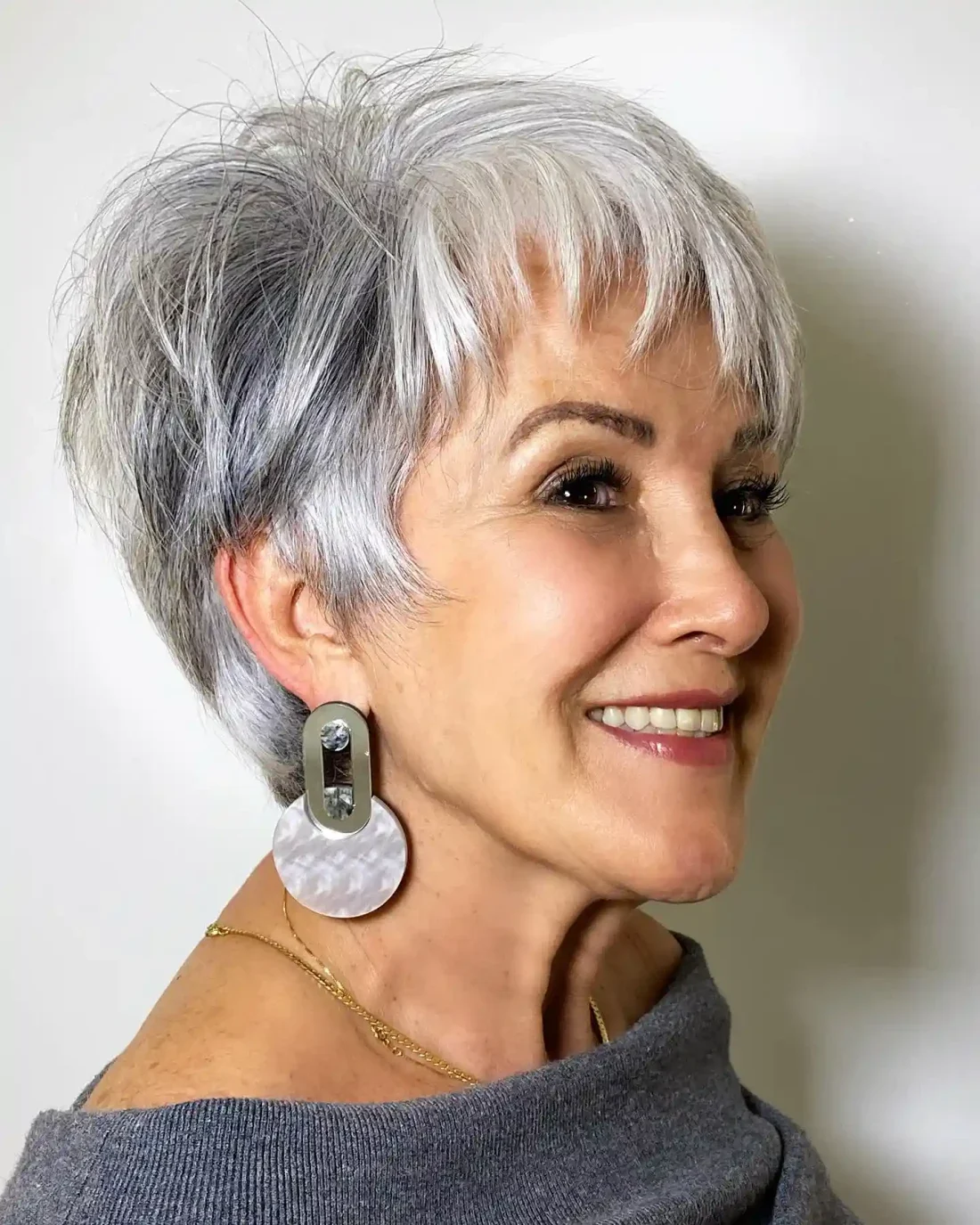
Idea 05
Silver Pixie With Short Bangs
Short silver bangs break into fine points above the brows. The side stays close to the ear, but the top retains enough length for a lightly rounded shape.
- Length
- Pixie
- Front
- Short bangs
- Shape
- Soft taper
A little separation through the crown keeps this crop from looking completely flat. The edge around the ear is soft, which makes the cut less severe than a tightly clipped undercut.
Wearability note: Save this for the fringe length and gentle taper. If your hair grows forward or splits at the front, discuss that growth pattern before committing to bangs this short.
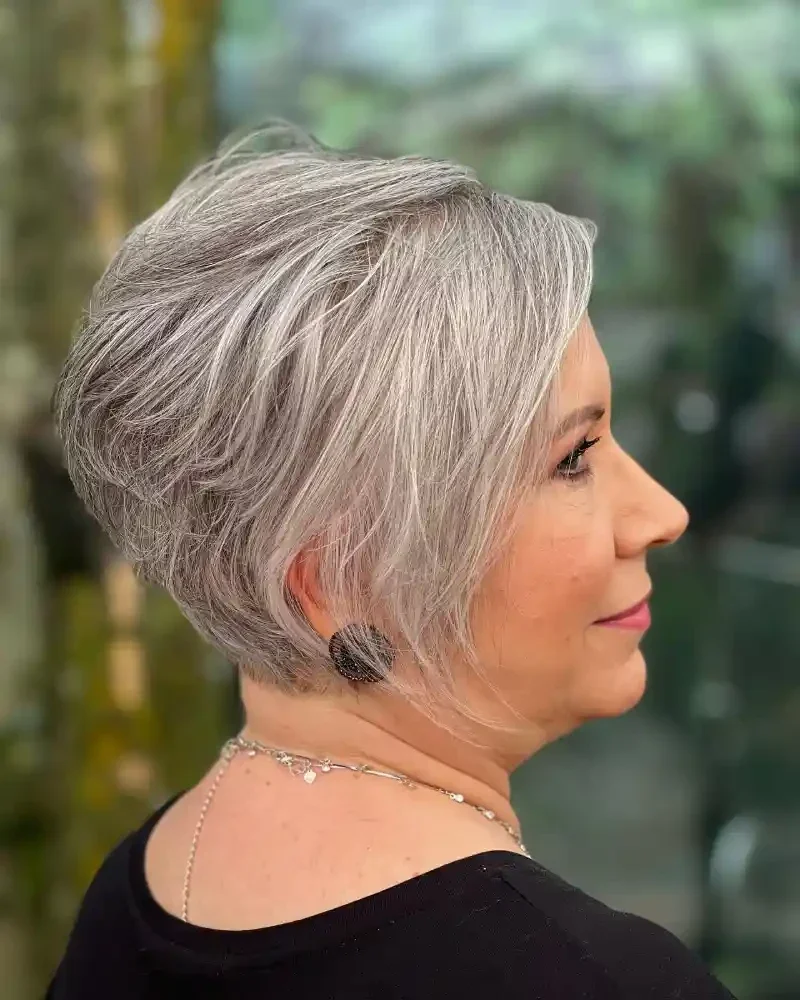
Idea 06
Side-Swept Silver Bixie
Longer layers sweep over the ear while the nape stays compact. That balance gives this crop bob-like softness without retaining the full length of a conventional bob.
- Length
- Ear length
- Front
- Long side sweep
- Shape
- Tapered nape
The back forms a rounded curve instead of a tall stack. Fine, separated strands remain visible through the surface, making this a particularly useful photograph for comparing a soft finish with a sharply sculpted one.
Wearability note: Ask to keep the ear coverage if that is what you like here. Taking the sides much shorter would change the silhouette and make the cut feel closer to a pixie.

Idea 07
Clean Silver Bob
This silver bob relies on a clean outline rather than visible layers. The slightly off-center part lets one side fall more heavily across the forehead.
- Length
- Chin length
- Front
- Off-center part
- Shape
- Smooth edge
The ends turn inward just enough to frame the jaw without a large curl. The surface also shows individual gray and darker strands, so the photograph is useful for shape even if you are not planning a color change.
Wearability note: A fuller perimeter can be helpful when fine ends look sparse. Have the length checked with your hair sitting in its usual part, since moving the part can change how evenly the two sides fall.
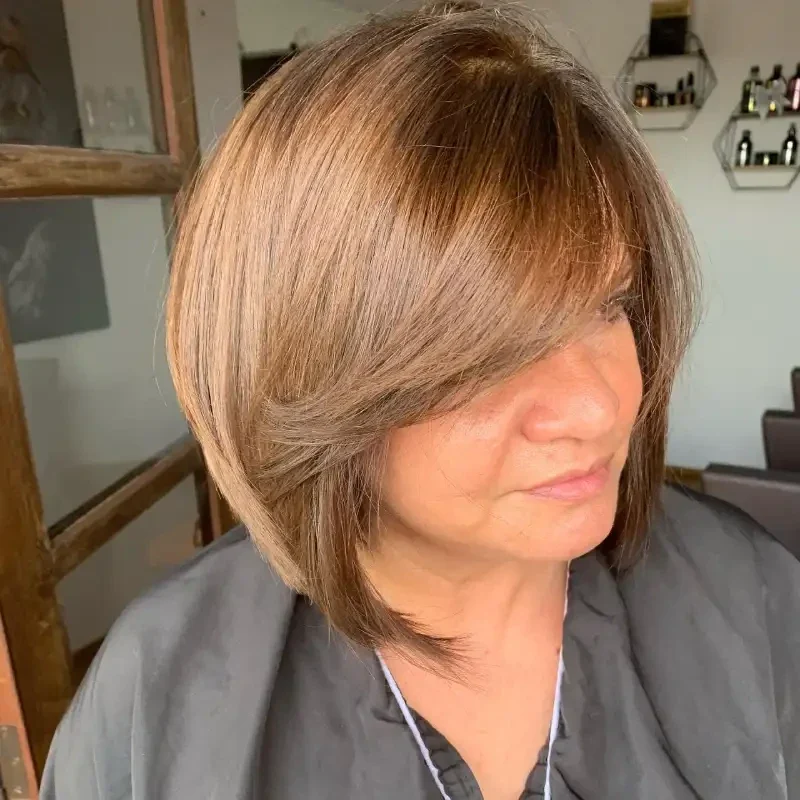
Idea 08
Angled Bob With a Sweeping Front
A long front section gives this bob a clear diagonal line. The side sweep partly covers one eye, making the fringe a major part of the finished look.
- Length
- Jaw to neck
- Front
- Long fringe
- Shape
- Angled front
The back appears compact while the front continues toward the neck. A subtle outward turn near the cheek interrupts the otherwise smooth surface and gives the cut movement without all-over curls.
Wearability note: Decide how much eye coverage you can comfortably wear before copying the fringe. A shorter front piece can preserve the angled idea while keeping reading, driving and glasses use more comfortable.

Idea 09
Jaw-Length Bob With Full Bangs
Straight bangs make a clear horizontal line above the eyes, while the sides curve toward the jaw. The result feels more structured than the wispy-fringe bobs in this gallery.
- Length
- Jaw length
- Front
- Full bangs
- Shape
- Rounded sides
The perimeter stays fairly solid, with little obvious thinning at the ends. This gives you a useful way to compare two separate choices: the density of the bangs and the amount of weight left around the face.
Wearability note: Full bangs need enough hair at the front to sit together. If yours separate naturally, consider a lighter version instead of assuming that more cutting will recreate this photographed fringe.
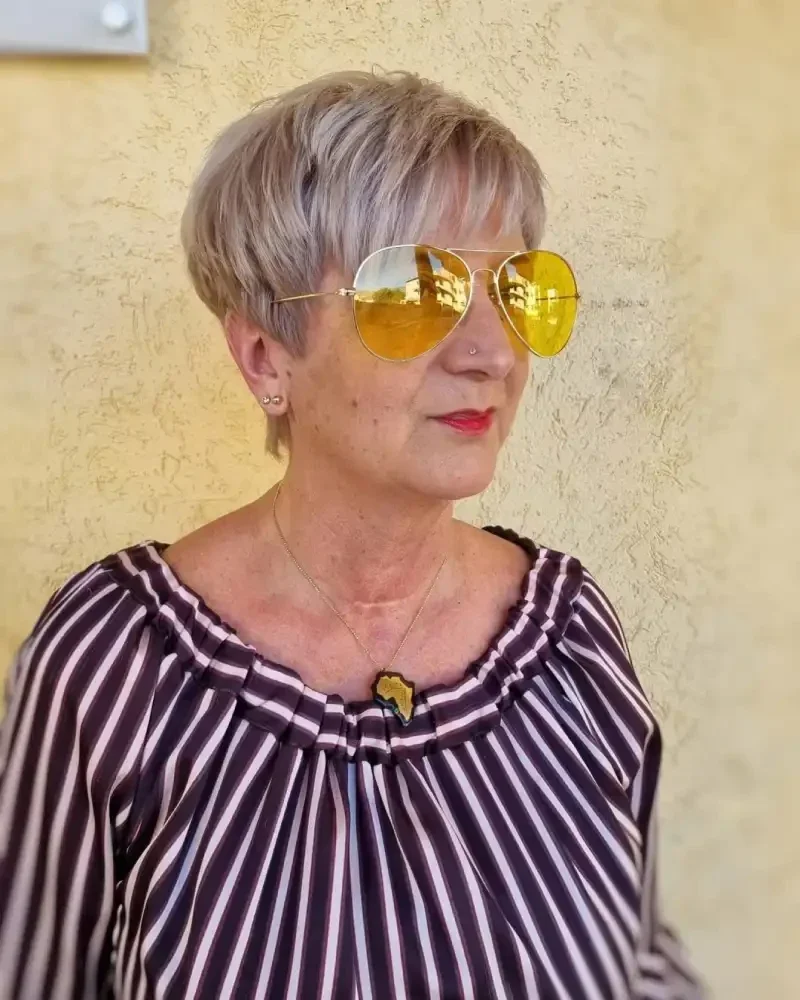
Idea 10
Light Pixie With a Soft Nape
The fringe stays light above the glasses, and small pieces soften the ear area. A little length remains at the nape instead of ending in a sharply clipped line.
- Length
- Pixie
- Front
- Wispy fringe
- Shape
- Longer nape
This crop has a flatter, more relaxed top than the spiky pixie earlier in the gallery. The texture reads as soft and fine, making it useful if you want short hair without a strongly lifted finish.
Wearability note: Compare the fringe with the top rim of your own glasses. A few extra millimeters can determine whether the ends sit comfortably above the frame or keep catching behind it.

Idea 11
Soft Bob With an Open Fringe
The bangs separate into small sections, leaving the center of the forehead partly open. Loose bends around the cheeks keep the jaw-length outline from feeling rigid.
- Length
- Jaw length
- Front
- Open bangs
- Shape
- Loose bends
The crown is rounded but not especially high, and the lower edge has enough weight to remain visible. This is a useful middle ground between a straight bob and a much more layered shag.
Wearability note: If you like the softness, ask to preserve the lower edge rather than adding layers everywhere. The amount of movement will depend on your natural bend and how much styling you want to do.
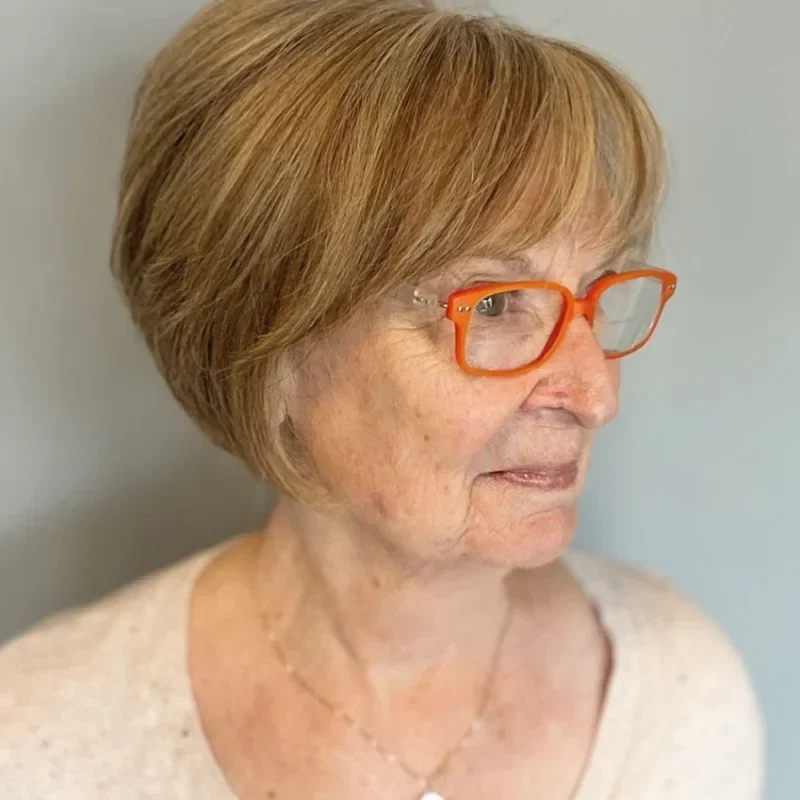
Idea 12
Feathered Crop With Glasses
A longer top rounds over the head while the side sections taper close to the cheek. The fringe travels diagonally above the glasses rather than sitting in a heavy straight line.
- Length
- Ear length
- Front
- Side fringe
- Shape
- Rounded back
The fine ends lie in small overlapping pieces, especially near the temple. That keeps the shape soft even though the overall length is short and the neckline is compact.
Wearability note: Take your glasses to the appointment so the ear pieces can be checked with the frame in place. Leaving slightly longer hair at the temple may preserve this softness as the cut grows.
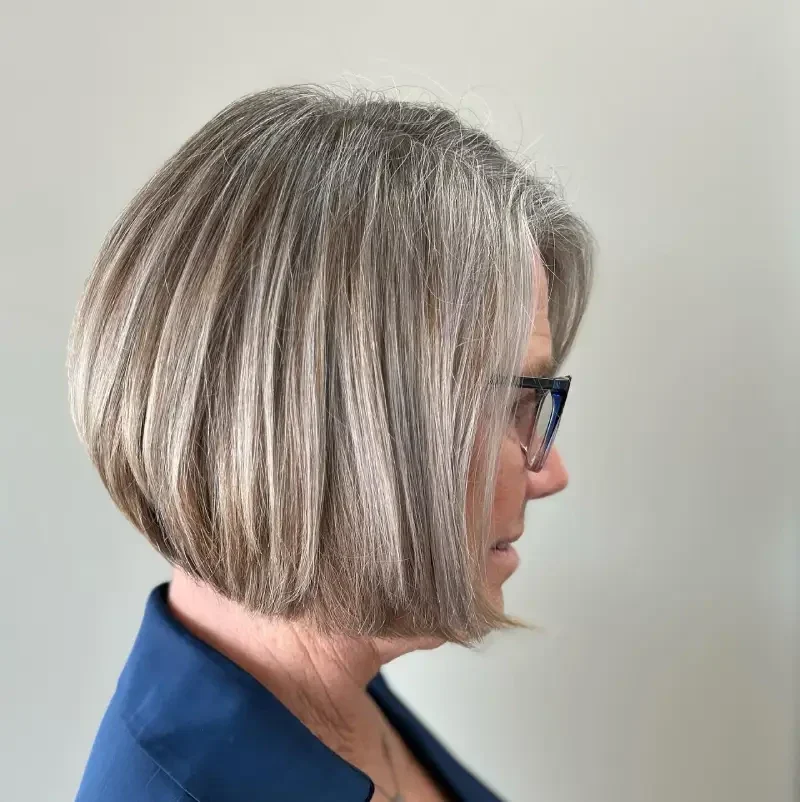
Idea 13
Silver Bob With a Full Edge
The strong lower edge is the main feature of this bob. Smooth vertical strands end together, creating a compact outline beneath the jaw.
- Length
- Jaw length
- Front
- Long front
- Shape
- Blunt perimeter
There is little obvious choppiness through the surface, and the front remains long enough to fall beside the glasses. The photograph shows how a simple perimeter can look intentional without a large fringe or lifted crown.
Wearability note: This is worth comparing if your fine hair becomes see-through after heavy texturizing. Ask for the edge to be assessed on dry hair so it keeps enough weight when it settles.
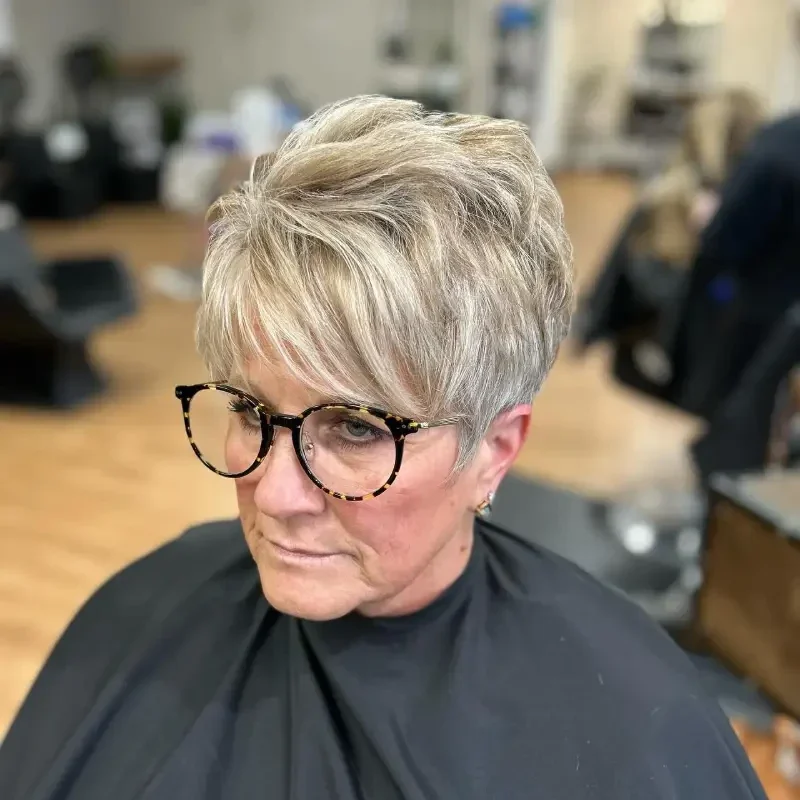
Idea 14
Swept Pixie With Crown Lift
The pale top sweeps forward and across, while the sides stay short above the ears. That longer top creates a soft canopy over the compact base.
- Length
- Pixie
- Front
- Long swept bangs
- Shape
- Lifted crown
Small layers lift at the crown without turning into sharp spikes. The fringe reaches toward the glasses, so the photographed shape is fuller at the front than a closely cropped pixie.
Wearability note: Check where the fringe lands when you look down, not only when facing a mirror. Fine hair can fall forward during the day, and the glasses should remain easy to put on and remove.
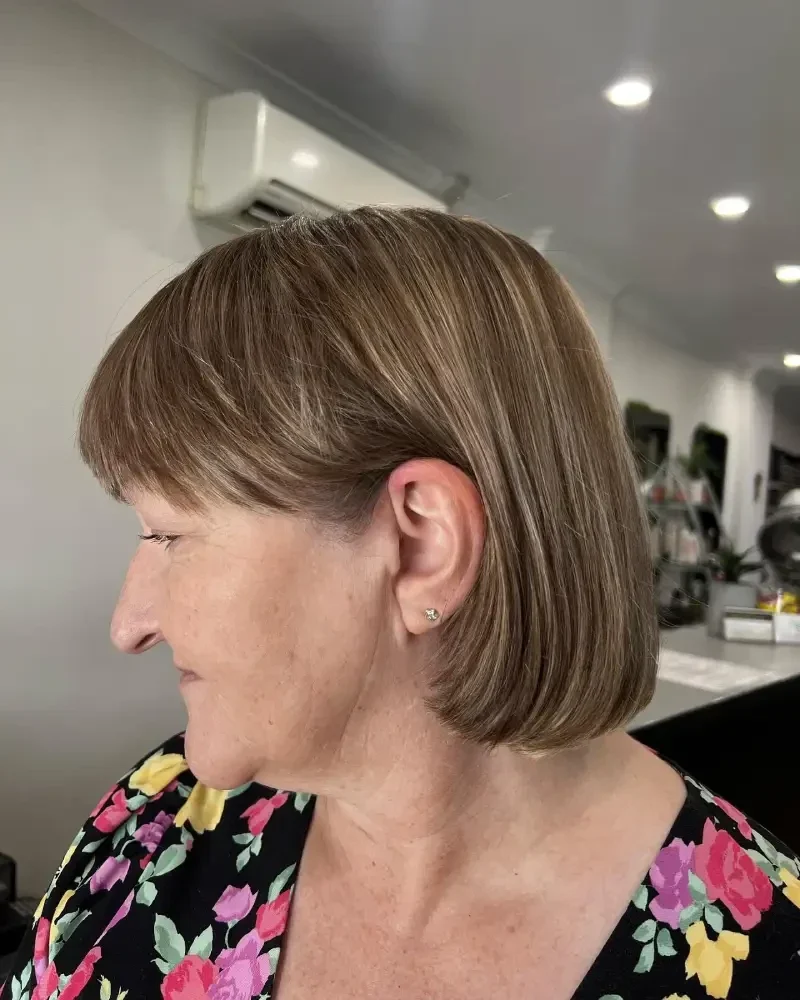
Idea 15
Tucked Bob With Light Bangs
Tucking one side behind the ear reveals how much length this bob keeps at the back. The lower edge curves gently toward the neck instead of ending high at the jaw.
- Length
- Neck length
- Front
- Light bangs
- Shape
- Tucked side
The bangs are short and light, and the crown remains smooth. This makes the photograph useful for readers who want a neat bob that can still be moved away from the face.
Wearability note: Make sure the side is long enough to stay tucked if that matters to your routine. A shorter jawline bob can look similar from the front but may not reach securely behind the ear.
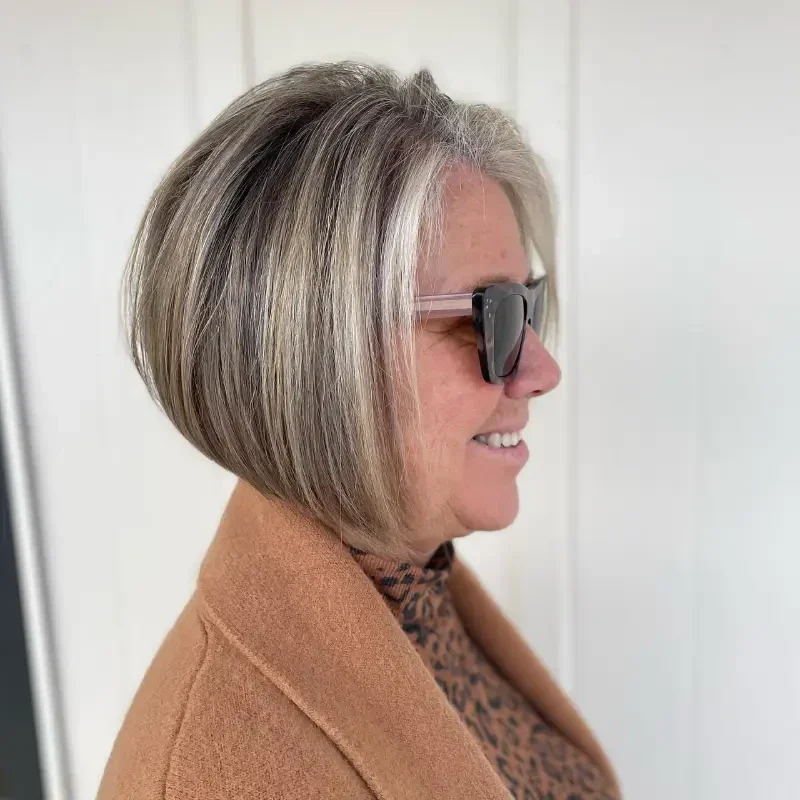
Idea 16
Rounded Salt-and-Pepper Bob
The back rounds outward before narrowing toward the nape. Longer front sections continue below the cheek, giving the bob a gentle forward angle.
- Length
- Jaw length
- Front
- Long front
- Shape
- Rounded back
Gray and darker strands show the direction of the smooth surface. The edge stays relatively full, making this a useful reference for discussing shape without relying on a highly separated or piecey finish.
Wearability note: A rounded back may need some directed drying if your crown lies flat. Ask to see how the cut sits without that lift so you can judge the everyday version as well as the salon finish.
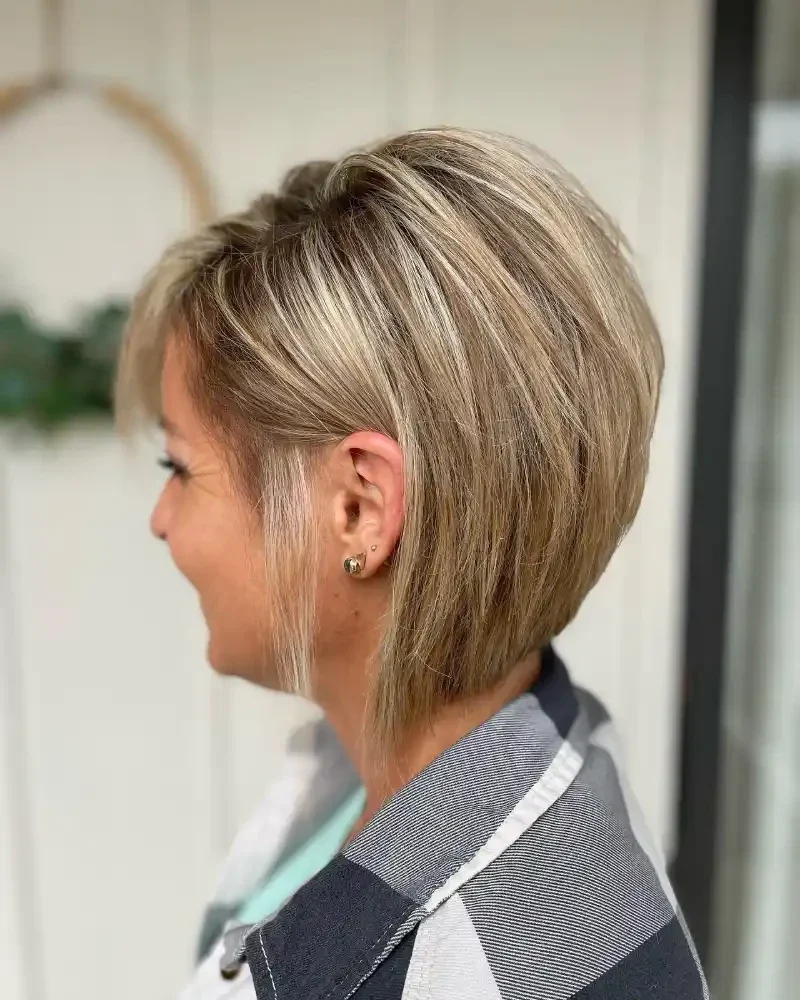
Idea 17
Short Bob With a Tucked Side
The ear tuck reveals a compact back and leaves a narrow front section beside the cheek. This is a good example of how placement changes a bob without changing its length.
- Length
- Jaw length
- Front
- Ear tuck
- Shape
- Rounded crown
The crown forms a smooth rounded shape, and the nape stays neatly contained. The longer face-framing piece keeps the profile soft even with the ear exposed.
Wearability note: Choose this for the outline and tuck rather than assuming the highlights are necessary. If your side sections are very fine, a slightly shorter front may sit more securely without exposing a thin patch.
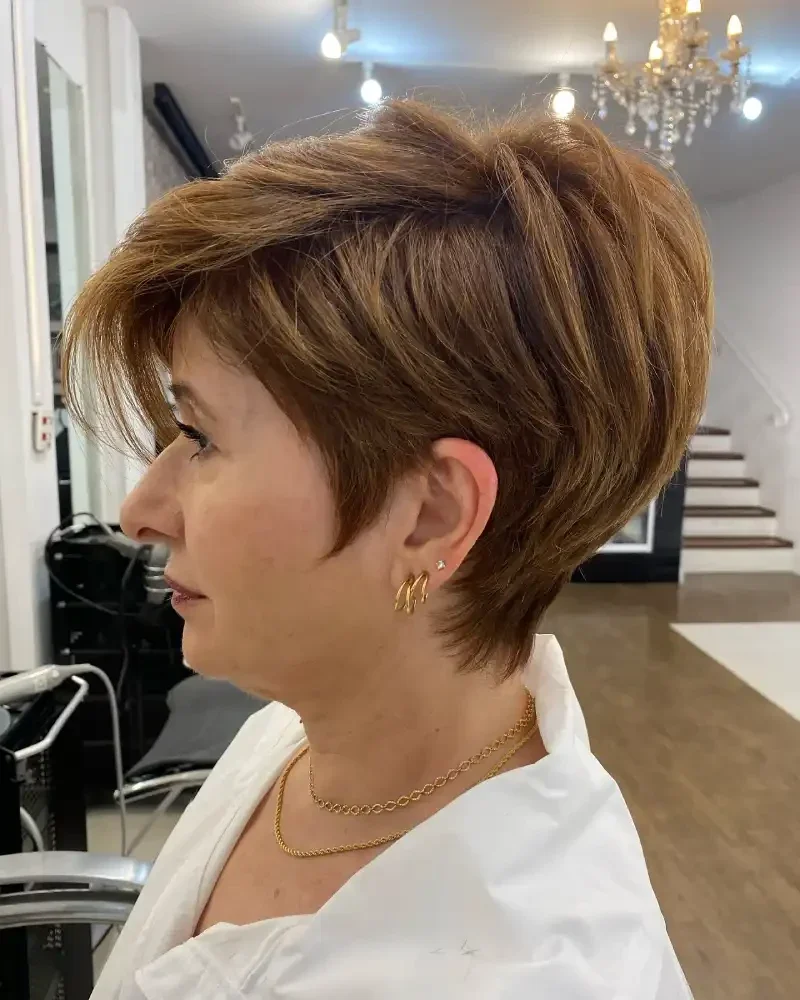
Idea 18
Soft Brown Pixie-Bob
This cut keeps height through the top but narrows neatly behind the ear. A curved front section supplies softness without the length of a full bob.
- Length
- Ear length
- Front
- Swept front
- Shape
- Tapered nape
The layers overlap rather than separating into spikes, producing a rounded profile. The small point in front of the ear and the softly tapered nape are useful details to show a stylist.
Wearability note: A cut like this can lose its outline as the sides grow. Discuss how much ear and neck coverage you want between appointments, particularly if frequent reshaping would be inconvenient.
Fine texture and low density are different
A photograph can show the way a haircut sits, but it cannot measure the diameter of individual strands or establish why hair looks sparse. Use these images to discuss shape with a stylist, rather than treating every model as proof of the same hair type.
If your main concern is a see-through lower edge, compare bobs that retain a solid perimeter. If the issue is hair lying flat at the crown, discuss the part, growth direction and amount of layering before removing more weight.
What to discuss before going shorter
Point out the exact detail you want: a fringe above the glasses, enough length to tuck behind the ear, or a nape that stays off the collar. Those requests are more useful than asking for a cut to make hair universally thicker.
Ask how the shape will sit with your normal drying routine. A lifted crown or curved bob edge may need arranging, while a shorter crop can still need regular reshaping to keep its outline.

About the author
Bella Ross
Bella Ross is the hairstyle editor behind Latest Easy Hairstyles. She curates practical haircut, braid, color, and styling ideas with a focus on looks that are easy to browse, realistic to recreate, and useful for everyday hair decisions.