
Before you choose
Choose the fringe and layer contrast separately
Start with how much forehead you want to cover. Then compare the shortest side layers with the length left underneath. A wispy fringe, fuller bang and open curtain create different fronts, even when the lower haircut reaches a similar place. These photos show finished appearances rather than exact cutting measurements.
The hairstyle gallery
22 shag haircuts with bangs ideas to compare
Compare the visible length, shape, texture, and finish before choosing a salon reference.
Idea 01
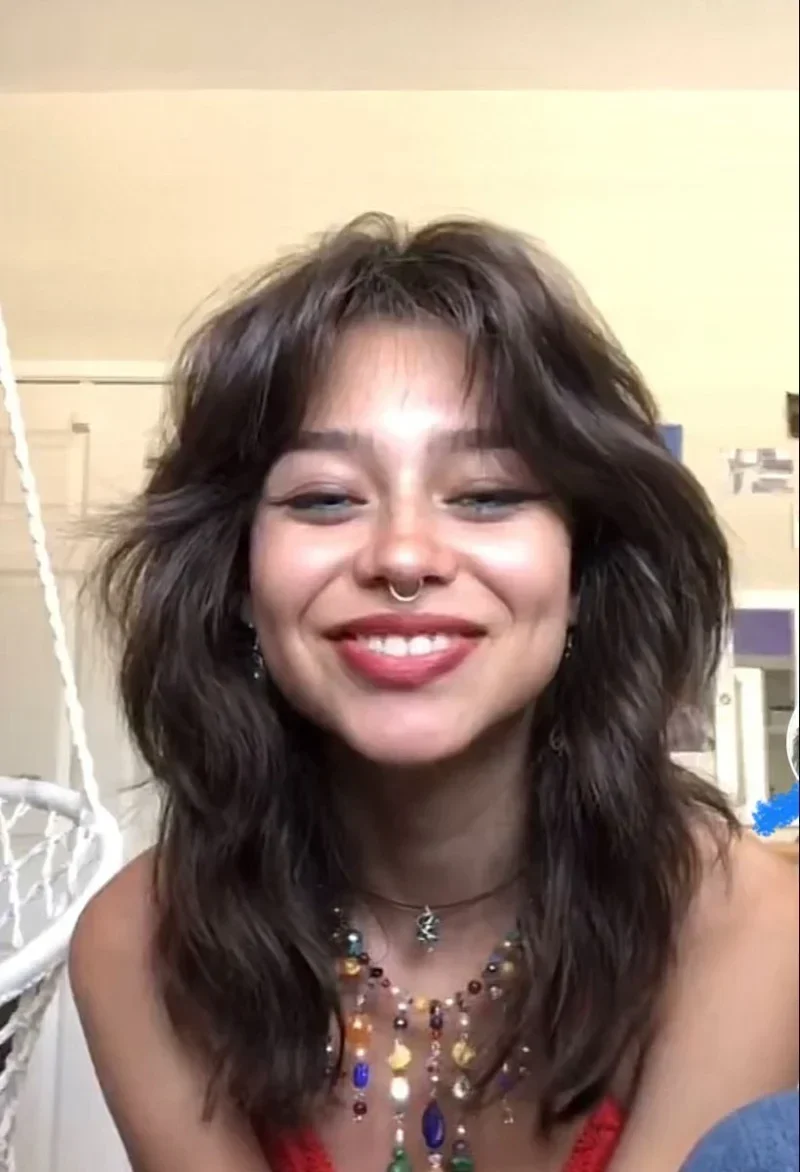
Long Shag With Open Curtain Bangs
Open curtain bangs leave the center of the forehead visible while longer side pieces turn outward. The dark lower lengths stay loose, giving the cut movement without a solid, straight lower edge.
- Shape
- Long loose layers
- Detail
- Open curtain bangs
Shorter sections around the cheeks create most of the width. The ends below them look lighter and more separated than the fuller upper outline.
Wearability note: Compare the opening in the fringe with the shorter, fuller bangs elsewhere. If you like an open forehead, show where you want the shortest front pieces to begin rather than copying the overall length alone.

Idea 02
Choppy Shag With a Broken Fringe
A broken fringe sits across the forehead while short side layers turn away from the cheeks. The combination gives this medium shag a more interrupted outline than long, smoothly connected layers.
- Shape
- Choppy medium layers
- Detail
- Separated forehead fringe
The mirror view shows separation through the upper hair and a narrower lower length. The fringe has small gaps rather than forming a completely solid band.
Wearability note: Choose the amount of forehead coverage independently from the side volume. A fringe with gaps can still fall near the eyes, so compare the shortest central pieces with your comfortable everyday sightline.
Idea 03
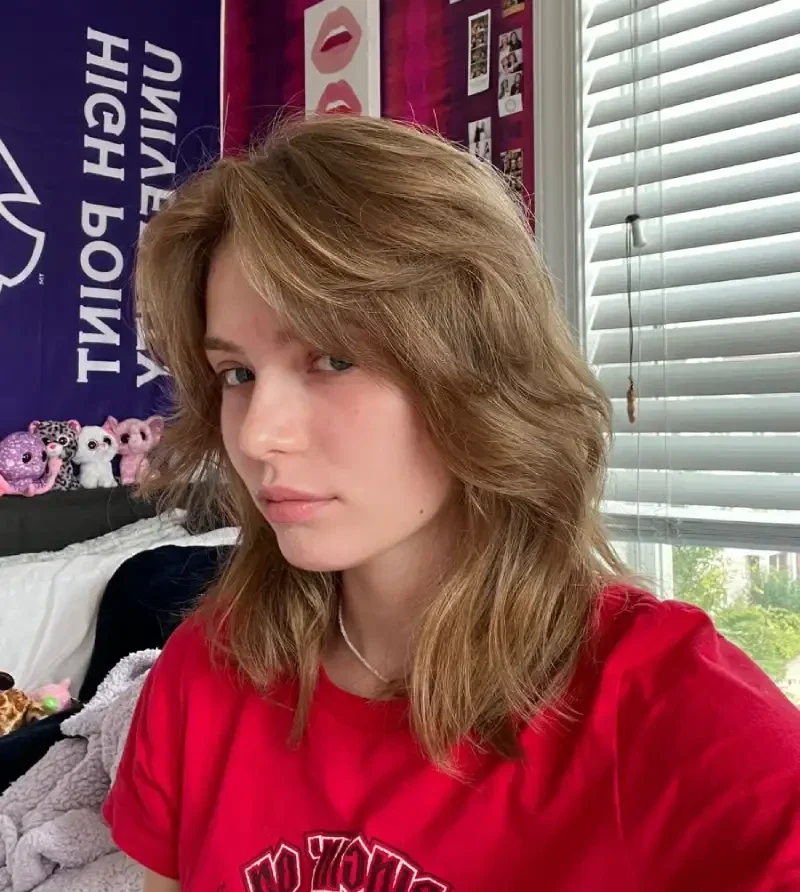
Shoulder Shag With Swept Curtain Bangs
Swept curtain bangs flow into broad layers around the cheeks. The honey-brown hair has a rounded upper shape, with smaller outward turns bringing movement to the shoulder-length ends.
- Shape
- Shoulder-length layers
- Detail
- Swept curtain fringe
The center of the forehead remains open. The side pieces are long enough to blend into the next layer instead of stopping in a sharply separate fringe.
Wearability note: Save this when you want a softer connection between bangs and sides. Explain how far the front should fall toward your cheek before turning outward, especially if you normally wear a different part.
Choose your direction
Keep an open front
Compare curtain openings and longer cheek-level bangs.
Cover more forehead
Look at fuller fringes and shorter separated bangs.
Choose the shag shape
Compare soft long layers with a shorter crown and narrow lower tail.
Idea 04
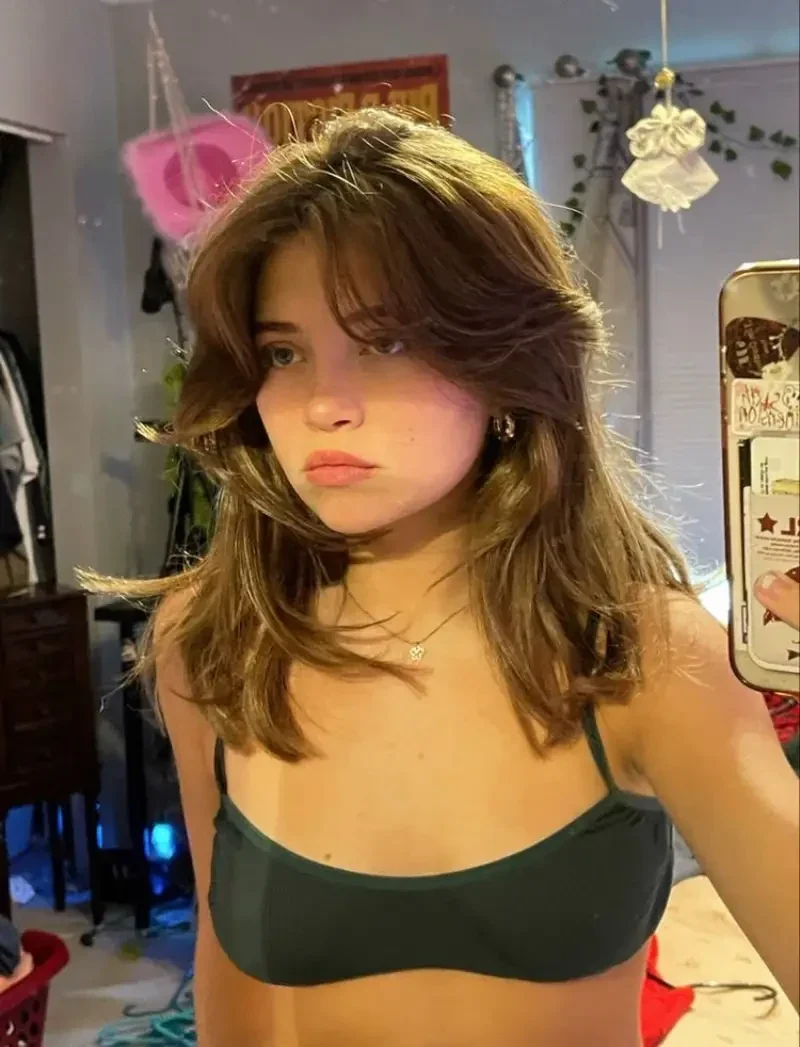
Rounded Shag With Wide Curtain Wings
Wide curtain wings create a rounded frame around the face. The shorter upper layers spread outward before the lower lengths curve back toward the shoulders.
- Shape
- Rounded shoulder layers
- Detail
- Wide curtain wings
The front has a small center opening, with much of its volume sitting beside the eyes and cheeks. The bottom stays relatively light compared with that fuller upper shape.
Wearability note: Compare this width with the narrower, straighter examples. The photograph shows a shaped finish, so discuss how much side volume you want in your normal routine before choosing similarly short upper layers.
Idea 05
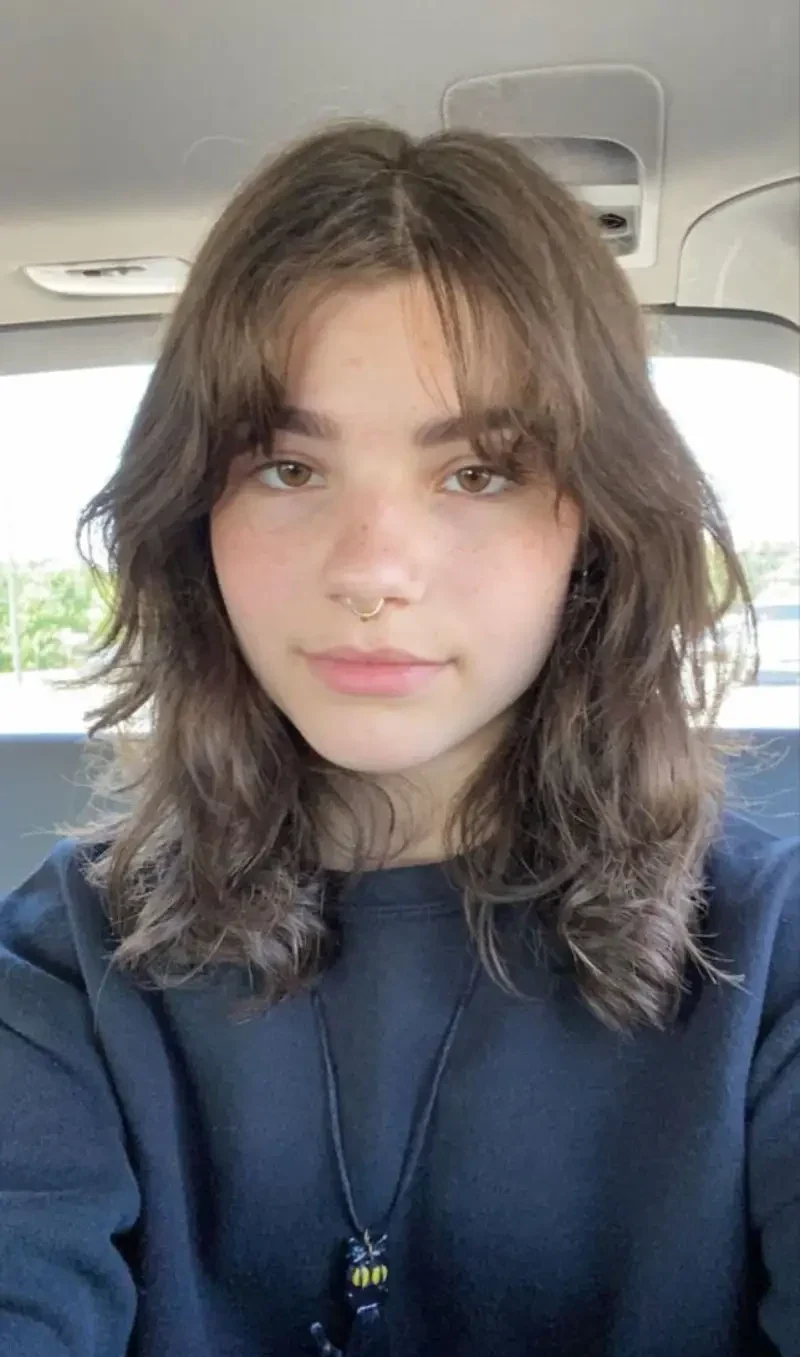
Light Shag With Wispy Bangs
Sparse wispy bangs give this shag a light front edge. The lower hair falls in separated sections around the shoulders, with less pronounced side volume than the fuller feathered cuts.
- Shape
- Light shoulder layers
- Detail
- Sparse wispy bangs
A small center opening breaks up the fringe. The ends turn in different directions rather than forming a dense, evenly curved perimeter.
Wearability note: Use this to compare a lighter fringe with fuller forehead coverage. Describe the spacing you like as well as the length, since two bangs of similar length can leave very different amounts of forehead visible.
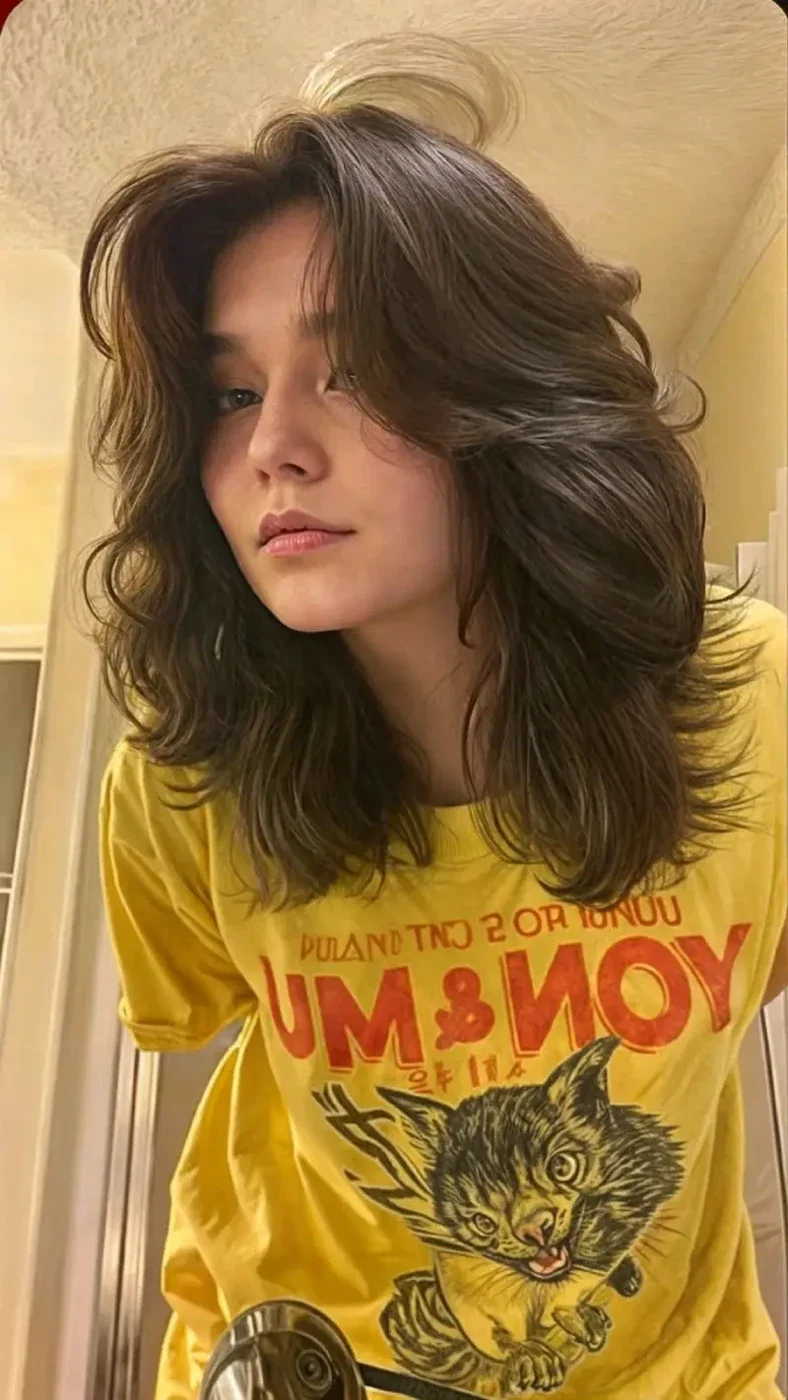
Idea 06
Full Shag With Curved Face-Framing Layers
Long parted bangs sweep into curved layers that frame the cheeks. The upper hair looks full and rounded, while the lower ends break into smaller feathered sections.
- Shape
- Full curved layers
- Detail
- Long parted bangs
The front opening is relatively narrow compared with the wide side movement. Several visible layer lengths create a stepped outline from the face toward the shoulders.
Wearability note: Compare the shortest side layer with the length you want to keep underneath. Short face framing can change what reaches a tie-back, even when the overall haircut still looks fairly long in a portrait.
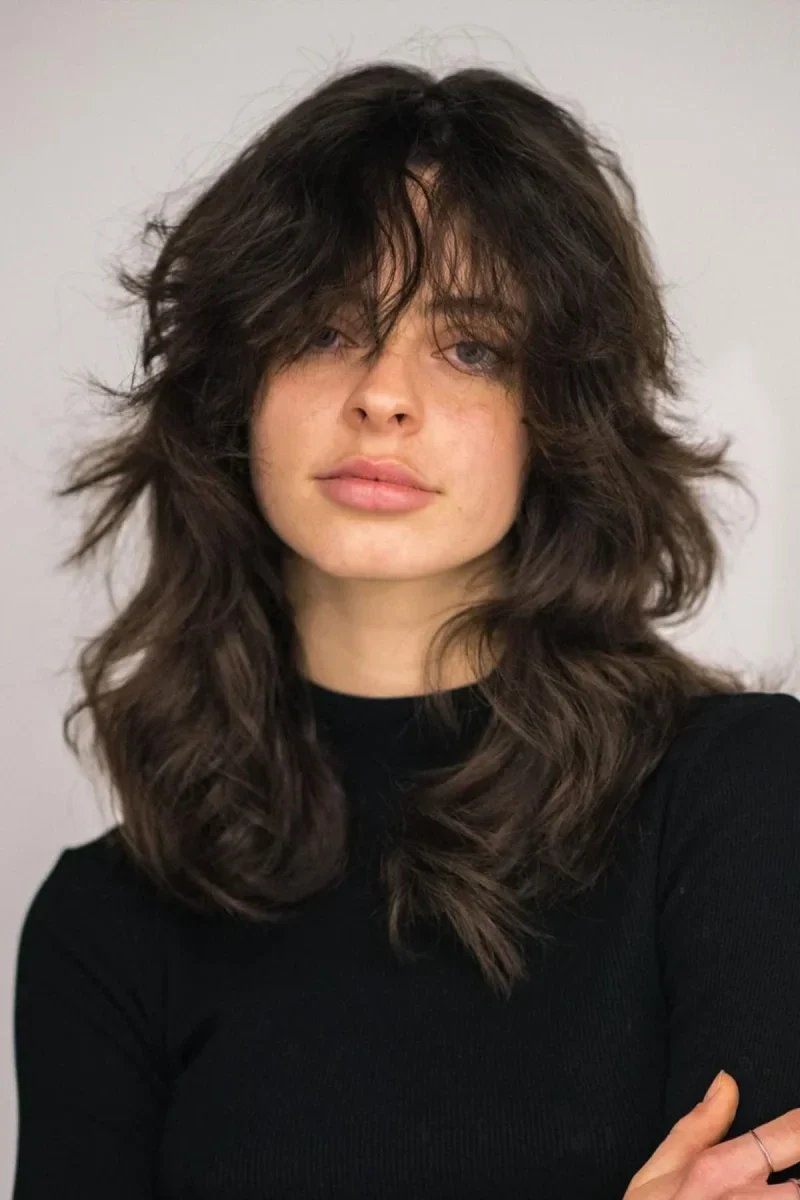
Idea 07
Textured Shag With Eye-Level Bangs
Eye-level bangs give this dark shag a close frame around the eyes. Tousled side layers rise outward, while longer lower pieces keep the cut from reading as a rounded bob.
- Shape
- Tousled medium layers
- Detail
- Eye-level fringe
Small breaks in the fringe soften its edge. The top has visible loose strands and uneven movement rather than a flat, polished surface.
Wearability note: Choose the fringe length with your normal posture in mind. Bangs that sit near the eyes in a still portrait can move forward when you look down, so show the clearance you prefer.
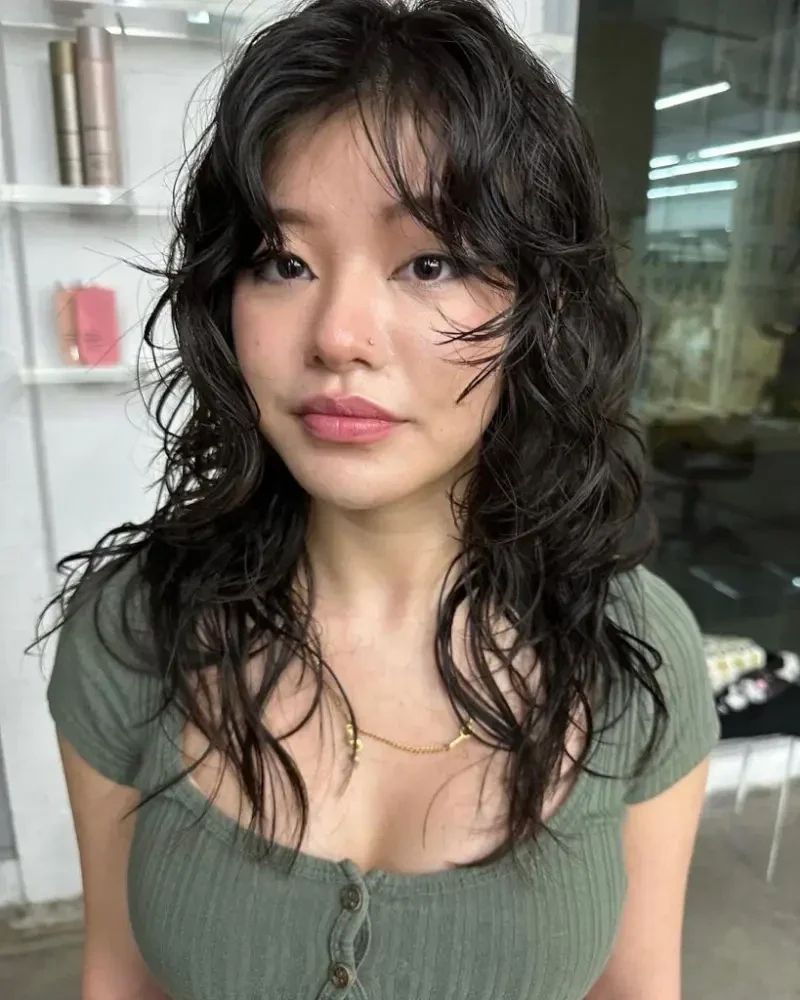
Idea 08
Piecey Shag With a Wet-Look Finish
Separated strands give this dark shag a wet-look finish. The thin split fringe leaves parts of the forehead open, while longer pieces curve beside the cheeks.
- Shape
- Separated dark layers
- Detail
- Split piecey fringe
The lower outline is narrow and uneven, with individual sections visible against the top. This surface finish makes the layers read differently from the brushed, fuller examples.
Wearability note: Save the shape and finish as separate preferences. A photograph of grouped, damp-looking strands cannot show exactly how the same cut will fall when fully dry and worn in your usual texture.
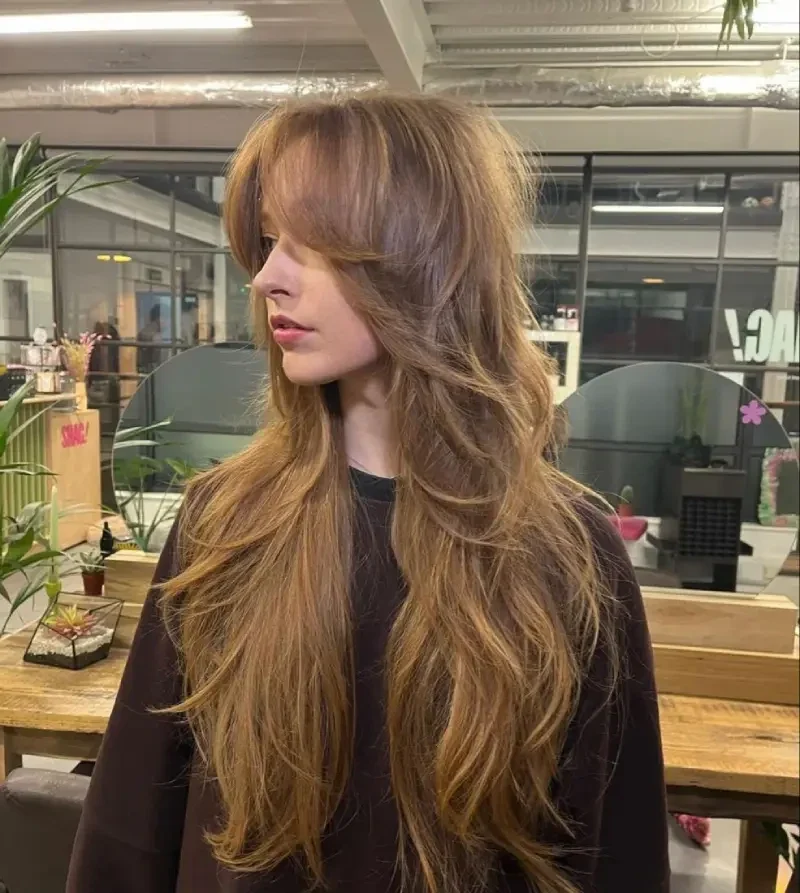
Idea 09
Long Feathered Shag With Curtain Bangs
Curtain bangs lead into sweeping layers around the cheeks and shoulders. Long lower pieces preserve the overall length, while the upper layers create a much shorter frame around the face.
- Shape
- Long feathered outline
- Detail
- Curtain bangs
The side view makes the difference between the short upper layers and long ends easy to see. Lighter strands also help separate the overlapping sections.
Wearability note: Compare the upper layer length with the amount of fullness you want to retain below. This is a useful reference for keeping long hair while changing the front, rather than shortening the whole perimeter.
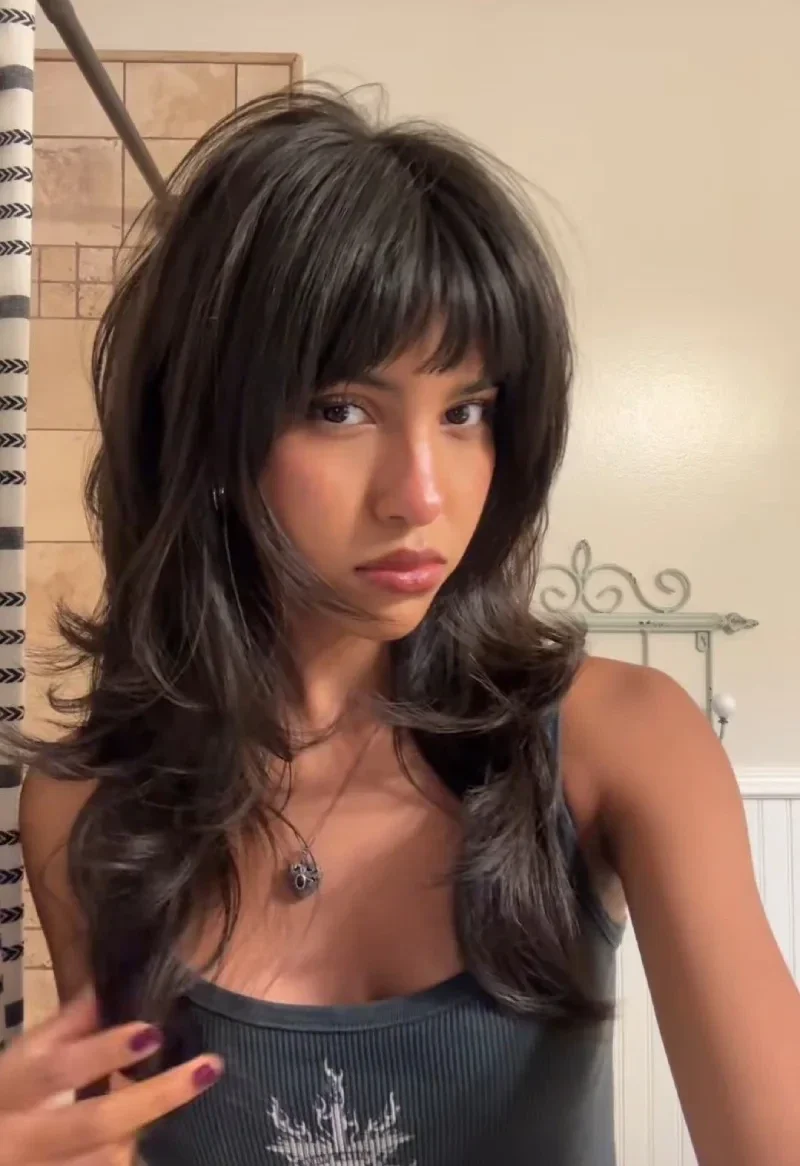
Idea 10
Long Dark Shag With a Fuller Fringe
A fuller fringe covers most of the forehead above long dark layers. The side pieces curve outward near the cheeks, giving the front a stronger frame than the open-curtain examples.
- Shape
- Long dark layers
- Detail
- Full forehead fringe
The lower lengths stay relatively smooth before turning at the ends. Small gaps in the bangs keep the edge from looking like a completely blunt line.
Wearability note: Choose this for comparing fuller forehead coverage with a long lower shape. Discuss the fringe width too, since how far it extends toward the temples changes the amount of hair beside the face.
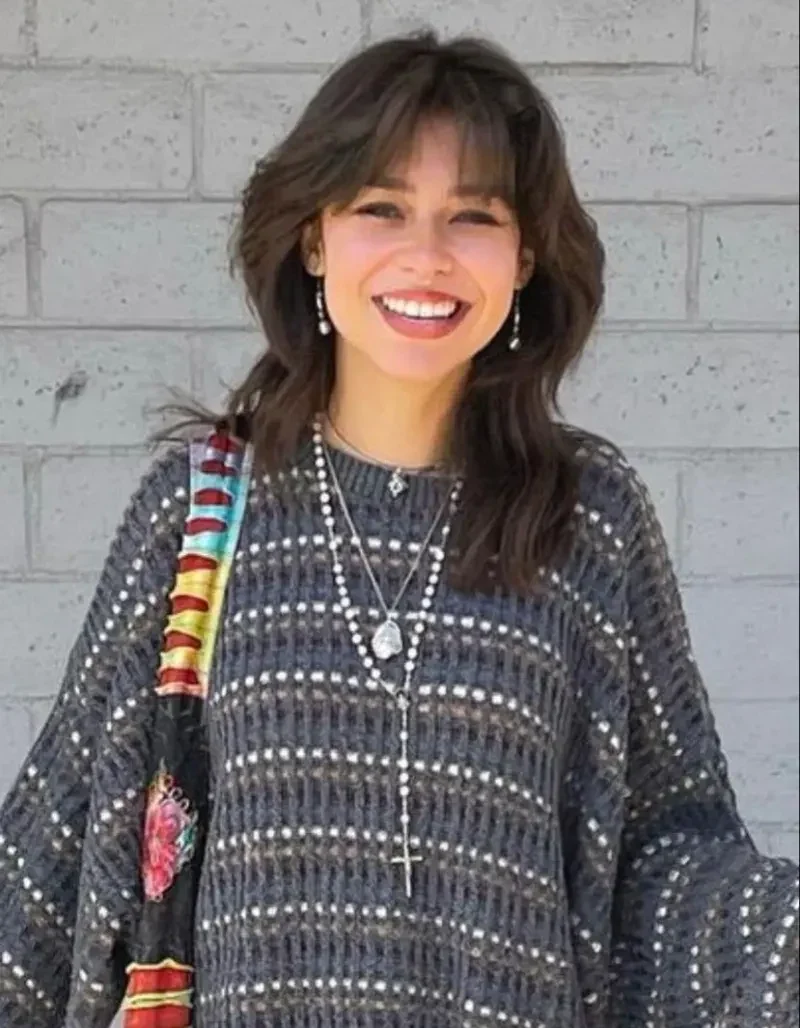
Idea 11
Short Upper Layers With a Longer Tail
Short upper layers create width around the head while a narrower tail keeps length below. A broken forehead fringe connects that fuller top to the front.
- Shape
- Short upper layers
- Detail
- Narrow lower tail
The difference between the upper and lower sections is more pronounced than in a softly blended layered cut. Small outward pieces interrupt the outline near the cheeks.
Wearability note: Use this when comparing a stronger shag shape with gentler layering. Ask to see the back length as well, because a front portrait can hide how much of the lower tail remains.
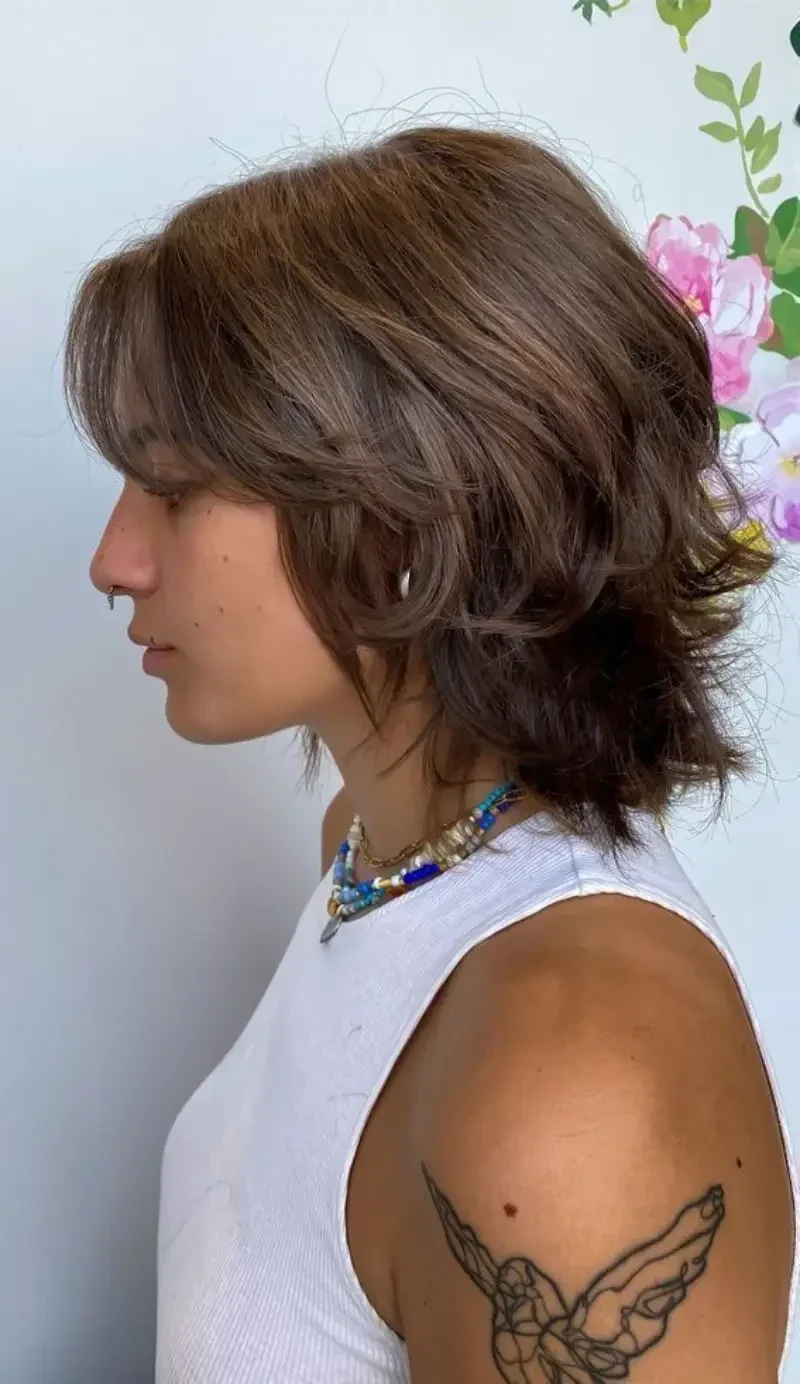
Idea 12
Short Shag With a Curved Side Fringe
A curved side fringe meets short layers around the cheek in this profile view. The hair extends farther at the nape, creating a longer back beneath the rounded upper shape.
- Shape
- Short layered nape
- Detail
- Curved side fringe
Several small ends turn outward behind the ear. The side angle explains those changes in length more clearly than a straight-on portrait would.
Wearability note: Save this angle if the ear coverage and nape are what you want to change. Pair it with a front reference so the fringe opening is clear instead of leaving that detail to guesswork.
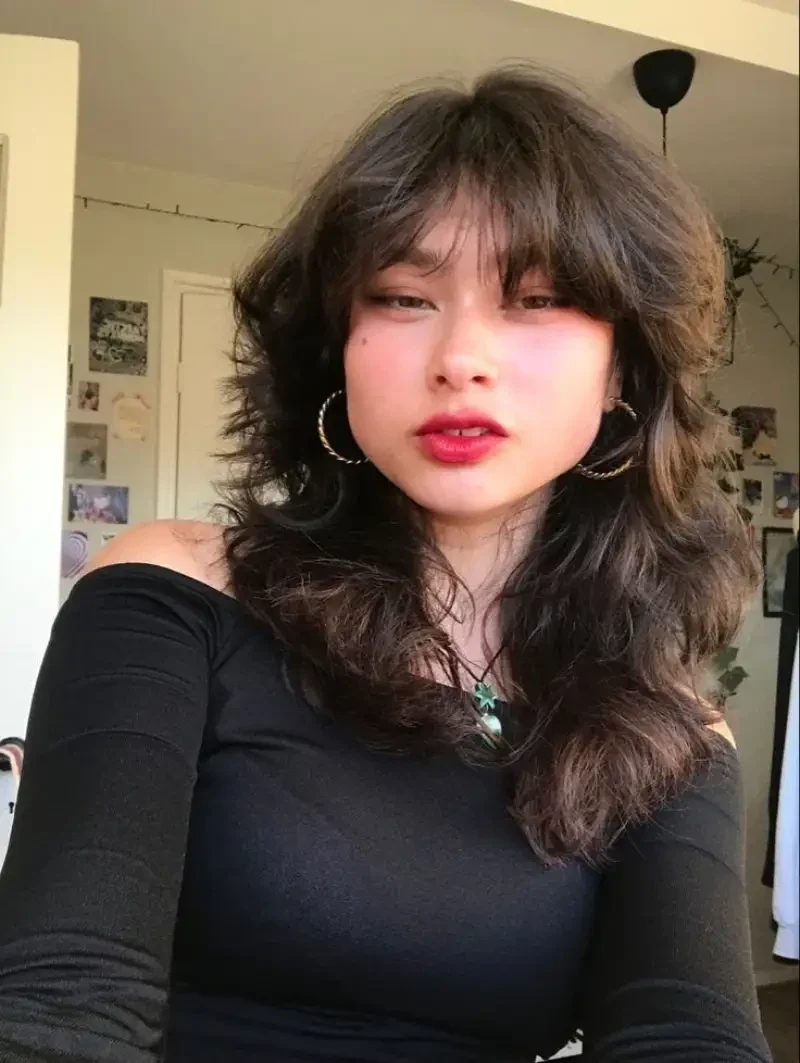
Idea 13
Long Tousled Shag With a Soft Split Fringe
A soft split fringe opens slightly above the eyes and blends into shorter cheek-level sections. The lower hair remains long, with loose bends breaking up the ends.
- Shape
- Long tousled layers
- Detail
- Soft split fringe
The top has an airy, irregular outline rather than a tightly rounded finish. Longer sections sit beneath the shorter side layers, making the change in length visible from the front.
Wearability note: Compare the loose surface with the smoother long shags. If you like the cut but prefer a flatter finish, explain that difference so the amount of upper layering suits your everyday preference.
Idea 14
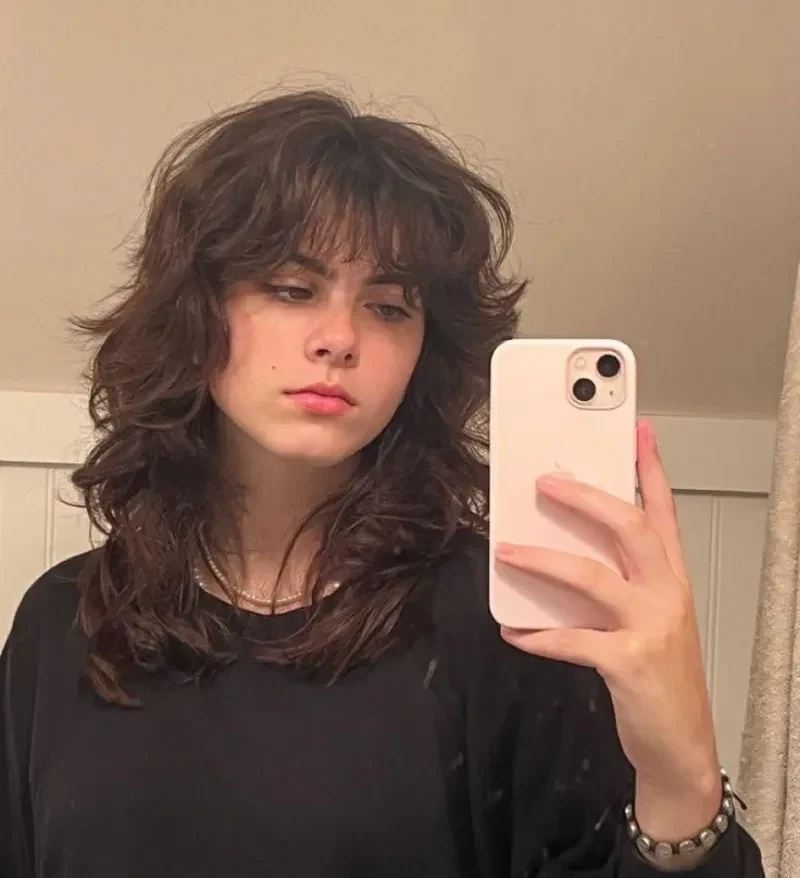
Wavy Shag With a Narrow Fringe
Loose waves spread around the shoulders beneath a narrow, piecey fringe. The shortest bangs sit near the middle, with longer sides creating a wider frame around the cheeks.
- Shape
- Loose shoulder waves
- Detail
- Narrow forehead fringe
The upper layers lift away from the face in separate bends. The lower edge stays irregular, which helps distinguish the shag shape from a single-length waved cut.
Wearability note: Look at the fringe when deciding how much of your forehead to cover. A narrow central section leaves more flexibility at the sides, but the exact opening should be compared with your own part.

Idea 15
Short Shag With Light-Tipped Layers
An open curtain fringe leads into short layers that skim the neck and shoulders. Lighter ends make the small outward turns more visible against the darker upper hair.
- Shape
- Short shoulder-skimming layers
- Detail
- Open curtain fringe
The front stays open in the center, while the side sections create most of the movement. The lower length looks compact compared with the longer shag references.
Wearability note: Compare the cut without relying on the lighter tips to explain it. Color contrast highlights the ends here, but the fringe opening and length around the neck are separate decisions.
Idea 16
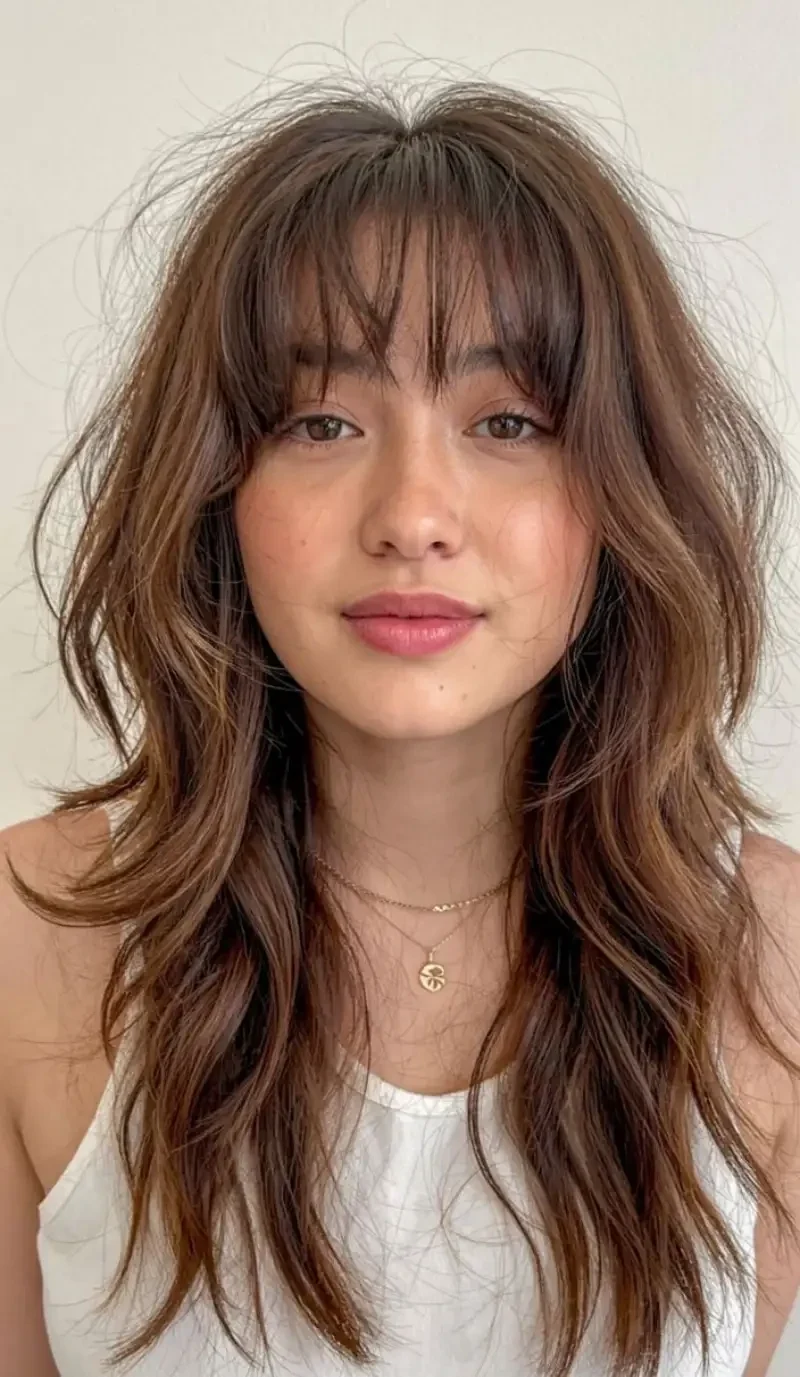
Long Shag With Fine Forehead Bangs
Fine bangs break across the forehead above long, separated layers. The side pieces begin around the cheeks, creating a clear front frame without removing all the lower length.
- Shape
- Long separated layers
- Detail
- Fine forehead bangs
Small gaps make the bangs lighter than the fuller dark fringe examples. The ends remain distinct rather than gathering into a single heavy lower line.
Wearability note: Save this when the fringe weight is more important than a dramatic crown shape. Compare how much forehead remains visible, then decide separately how short the side layers should be.
Idea 17
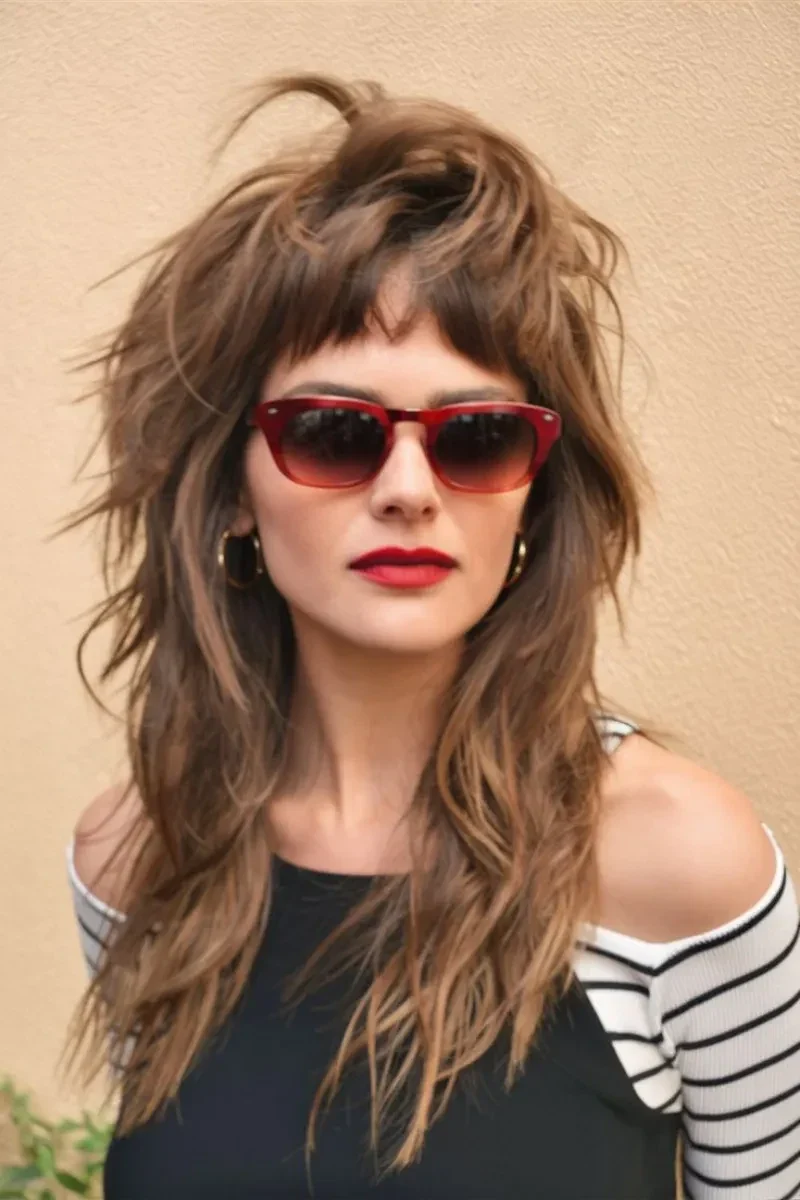
Ruffled Shag With Short Bangs
Short uneven bangs sit above a ruffled crown in this stronger shag shape. Much longer lower pieces create a clear contrast with the short, lifted upper hair.
- Shape
- Ruffled short crown
- Detail
- Short uneven bangs
The side outline has small pointed ends rather than broad smooth curves. Sunglasses obscure part of the front, but the short fringe and irregular crown remain visible.
Wearability note: Use this to compare the contrast between a short top and long base. Bring another front view if eye clearance matters, since the glasses limit how much of the fringe position can be judged.

Idea 18
Shoulder Shag With a Long Soft Fringe
A long soft fringe reaches toward the eyes above shoulder-length layers. Small outward pieces at the sides create movement without the sharply separated upper and lower lengths of a stronger wolf-style cut.
- Shape
- Shoulder-length shag
- Detail
- Long soft fringe
Lighter ends make the shag’s lower outline easier to follow. The crown looks softly lifted, with visible flyaways keeping the surface relaxed.
Wearability note: Compare the fringe depth with your comfortable eye clearance before saving this as a main reference. The lighter ends are optional; the useful haircut details are the side-layer placement and shoulder-length perimeter.
Idea 19
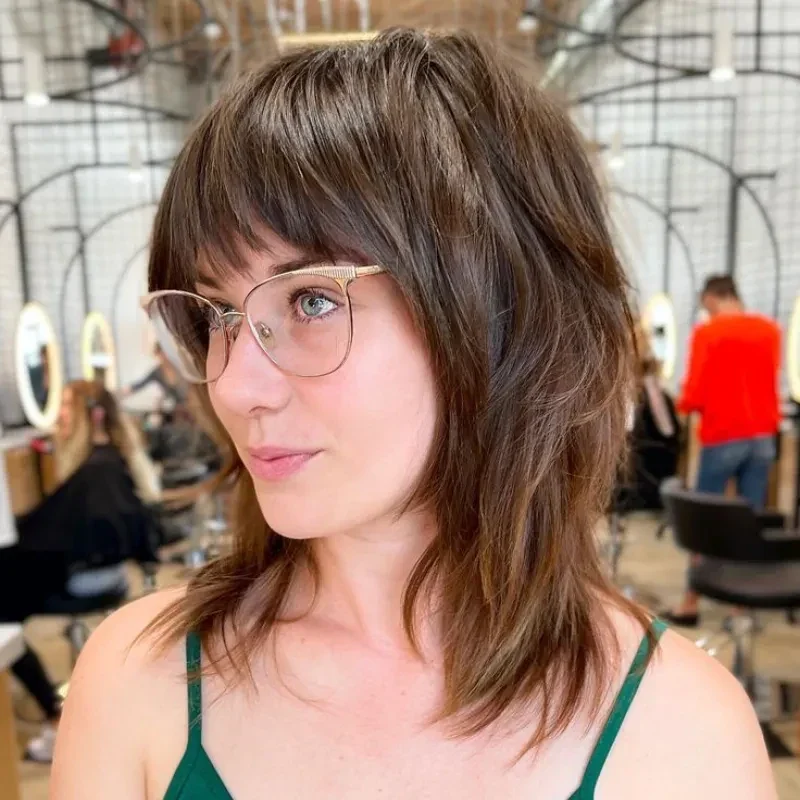
Compact Shag With Bangs and Glasses
Short forehead bangs sit above the glasses while longer side layers frame the cheeks. The compact lower shape keeps this shag closer to the neck than the long-layered examples.
- Shape
- Compact medium layers
- Detail
- Forehead fringe with glasses
The sides curve outward in small sections. A fairly full top contrasts with the thinner-looking ends, making the layered outline clear in three-quarter view.
Wearability note: Compare the bang line with the top of your own frames. The fringe and side pieces should be discussed together, especially if you prefer hair to stay away from the arms of your glasses.
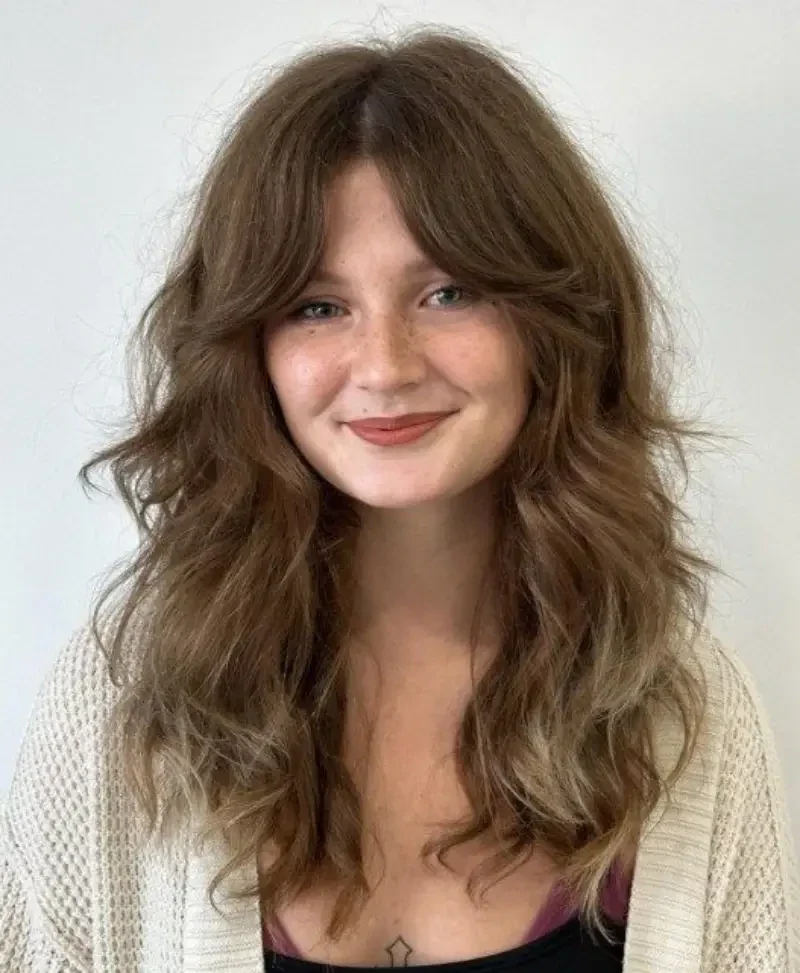
Idea 20
Soft Long Shag With Parted Bangs
Parted bangs sweep into soft long layers with loose waves below. The outline is rounded around the cheeks before becoming narrower through the lower hair.
- Shape
- Soft long layers
- Detail
- Parted curtain bangs
The curtain opening exposes the center of the forehead. The ends turn in several directions without creating the strong, sharply stepped shape seen in the shorter-crown shags.
Wearability note: Choose this for a gentler interpretation of a shag with bangs. Explain how much layering you want around the face versus through the back, rather than using the word shag as the only instruction.
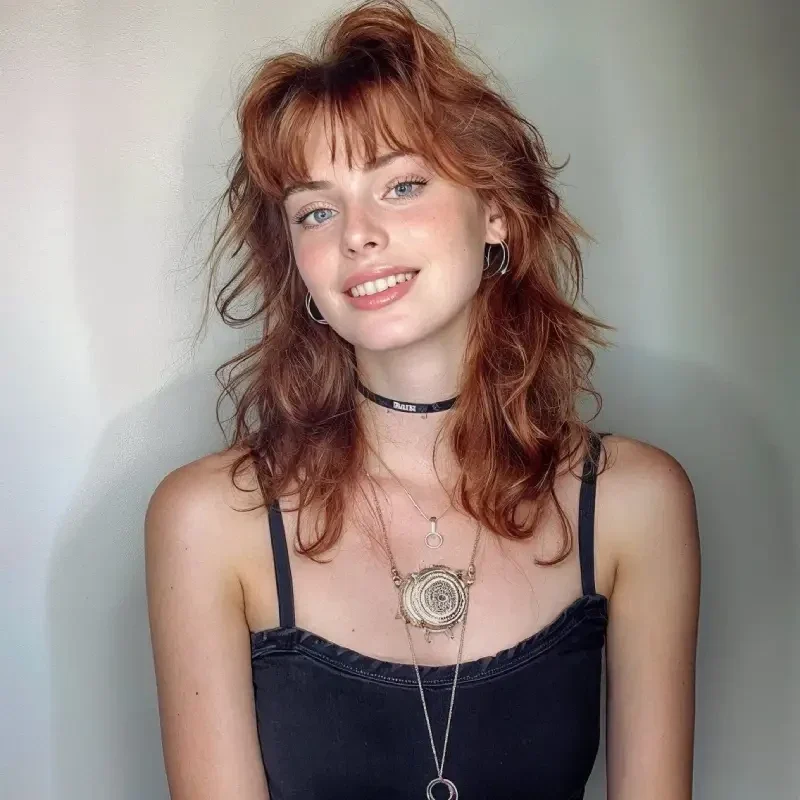
Idea 21
Curly Copper Shag With Short Bangs
Short separated bangs give this copper shag a different front from the long curtain styles. Loose curls spread around the sides and continue into the shoulder-length lower hair.
- Shape
- Loose copper curls
- Detail
- Short separated bangs
The fringe has small visible spaces rather than a dense straight edge. The upper hair looks lifted, while individual curls create an irregular perimeter.
Wearability note: Compare the fringe in the texture you normally wear. Curved strands can sit at a different apparent length from straighter bangs, so use the photograph to discuss visible forehead coverage rather than exact measurements.

Idea 22
Long Blonde Shag With an Open Fringe
A wispy open fringe leads into cheek-level layers in this long blonde shag. The lower hair stays long and narrow, while loose strands add movement around the upper outline.
- Shape
- Long blonde layers
- Detail
- Open wispy fringe
The outdoor view shows a less controlled surface than the salon portraits. The side pieces and pale lower ends remain visible despite that movement.
Wearability note: Use this to compare a looser everyday appearance with the more shaped finishes. Wind and posture can change the fringe opening, so choose the desired shortest pieces rather than expecting each strand to stay exactly as photographed.
Show the shortest layer you want
Two photographs can have similar overall length but very different upper layers. Point out the fringe, cheek-level pieces and lower edge separately so the reference explains more than a general tousled finish.
Take a side or back view when the nape and lower tail matter. A front portrait can hide those lengths, especially when hair is brought over the shoulders.

About the author
Bella Ross
Bella Ross is the hairstyle editor behind Latest Easy Hairstyles. She curates practical haircut, braid, color, and styling ideas with a focus on looks that are easy to browse, realistic to recreate, and useful for everyday hair decisions.