Before you choose
Start with the edge above your forehead
These fringe haircuts compare short, blunt, broken and side-swept fronts. The focus is the visible front edge, including how it sits near the eyebrows and how it meets the shorter sides. Compare the photographed length with your own growth direction and texture rather than choosing by the top height alone.
The hairstyle gallery
15 fringe haircuts for men ideas to compare
Compare the visible length, shape, texture, and finish before choosing a salon reference.
Idea 01
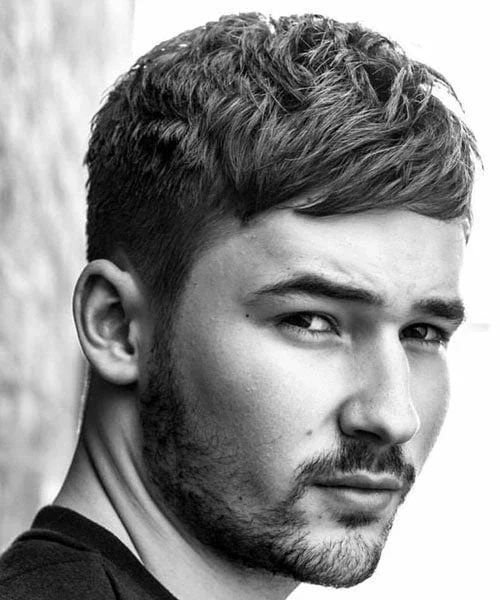
Short Side Fringe With a Textured Top
A short fringe moves to one side below a textured top. The front ends sit above the eyebrows, leaving more of the forehead visible than the longer diagonal examples.
- Shape
- Short side fringe
- Detail
- Textured crown
The side outline stays compact and connects with the upper hair. Small changes in direction across the crown keep the surface from looking completely flat.
Wearability note: Choose this if you want a fringe without much eye coverage. Compare the front edge at rest, since a short side sweep may sit differently when it falls straight forward.
Idea 02
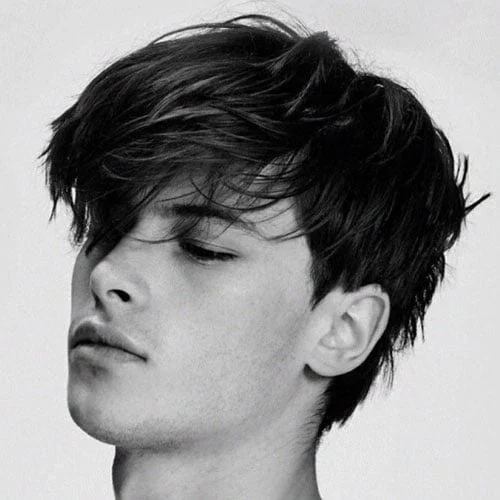
Long Dark Fringe Across the Eyes
A long dark fringe crosses the eyes in separated diagonal pieces. The softer sides connect with the top, creating a longer outline around the ears.
- Shape
- Long diagonal fringe
- Detail
- Soft layered sides
The front edge is broken rather than blunt, with several thin ends extending beyond the main section. This makes the fringe look lighter despite its considerable length.
Wearability note: Choose this only if you enjoy hair falling close to your eyes. Compare the amount of coverage with shorter options, especially if you prefer an unobstructed view during work or sport.
Idea 03
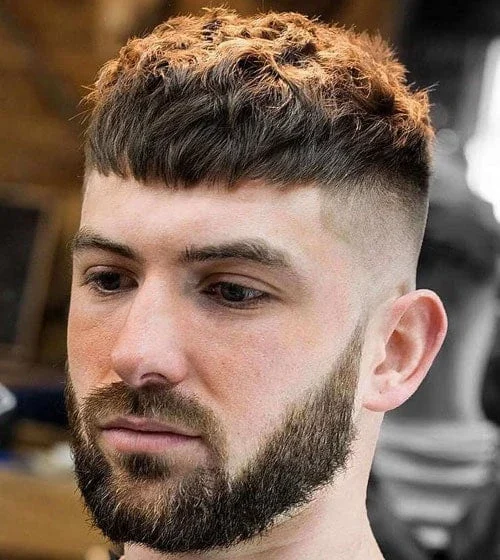
Short Textured Fringe Above a Fade
A short textured fringe forms a narrow band above the forehead. The closely faded sides create contrast beneath the longer, softly wavy upper hair.
- Shape
- Short forward fringe
- Detail
- Close side fade
The front edge has small irregularities rather than a perfectly straight line. The top keeps enough lift to avoid looking flat even though the fringe itself stays compact.
Wearability note: Choose this if you want a forward direction without a long hanging front. Compare the side fade height as well as the fringe length when explaining the shape.
Choose your direction
Choose the coverage
Compare open eyebrows with longer eye-level pieces.
Choose the edge
Look at blunt, broken and curly fronts.
Check the connection
Compare fuller sides with closely cut contrast.
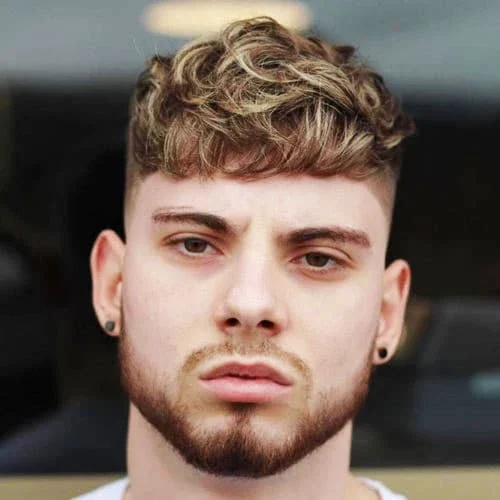
Idea 04
Blunt Front With Loose Waves Above
A short blunt fringe creates a clear horizontal edge beneath loose waves. The front line gives the hairstyle structure while the upper sections remain more irregular.
- Shape
- Blunt short fringe
- Detail
- Loose top waves
The sides stay shorter than the top, keeping the width controlled around the temples. The difference between the straight edge and wavy surface is the main detail to compare.
Wearability note: Choose this if you like a defined front without a completely smooth top. Discuss how straight you want the edge, since a softer broken fringe would change the overall effect.
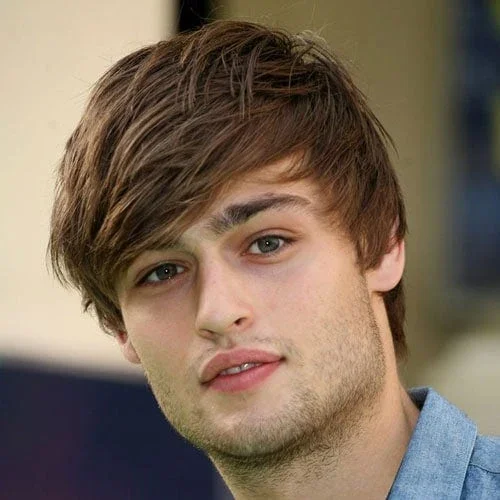
Idea 05
Long Brown Side Fringe
A long brown fringe sweeps diagonally across the forehead, ending near one eye. Fuller sides connect it with the rest of the haircut rather than a close fade.
- Shape
- Long side fringe
- Detail
- Fuller side length
The top lies in overlapping straight sections with some lift at the crown. The diagonal edge makes the front feel directional without a sharply defined side part.
Wearability note: Choose this if you prefer softer side coverage with your fringe. Compare the longest piece near the eye and the amount of ear coverage as two separate length decisions.
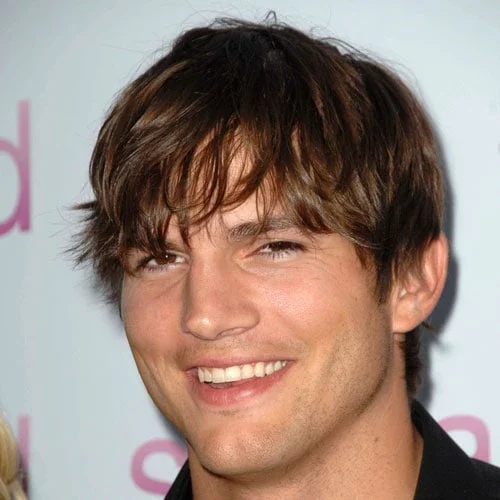
Idea 06
Separated Fringe With Longer Sides
Separated brown pieces fall around eyebrow level while longer sides soften the outline near the ears. The fringe has small openings instead of one solid front panel.
- Shape
- Separated brow-length fringe
- Detail
- Longer side outline
The top keeps a loose, irregular surface. This connects the front with the fuller side length and gives the shape more movement than a compact blunt crop.
Wearability note: Choose this if you like a softer fringe with some forehead showing between pieces. Discuss the side length too, since a close fade would make the same front look more disconnected.
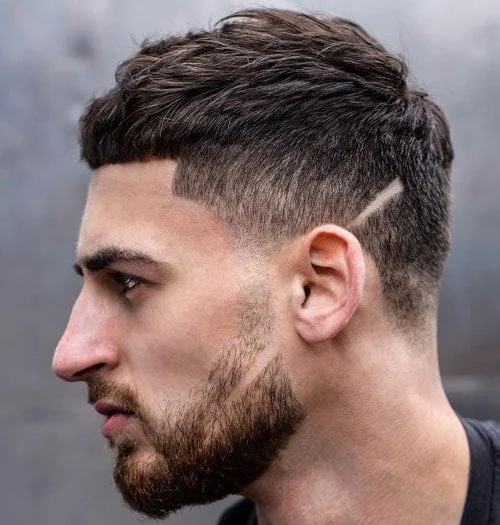
Idea 07
Blunt Crop With a Diagonal Side Line
A short blunt fringe sits above a closely cut side with a diagonal carved line. The straight front edge gives the hairstyle a strong, compact frame.
- Shape
- Blunt dark fringe
- Detail
- Diagonal carved line
The top has small waves and uneven texture above that clear edge. The carved side detail is separate from the fringe, adding another angle near the ear.
Wearability note: Choose the front line first, then decide whether the side design also appeals to you. A plain side would keep the same fringe direction with less decorative detail.
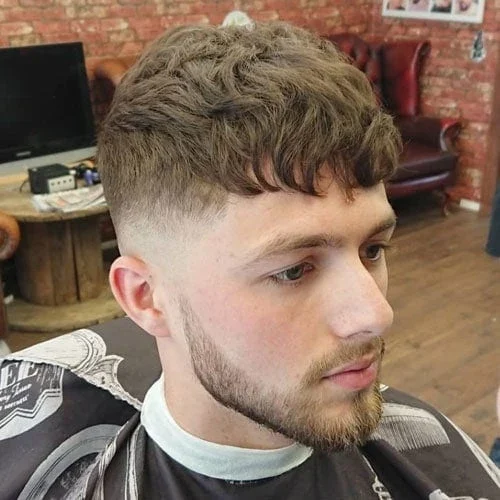
Idea 08
Soft Forward Waves With a Low Fringe
Soft brown waves move forward into a short broken fringe. The ends sit high enough to keep the eyebrows visible while adding a clear downward direction at the front.
- Shape
- Soft forward waves
- Detail
- Short broken fringe
The close side contrasts with the fuller wavy top. Small bends across the front prevent the edge from looking as rigid as a straight blunt crop.
Wearability note: Choose this if you like a fringe with visible movement rather than a hard line. Compare your own wave pattern with the photograph when discussing how the front will naturally fall.
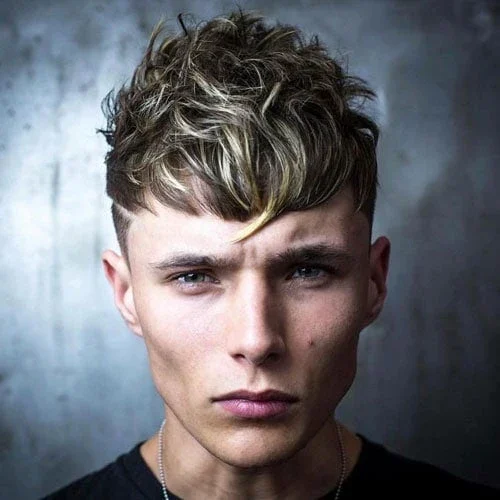
Idea 09
Wavy Fringe With One Longer Tip
A wavy short fringe includes one lighter tip that extends farther down the forehead. That small length difference creates a focal point without a fully long front.
- Shape
- Wavy short fringe
- Detail
- Single longer front tip
The rest of the top has separated bends and loose texture. The shorter sides keep the shape compact beneath the fuller upper section.
Wearability note: Choose this if you like an uneven front with one more prominent piece. Compare how far that tip reaches before choosing the length, particularly if hair near the eyes tends to bother you.
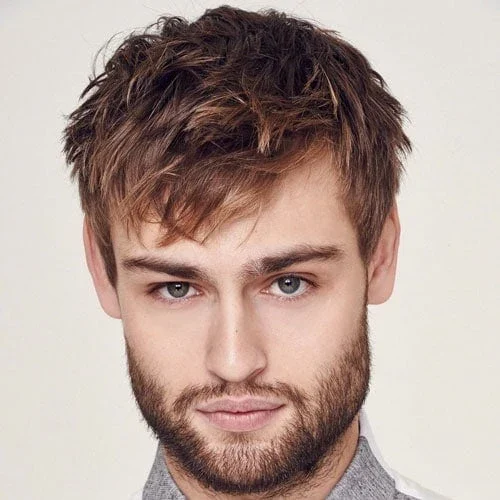
Idea 10
Choppy Fringe With Short Connected Sides
Choppy front ends break across the forehead beneath a softly textured crown. The short sides remain connected, keeping the outline continuous around the temples.
- Shape
- Choppy front ends
- Detail
- Connected short sides
The fringe has several small changes in length rather than a single blunt edge. Its moderate coverage leaves more open space above the eyebrows than the longest side-swept styles.
Wearability note: Choose this for a compact fringe with a softer outline. Compare the broken front edge with a straighter crop before deciding how defined you want the finish.
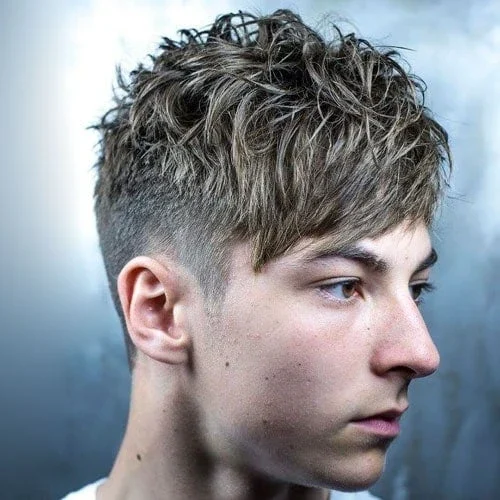
Idea 11
Long Textured Fringe With Close Sides
A long broken fringe falls diagonally from a textured top above close sides. Several pointed ends sit lower than the main front section, giving the edge a ragged shape.
- Shape
- Long broken fringe
- Detail
- Close side transition
The side profile exposes the change in length near the temple. The top remains fuller and more irregular than the compact blunt crops.
Wearability note: Choose this if you want length at the front while keeping the ear area open. Compare where the longest pieces end near the eyebrow before selecting a similar diagonal shape.
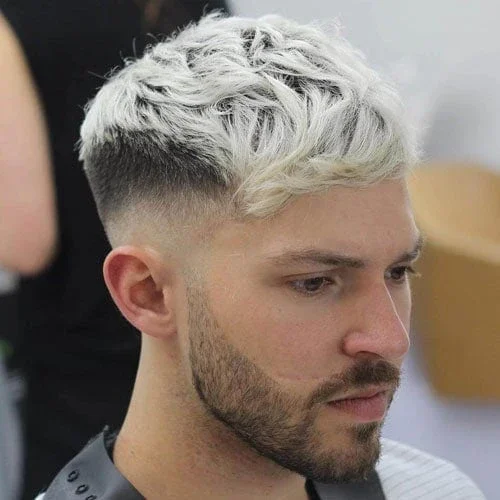
Idea 12
Pale Textured Fringe Above Dark Sides
Pale textured sections move forward over darker short sides. The fringe bends down in small pieces rather than forming a long continuous panel across the forehead.
- Shape
- Pale forward texture
- Detail
- Darker short sides
The color contrast makes the separate ends easy to see. The close side outline adds another contrast below the longer top, even though the overall height stays moderate.
Wearability note: Choose this for its front direction and short sides before considering the color. A similar outline can be discussed in your existing shade without assuming the photograph reveals a coloring method.
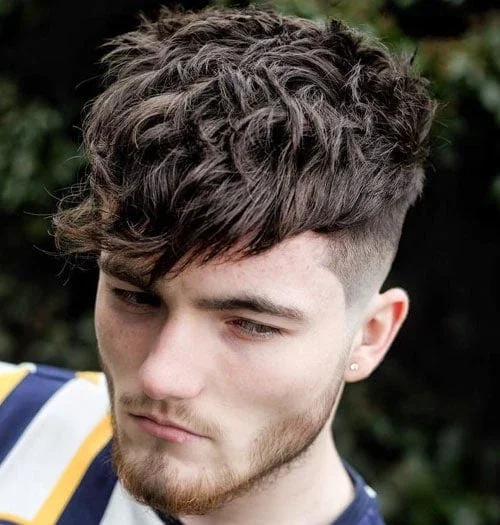
Idea 13
Full Curly Fringe With an Undercut
A full curly fringe bends forward over closely cut sides. One larger curl turns near the front edge while smaller bends fill the rest of the upper shape.
- Shape
- Full curly front
- Detail
- Closely cut sides
The longer top sits distinctly above the close side, giving the fringe a rounded, disconnected outline. The forehead is partly covered without a perfectly straight edge.
Wearability note: Choose this if you want the curl shape to frame the front. Discuss your own curl pattern and where the ends fall when dry before deciding on a comparable length.
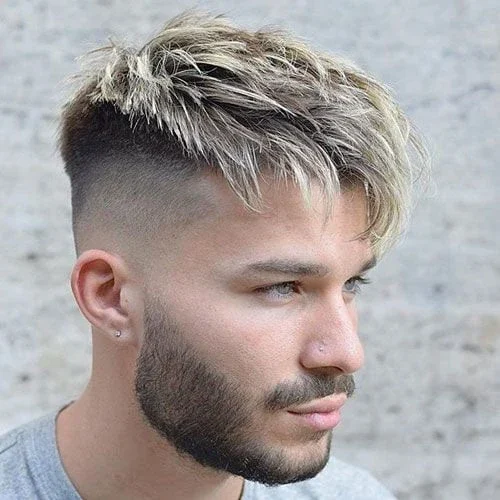
Idea 14
Fine Pale Fringe With Separated Ends
Fine pale ends fall forward and to one side above a close fade. The separate pieces leave small openings across the forehead rather than creating a dense straight edge.
- Shape
- Fine separated ends
- Detail
- Close side fade
The top stays relatively low behind the fringe. Its direction and separation are more noticeable than its height, making this a useful contrast with the fuller wavy fronts.
Wearability note: Choose this if you like a lighter-looking front outline. Compare the longest ends near the eyebrows and the short side contrast independently when discussing the reference.
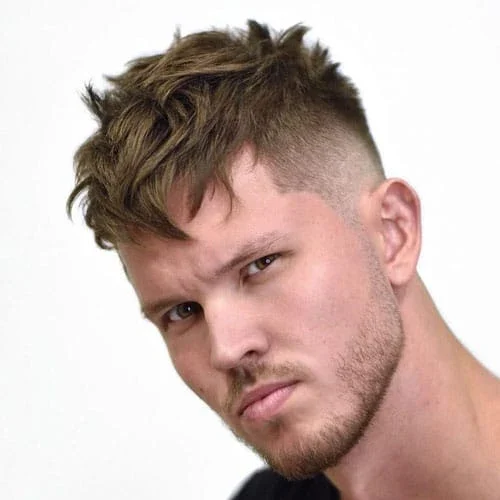
Idea 15
Uneven Forward Fringe With a Short Side
An uneven brown fringe falls forward with one longer piece near the center. The shorter side outline keeps the focus on the different lengths at the front.
- Shape
- Uneven forward fringe
- Detail
- Short side outline
The upper surface has loose bends rather than smooth comb lines. That texture makes the fringe look more irregular than a blunt crop, while the overall shape remains compact.
Wearability note: Choose this if you prefer a broken front edge with some movement. Compare the longest piece with the shorter surrounding ends so the amount of asymmetry is clear.
Compare the fringe when it falls forward
A portrait can show a fringe swept into one position. Discuss where it falls during ordinary movement, especially if you wear glasses or prefer to keep hair away from your eyes.
The same front length can look different on straight hair, waves and curls. Bring a clear close view of the edge and a side view showing how the top connects with the rest of the cut.

About the author
Bella Ross
Bella Ross is the hairstyle editor behind Latest Easy Hairstyles. She curates practical haircut, braid, color, and styling ideas with a focus on looks that are easy to browse, realistic to recreate, and useful for everyday hair decisions.