Before you choose
Choose the gathering before the ribbon
A small bow can change the look of softball hair, but the useful starting points are the braid pattern, the height of the gathering and how much length hangs below it. These athletic references include styles pictured with visors as well as more raised practice-day and team-photo ideas. Use the visible placement to compare shapes, then check the version you choose with your own equipment.
The hairstyle gallery
16 cute softball hairstyles ideas to compare
Compare the visible length, shape, texture, and finish before choosing a salon reference.
Idea 01
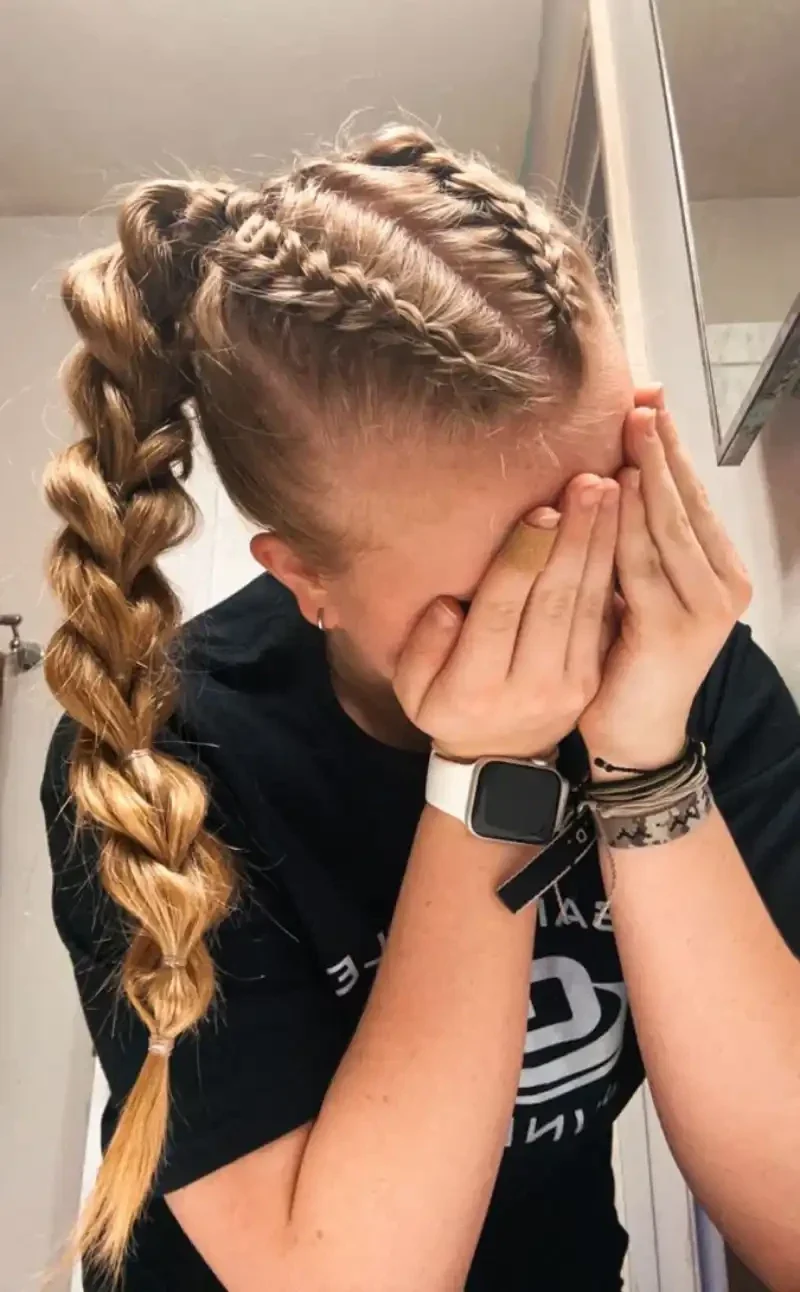
Raised Braids Into One Long Tail
Raised braids gather the upper hair before the length continues in one long tail. The woven lower section gives a more contained outline than a loose ponytail.
- Shape
- Two upper braids
- Detail
- Single long braided tail
The top view shows the partings between the braided sections, while the larger lower braid has more open loops. A loose tip remains below the final tie rather than being gathered into a bun.
Wearability note: Compare the height of the main gathering with your own headwear. The upper detail and long tail are separate choices, and their placement matters more than copying the exact braid width.
Idea 02
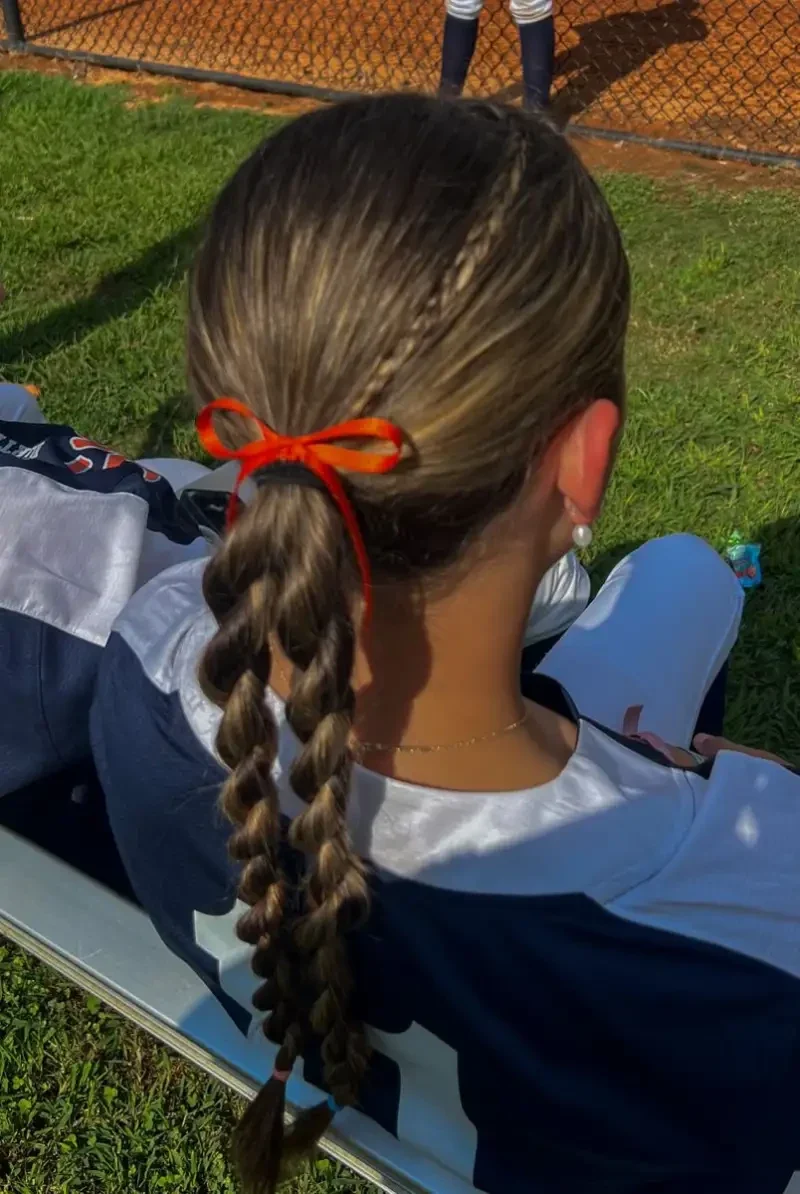
Fine Side Braid With Two Lower Plaits
A fine side braid leads toward a low gathering, with two separate plaits continuing below it. The small orange bow gives the rear a clear accent.
- Shape
- One fine upper braid
- Detail
- Two lower plaits
The upper hair lies close to the head rather than forming raised volume. Below the bow, the two braids hang together down the back, producing a different outline from either one broad braid or separate pigtails.
Wearability note: Save the rear view if the paired lower braids are the detail you want. Check how the low gathering feels around your collar before choosing it for a practice or game-day version.
Idea 03
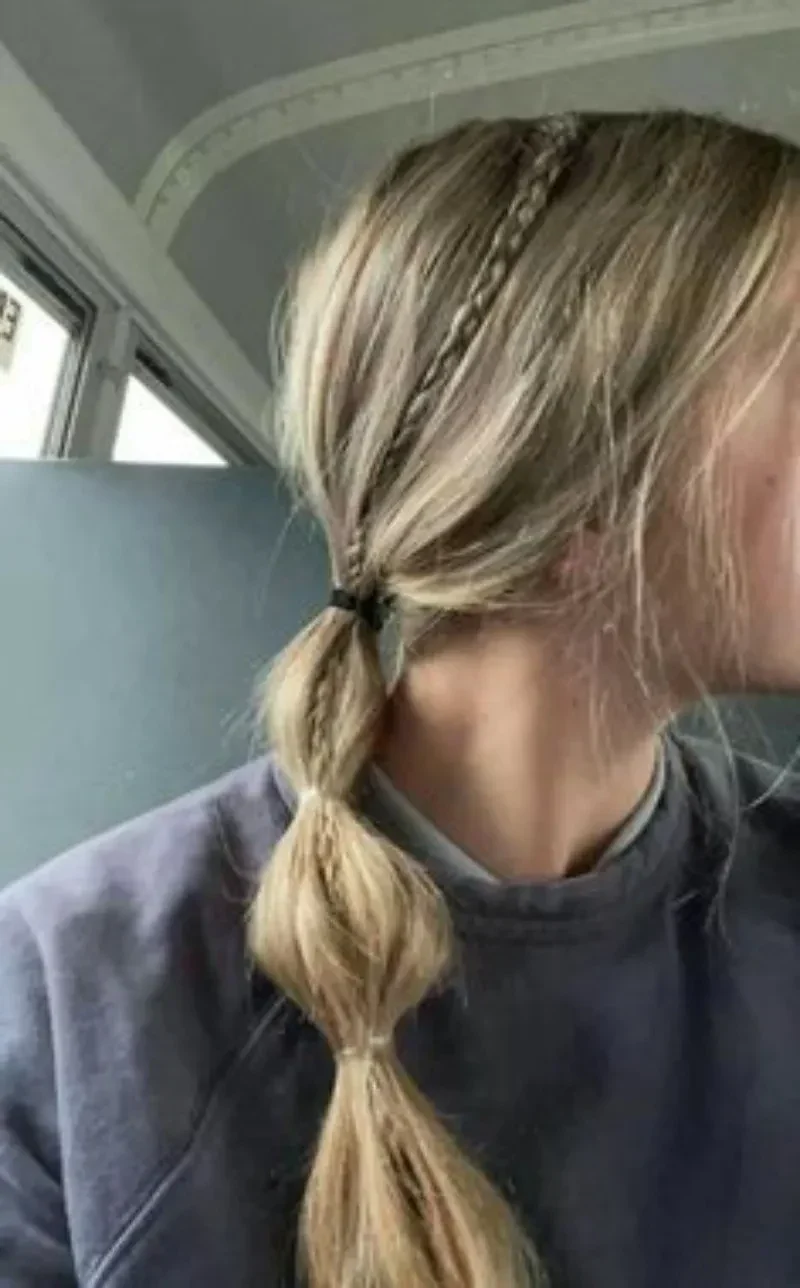
Low Bubble Tail With a Tiny Accent Braid
A tiny side braid adds detail above the low bubble ponytail. The shorter divided length makes this a useful reference beside the much longer tails elsewhere in the gallery.
- Shape
- Low divided ponytail
- Detail
- Fine side braid
The side hair sweeps back toward a gathering near the neck. Only a few rounded sections fit below it, showing how the same general idea changes when there is less loose length to work with.
Wearability note: Choose this for the lower starting point and modest tail length. The small braid does not have to be the main feature if a simpler side arrangement feels more comfortable.
Choose your direction
Compare the front detail
Look at narrow side accents and larger upper braid patterns.
Choose the lower length
Compare one plait, two tails and rounded divided sections.
Check the headwear
Compare the actual gathering and decorations with your own equipment.
Idea 04
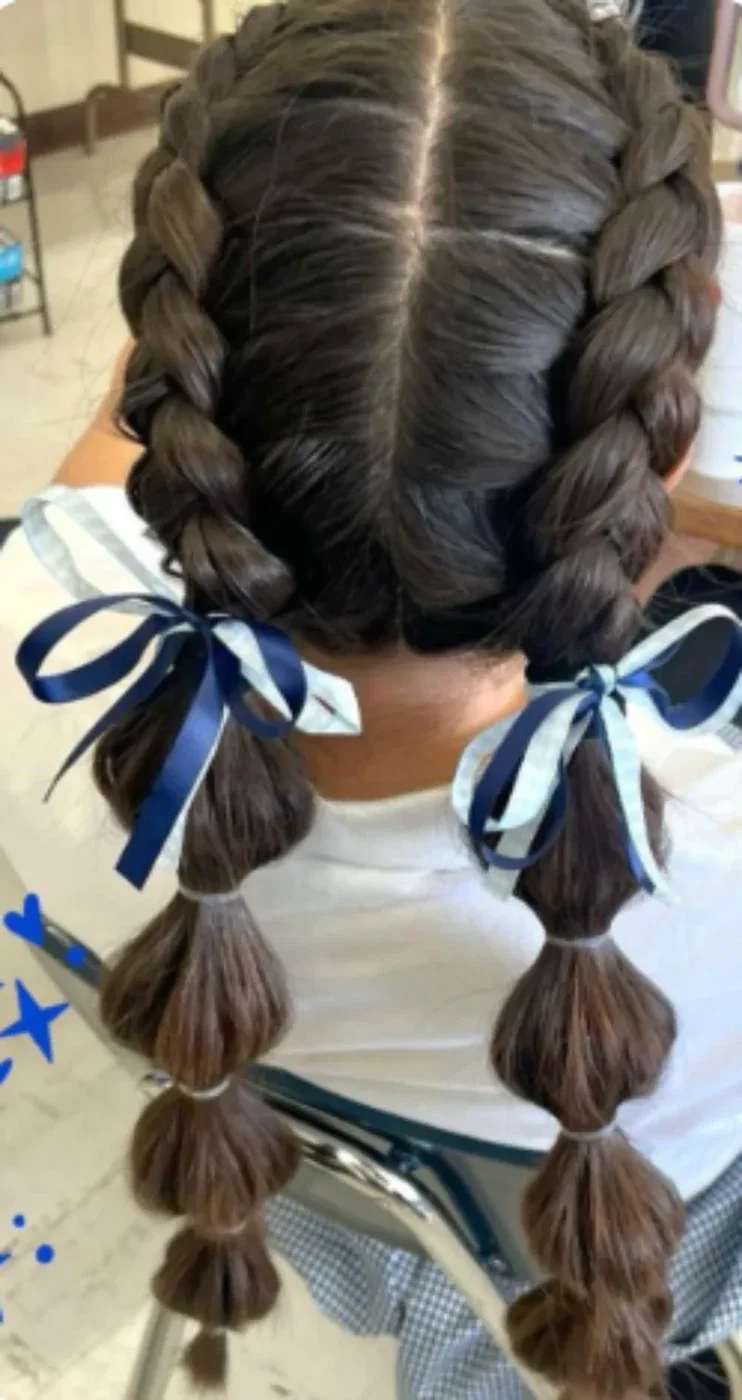
Braided Pigtails With Bubble Ends
Broad braids contain the upper sides, then change into bubble sections below the bows. The lower shape stays divided without continuing the woven pattern to the very ends.
- Shape
- Broad upper braids
- Detail
- Divided lower tails
A center part separates the two sides clearly. The navy and white bows mark the transition near the nape, while the rounded tails hang separately over the back.
Wearability note: Compare the lower width and bow size with your preferred amount of decoration. The braid-to-bubble change is the useful hairstyle detail even if your own version uses smaller or fewer ribbon accents.
Idea 05
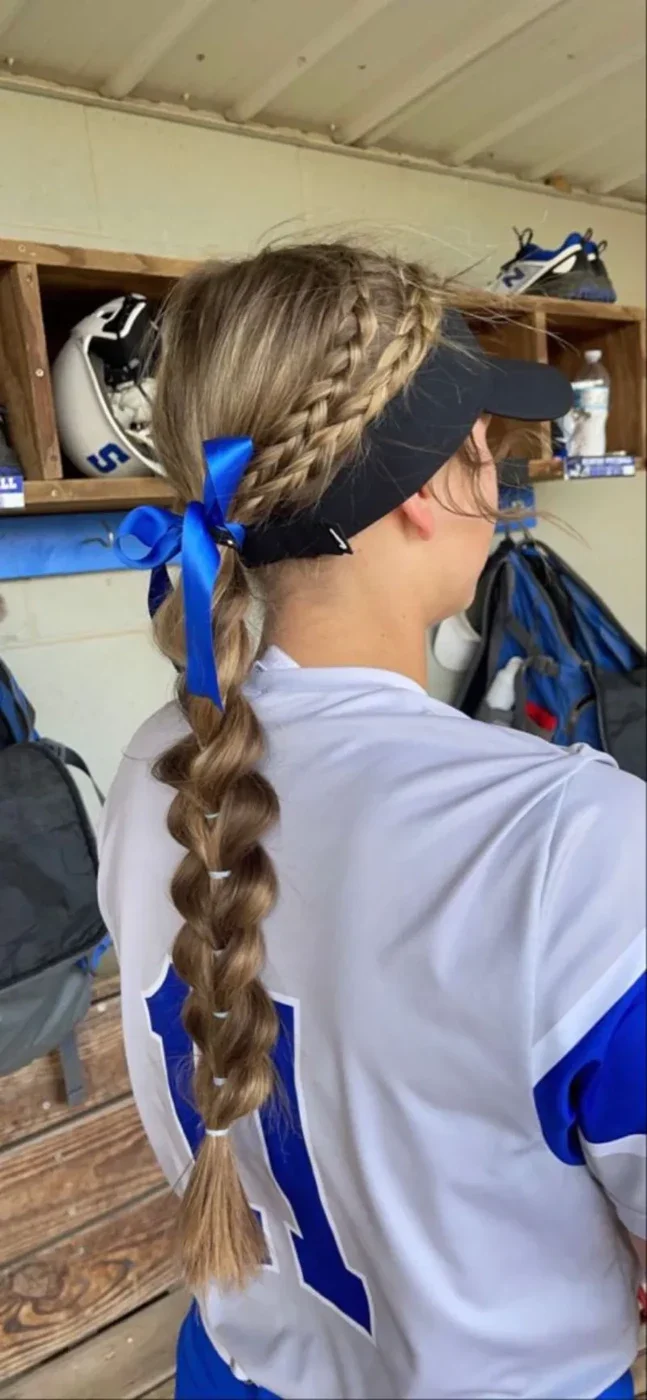
Visor With a Braided Bubble Ponytail
Fine side braids add detail above a low bubble ponytail, with a visor shown in place. This makes the relationship between the side hair and headwear easier to judge.
- Shape
- Fine side braids
- Detail
- Single bubble tail
The blue bow sits at the rear gathering, and the rounded lower sections continue down the back. The upper braids remain close to the head rather than creating a tall ridge.
Wearability note: Use this as a placement comparison for your own visor. It does not show batting-helmet fit, so judge that separately before choosing the same gathering height or bow position.
Idea 06
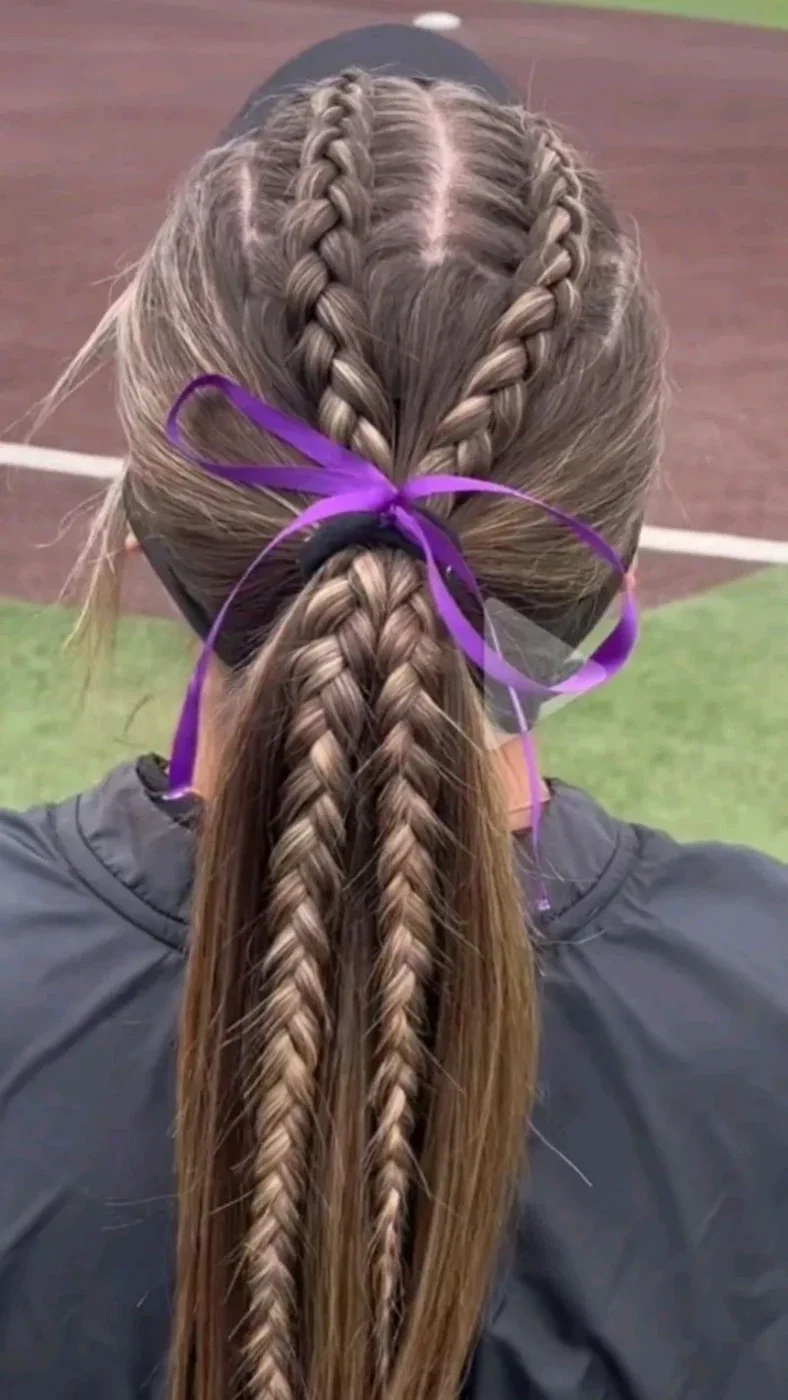
Upper Braids With Twin Fishtail Accents
Two upper braids meet above a loose ponytail containing narrow fishtail accents. The lower length mixes woven detail with hair left free instead of becoming one full plait.
- Shape
- Two upper braids
- Detail
- Fine braids inside ponytail
A purple bow marks the single rear gathering. The fine lower braids are easier to see against the smooth loose lengths than they would be within a fully braided tail.
Wearability note: This is useful if you like a detailed back view without gathering every lower strand. Compare how the unbraided length moves before choosing it over a single contained braid.
Idea 07
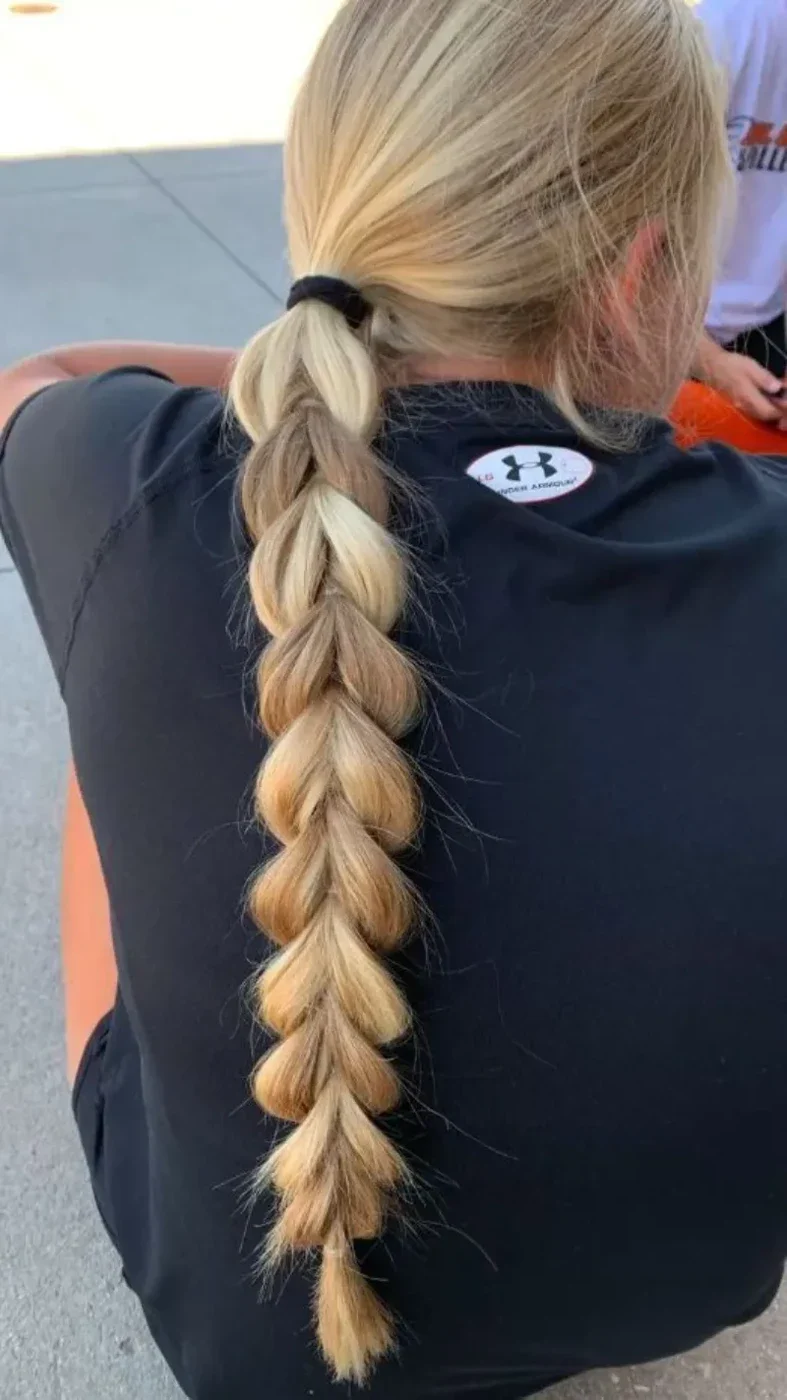
One Low Broad Plait
One low plait keeps the silhouette simple, with no large bow or extra scalp pattern. Its broad sections make the braid the main feature from the rear.
- Shape
- Low single gathering
- Detail
- Broad loose braid
The upper hair sweeps into a single black tie near the nape. The braid narrows toward a short loose tip, keeping most of the lower length within the woven shape.
Wearability note: Look at the starting height if you want a quieter option. A low braid rests differently against the collar from a raised ponytail, even when both contain a similar amount of length.
Idea 08
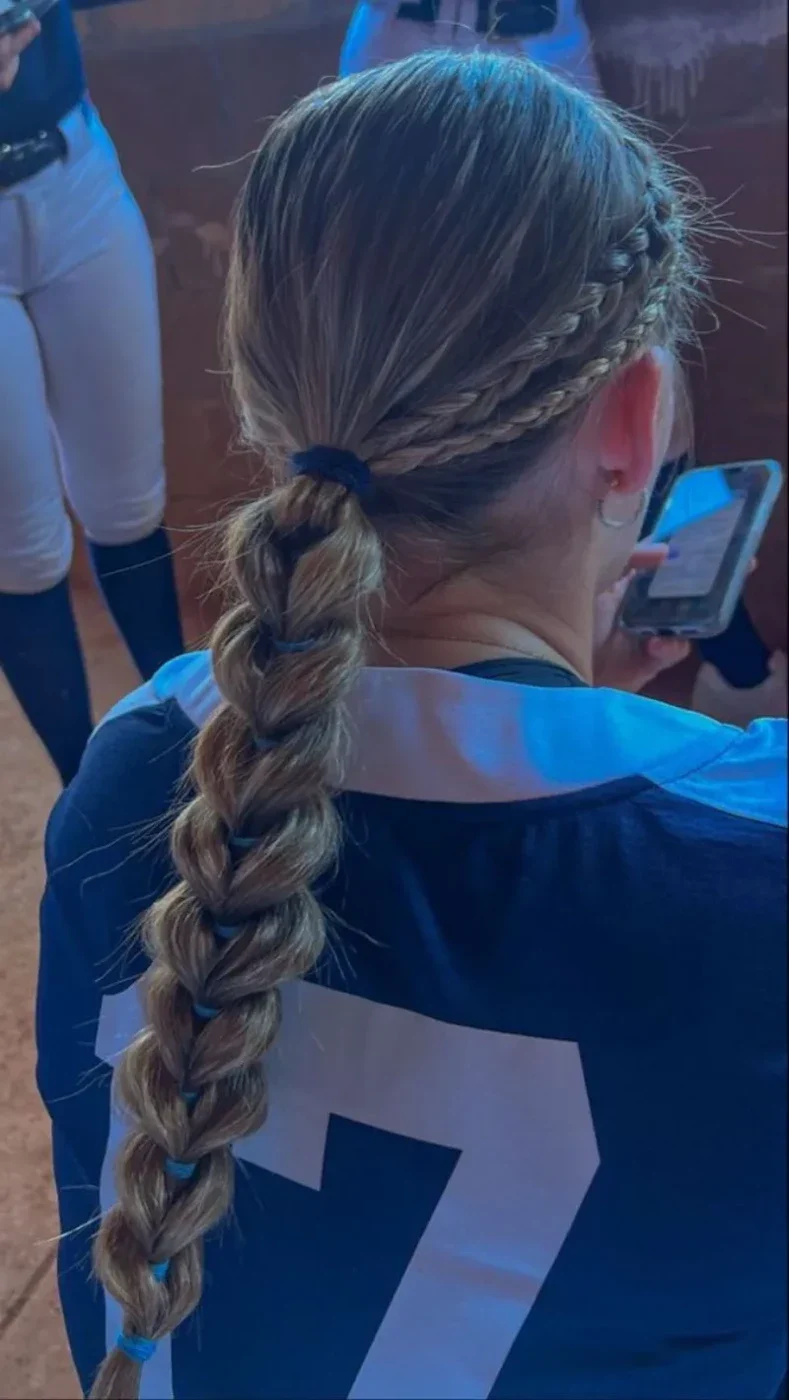
Two Fine Side Braids Into a Plait
Two fine side braids create parallel detail above the ear before meeting the main gathering. One larger plait contains the lower length below it.
- Shape
- Paired fine accents
- Detail
- Single rear braid
The upper surface stays relatively smooth between the narrow braided lines. A dark tie separates that closer head shape from the longer braid hanging over the shirt.
Wearability note: Choose this for the smaller side accents if broad scalp braids feel too visually busy. Save the side angle as well as the tail so their narrow scale remains clear in your reference.
Idea 09
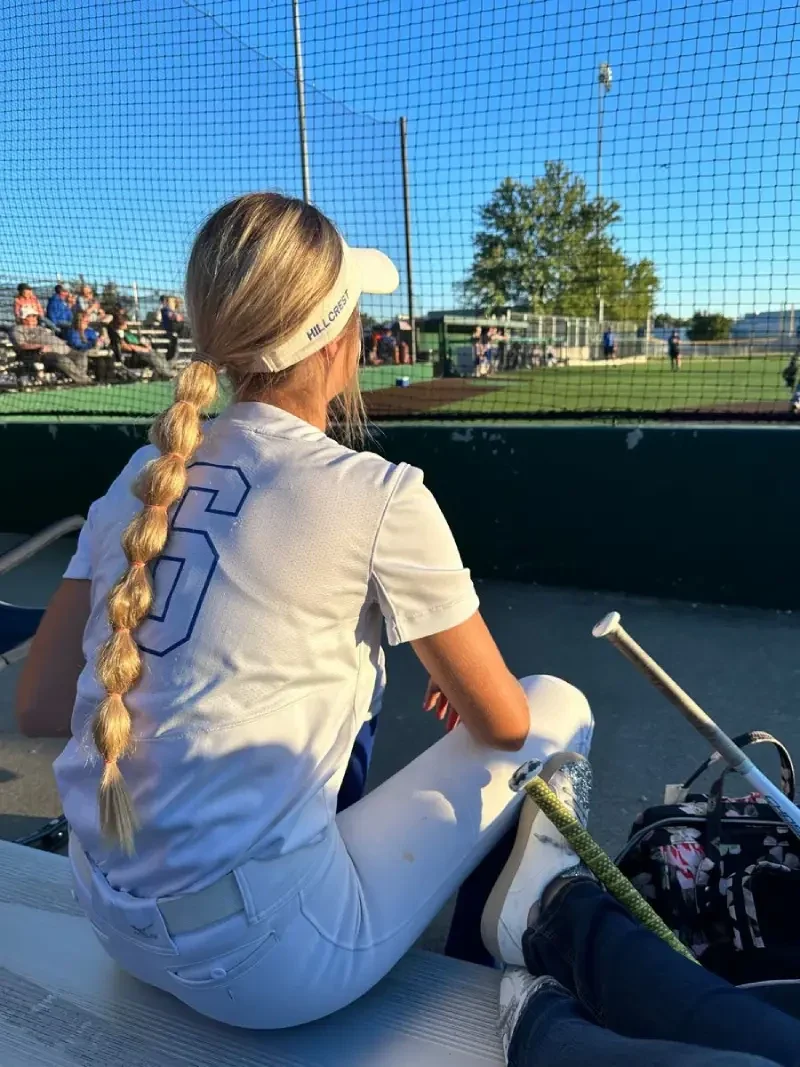
Visor With a Long Divided Tail
A long bubble ponytail hangs below the visor, with the upper hair gathered low rather than high behind the crown. The repeated sections keep its length visibly divided.
- Shape
- Low bubble ponytail
- Detail
- Visor shown in place
The rear view shows the tail extending well down the back. The visor leaves the upper head open, making this a useful comparison for gathering position rather than proof that the same arrangement fits every type of headwear.
Wearability note: Notice how much length remains even after division. If you prefer less movement against your back, compare a shorter tail or a more compact gathering before choosing this outline.
Idea 10
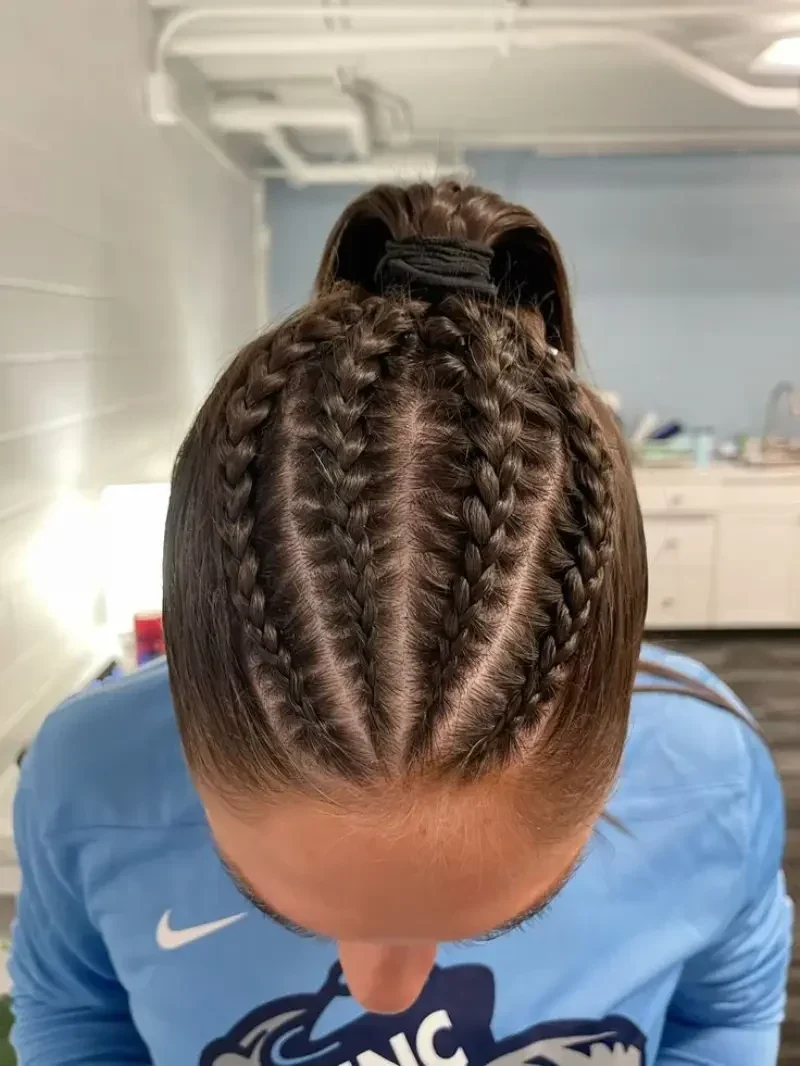
Curved Braids Into a Raised Ponytail
Curved braids guide the upper hair into one raised ponytail. Their arrangement creates detail across the head while the lower length stays in a single gathering.
- Shape
- Curved upper braids
- Detail
- Single high ponytail
The overhead view reveals a central part and several angled spaces between the braids. The ponytail begins behind the crown, higher than the low-tail options pictured with visors.
Wearability note: This angle is useful for discussing the braided pattern, but compare the gathering with your own equipment before choosing it for play. A lower version would change the silhouette without requiring a new front pattern.
Idea 11
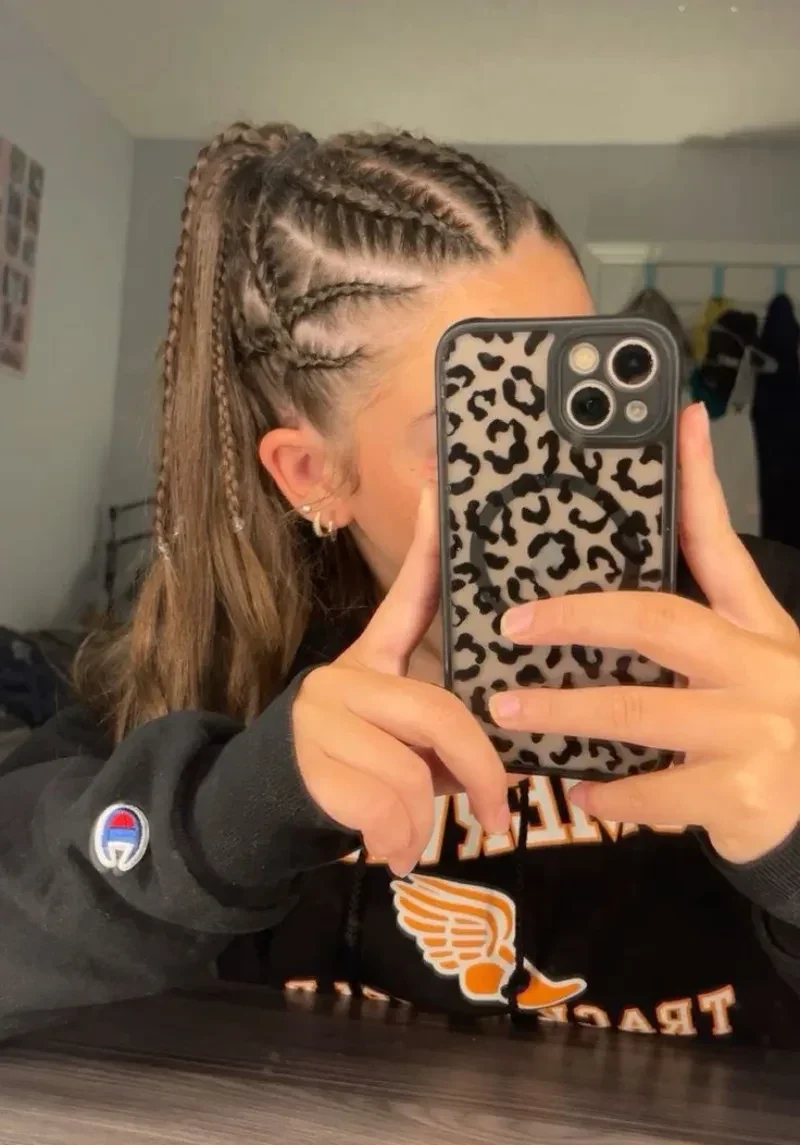
Fine Side Rows With a High Ponytail
Fine rows give the side a detailed pattern before joining the high ponytail. The long loose tail keeps the overall outline lighter than a fully braided length.
- Shape
- Narrow side rows
- Detail
- Long loose ponytail
The side view shows several small partings above the ear, with the braids directed upward toward the gathering. The larger ponytail remains separate from those finer lines.
Wearability note: Choose the row pattern and gathering height as separate details. This can be a visual reference for practice-day hair, while the height should be checked against any headwear you intend to use.
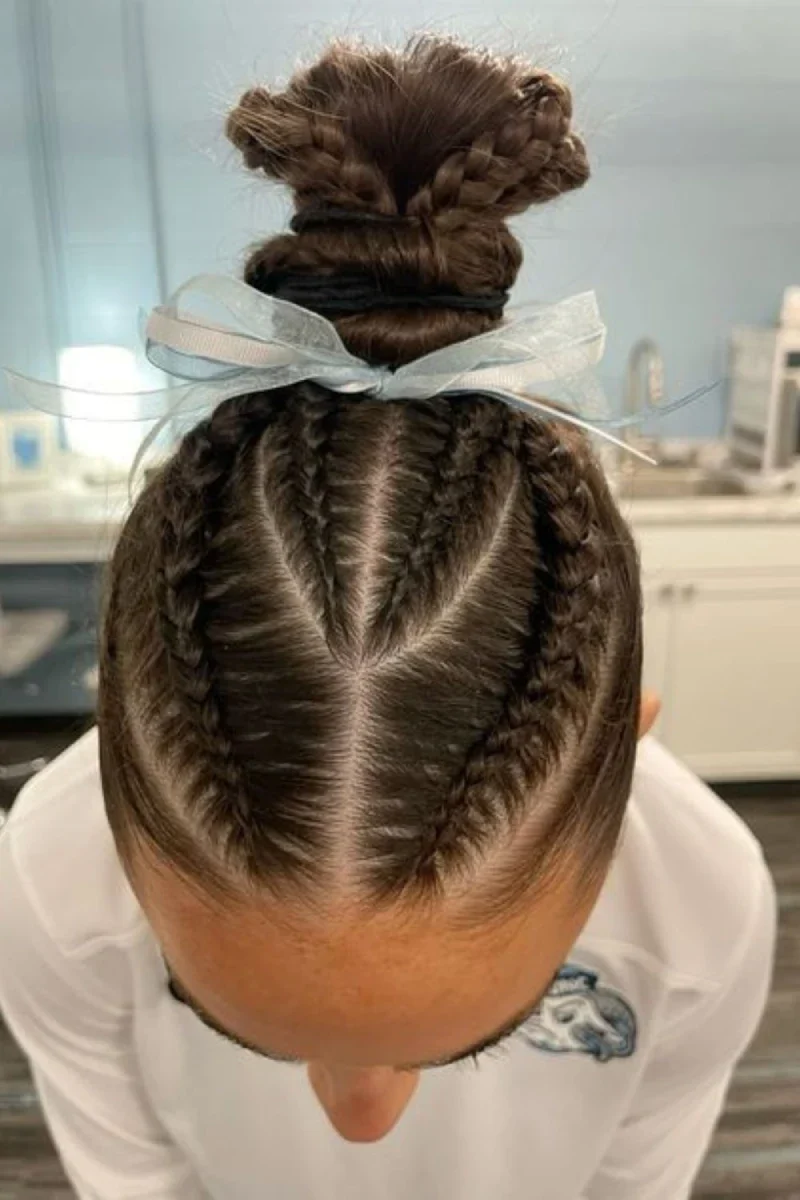
Idea 12
Several Braids With a Folded Bun
Several upper braids end in a folded gathering rather than a long loose tail. A pale bow sits beneath the larger rear shape, making the change in texture clear.
- Shape
- Multiple upper braids
- Detail
- Folded raised gathering
The narrow rows remain close to the head, while the folded hair projects farther outward behind the crown. That difference matters more to the silhouette than the color of the ribbon.
Wearability note: Compare this as a compact-length option for practice or time off the field. The photograph does not show a helmet in place, and the larger rear gathering needs its own fit check before play.
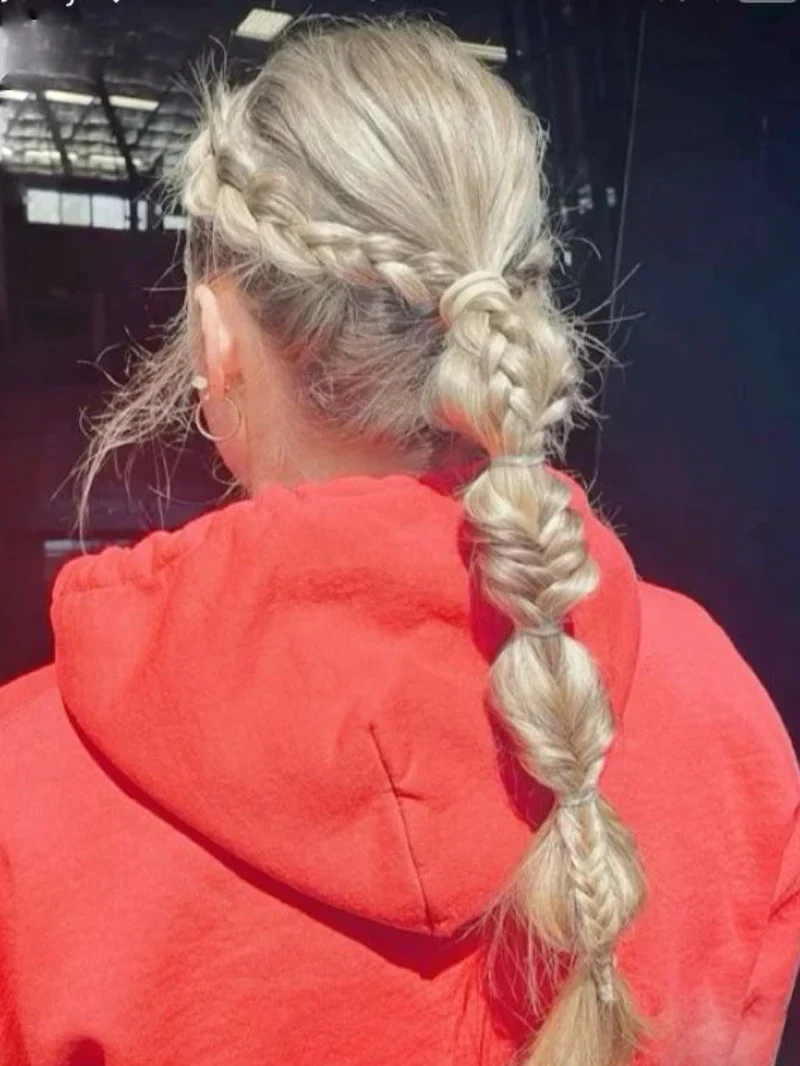
Idea 13
Small Side Braid With Looped Tail Sections
A small side braid leads into a lower tail divided into open looped sections. The separated folds create a softer surface than one continuous narrow plait.
- Shape
- Fine side braid
- Detail
- Divided looped tail
The upper hair is swept back close to the head. Below the gathering, the rounded sections alternate with narrower tied points, leaving a visibly loose tip at the end.
Wearability note: Use this to compare a fuller lower tail with a compact braid. The amount of outward width is part of the effect, so consider whether you like that shape resting against your upper back.
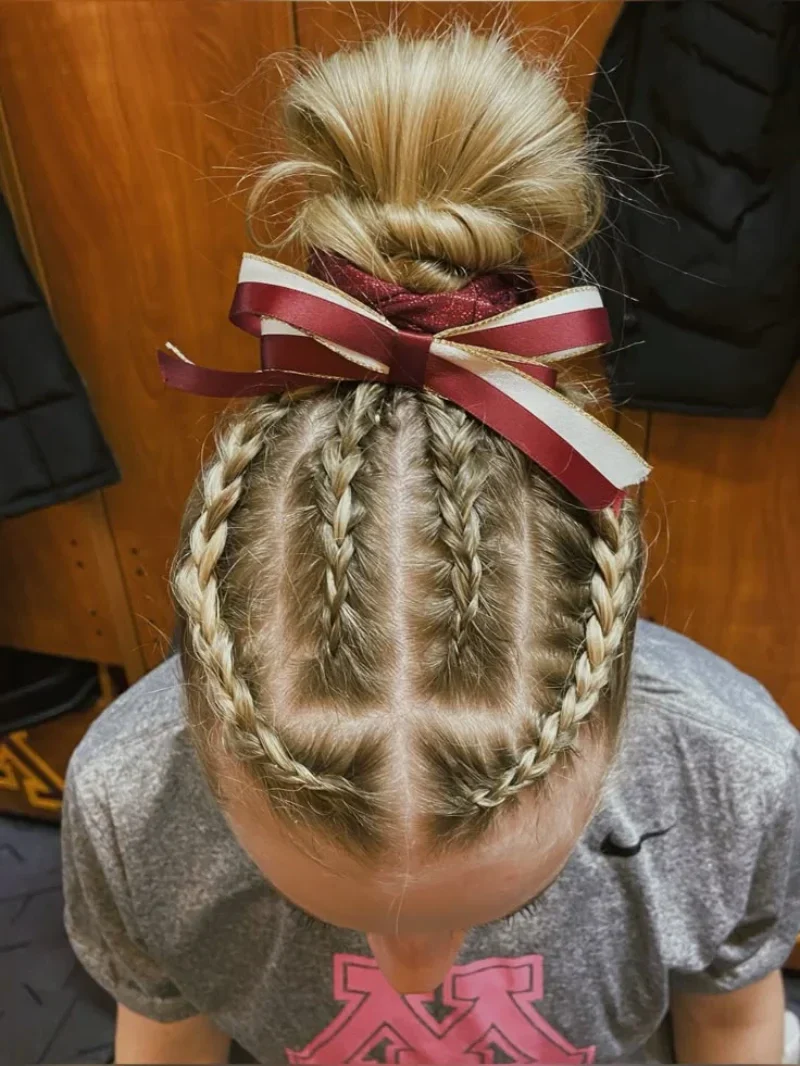
Idea 14
Heart-Like Braids With a High Bun
Curved braided lines create a heart-like pattern above the forehead, with the remaining hair gathered into a high bun. A burgundy and pale bow sits behind the upper detail.
- Shape
- Curved upper lines
- Detail
- Raised bun with bow
The shaped partings are easiest to understand from this overhead view. The bun adds a separate rounded form behind the crown instead of continuing the pattern into a trailing braid.
Wearability note: Choose this for the decorative braid arrangement if that is your priority. It is a useful practice-day or team-photo reference, with actual headwear fit checked separately before you use the same bun placement for play.
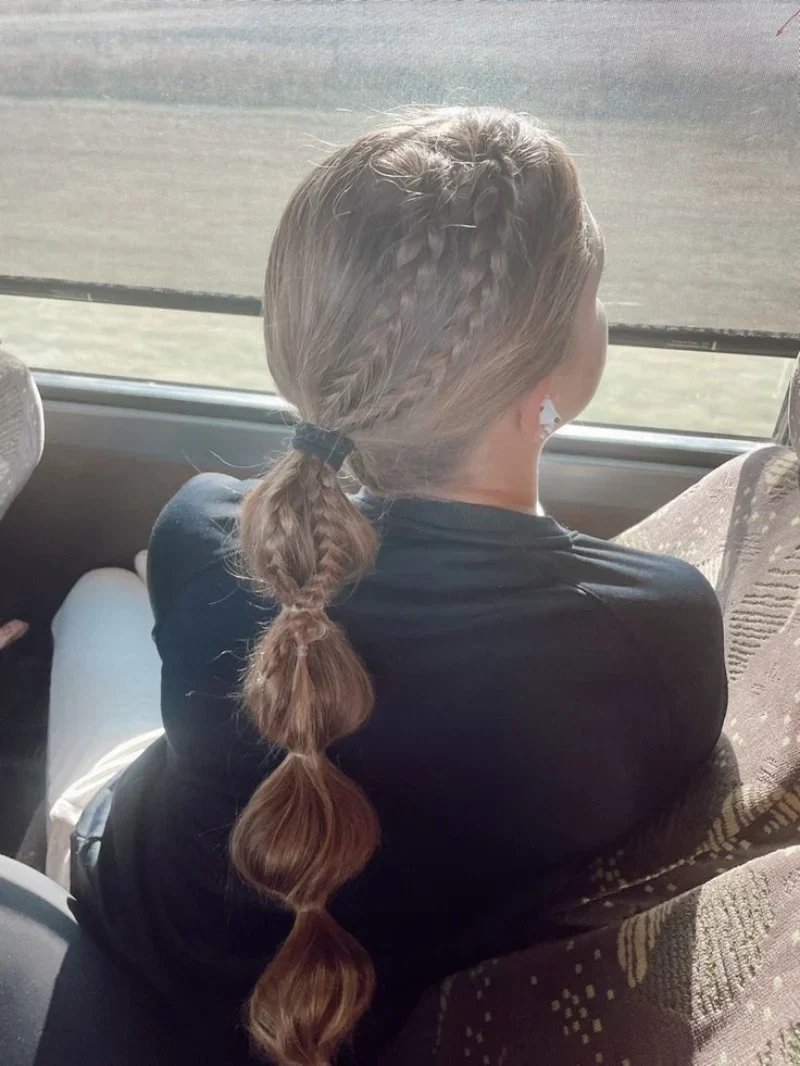
Idea 15
Narrow Upper Braids With a Low Bubble Tail
Narrow upper braids add texture before the low bubble tail begins. The divisions below the gathering keep the lower length in several rounded sections rather than one loose ponytail.
- Shape
- Fine upper braids
- Detail
- Low divided tail
The rear angle shows the tail starting near the nape, with the upper hair lying close around the braided lines. The final sections grow smaller toward the tip.
Wearability note: This offers a lower gathering to compare with the raised braided styles. Notice where the first bubble rests against the collar and how much length remains below it when deciding whether the outline suits you.
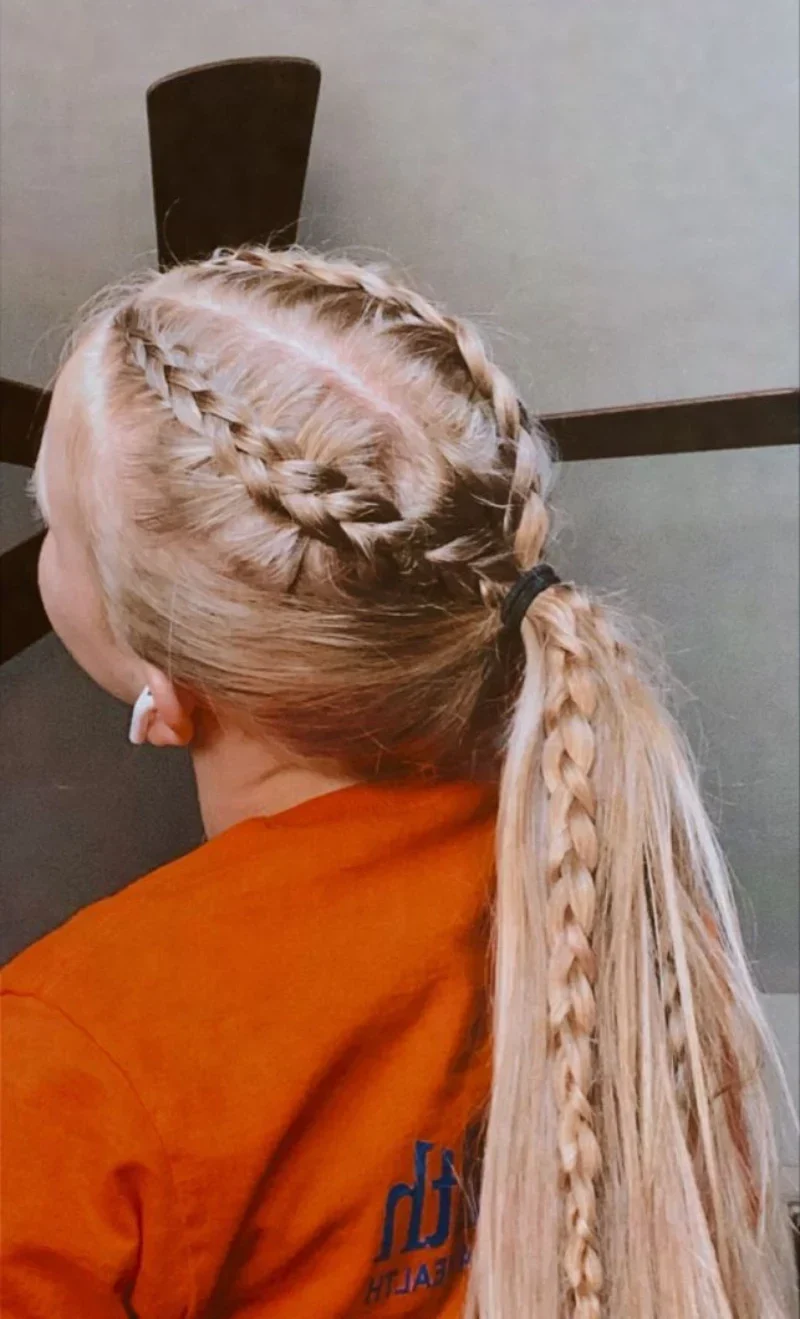
Idea 16
Fine Braids Through a Low Loose Ponytail
Fine braids meet at a low gathering, with a narrow braided accent continuing among the loose ponytail lengths. The result keeps a smaller woven detail without braiding the entire tail.
- Shape
- Two upper braids
- Detail
- Fine lower accent braid
The upper sections lie close to the head, separated by a visible central part. Most of the lower hair remains smooth and loose, making the fine braid stand out as a separate line.
Wearability note: Compare the loose length with a fully braided ponytail if movement is your main concern. This photograph is most useful for the modest side detail and low placement, rather than complete containment of the ends.
Separate a hairstyle reference from equipment fit
The photographs help explain where braids, ties and loose lengths sit. They do not establish that every raised bun, bow or ponytail will work with the equipment you use for softball. Compare that fit before choosing the final placement.
Several pictures come from other athletic settings. Their hair arrangements are included as visual references for gathered shapes, without claiming that the people pictured are playing softball or that the styles carry competition approval.

About the author
Bella Ross
Bella Ross is the hairstyle editor behind Latest Easy Hairstyles. She curates practical haircut, braid, color, and styling ideas with a focus on looks that are easy to browse, realistic to recreate, and useful for everyday hair decisions.