Before you choose
Compare the scalp pattern and the lower finish
A side view shows temple curves, an overhead view explains the row direction, and a back view reveals how the lengths finish. This gallery includes adult and children’s examples, clearly identified where relevant. Use the pattern as a starting point to adapt around comfort and the amount of length you want.
The hairstyle gallery
17 cornrow hairstyles ideas to compare
Compare the visible length, shape, texture, and finish before choosing a salon reference.
Idea 01
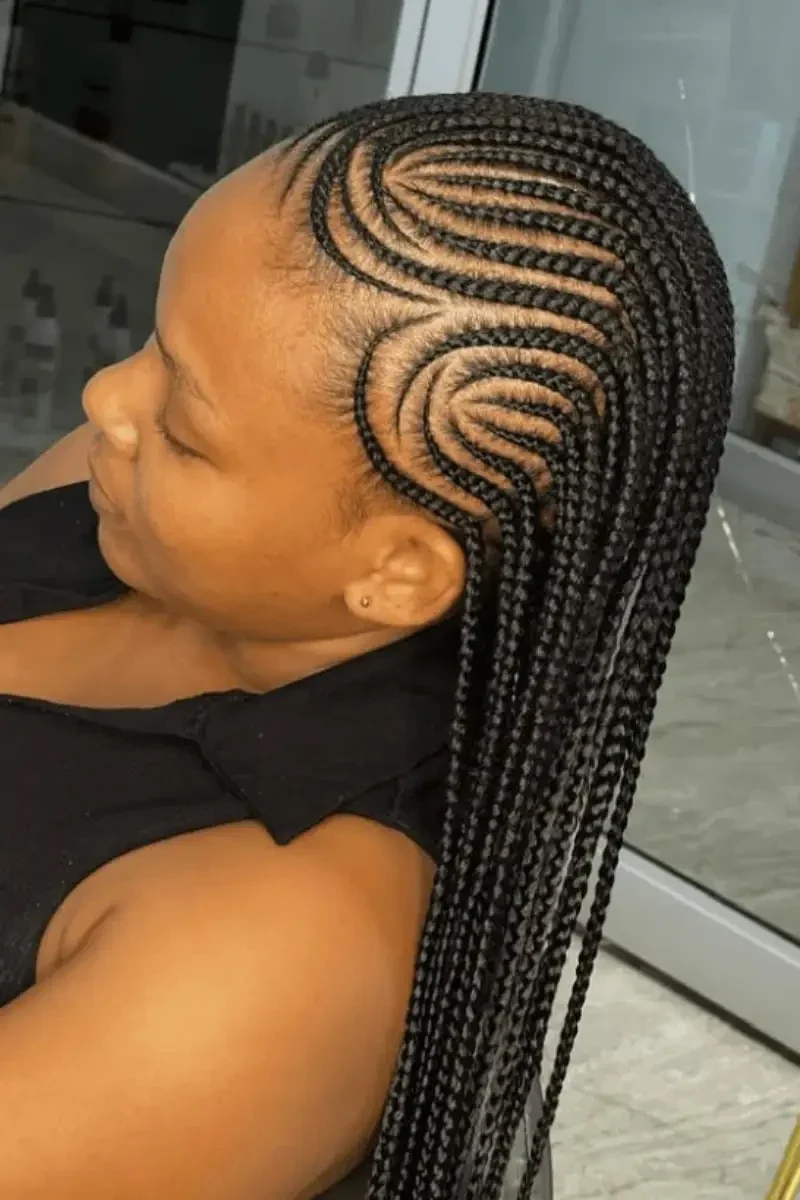
Sweeping Curves With Long Braids
Fine curved rows give this cornrow look a flowing side pattern. The braids continue down the back, leaving the design close to the head above the ear.
- Shape
- Curved rows
- Detail
- Long braids
The curves change direction near the temple before joining the longer lengths. Narrow parting lines make the pattern visible without added beads or a large accessory.
Wearability note: Save the side angle if the curves are the feature you want. Discuss the row size and overall length separately so the finished weight and placement feel comfortable for you.
Idea 02
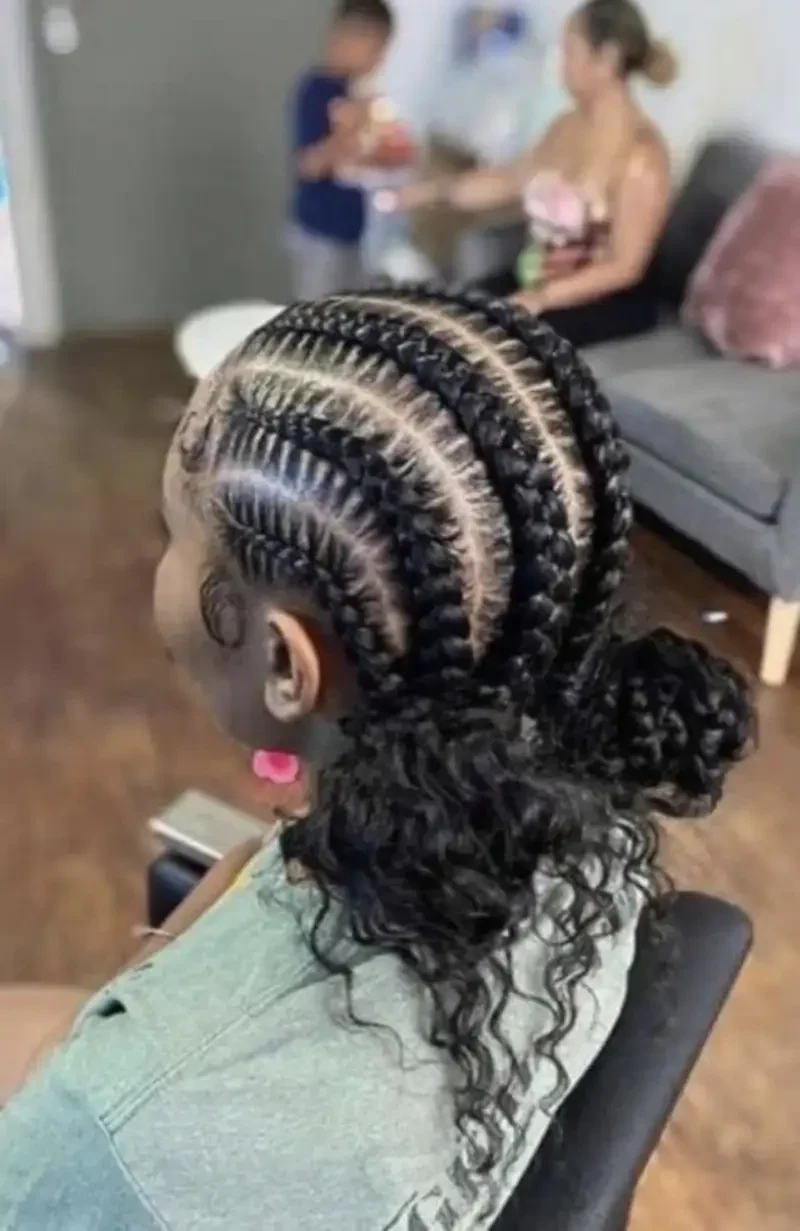
Broad Rows Into Low Curly Puffs
Broad cornrows keep the top organized while low curly puffs soften the back. The contrast between close rows and loose curls makes the shape easy to read from the side.
- Shape
- Broad rows
- Detail
- Low curly puffs
The rows run backward with clear parting lines between them. The lower curls sit near the shoulders rather than continuing into long braided tails.
Wearability note: For a child, prioritize a comfortable version of the pattern and puff placement. The rows should not need to feel tight to look defined, and the lower length can be adjusted to their preference.
Idea 03
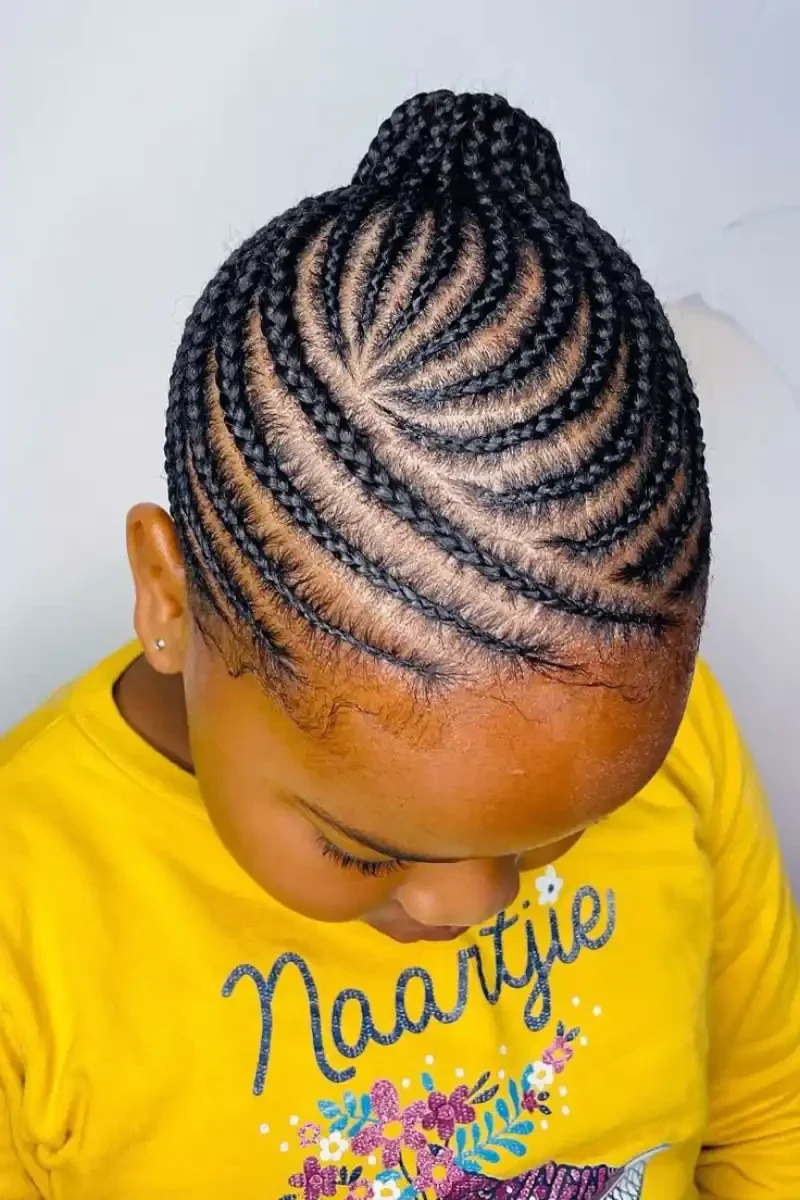
Curved Rows Into a High Gather
Curved rows fan toward a high gather in this overhead view. The pattern creates movement across the head even though the hair remains closely contained at the sides.
- Shape
- Curved rows
- Detail
- High gather
The rows vary slightly in direction as they rise from the forehead and temple. A thicker central section connects the finer side lines to the gathered braids above.
Wearability note: Use the overhead angle to explain the pattern rather than focusing only on the top gather. For a child, a simpler row arrangement may be preferable if it makes the style more comfortable.
Choose your direction
Choose curved detail
Compare the loop, wave and feather-like patterns.
Keep a direct pattern
Look at narrow straight-back rows and broader parallel sections.
Choose the finish
Compare long braids, short curly tails, high gathers and beaded ends.
Idea 04
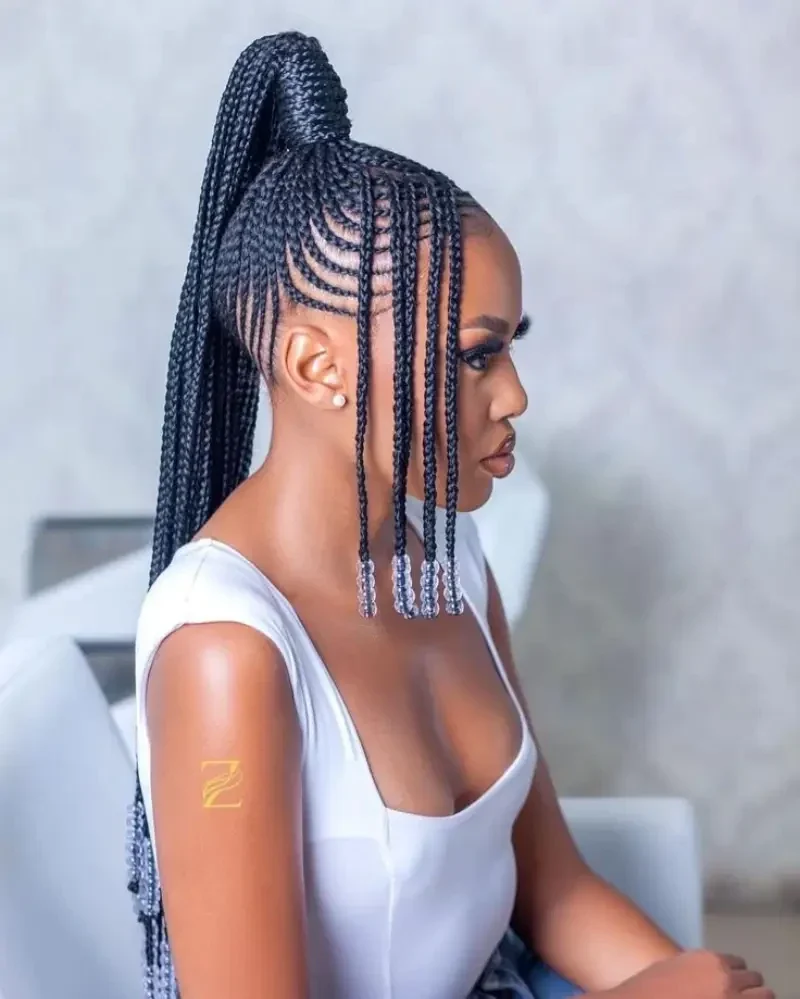
High Braided Ponytail With Beaded Fronts
A high braided ponytail adds height above the close cornrow pattern. Slim front braids remain loose beside the face, creating a second line of detail below the gathered top.
- Shape
- High ponytail
- Detail
- Beaded front braids
The side rows curve upward toward the ponytail. Clear beads sit at the ends of the front braids, while the longer gathered braids fall down the back.
Wearability note: Compare ponytail height and front-braid length as separate choices. If you want the face more open, fewer loose front braids can keep the lifted silhouette without the same amount of movement beside the cheeks.
Idea 05
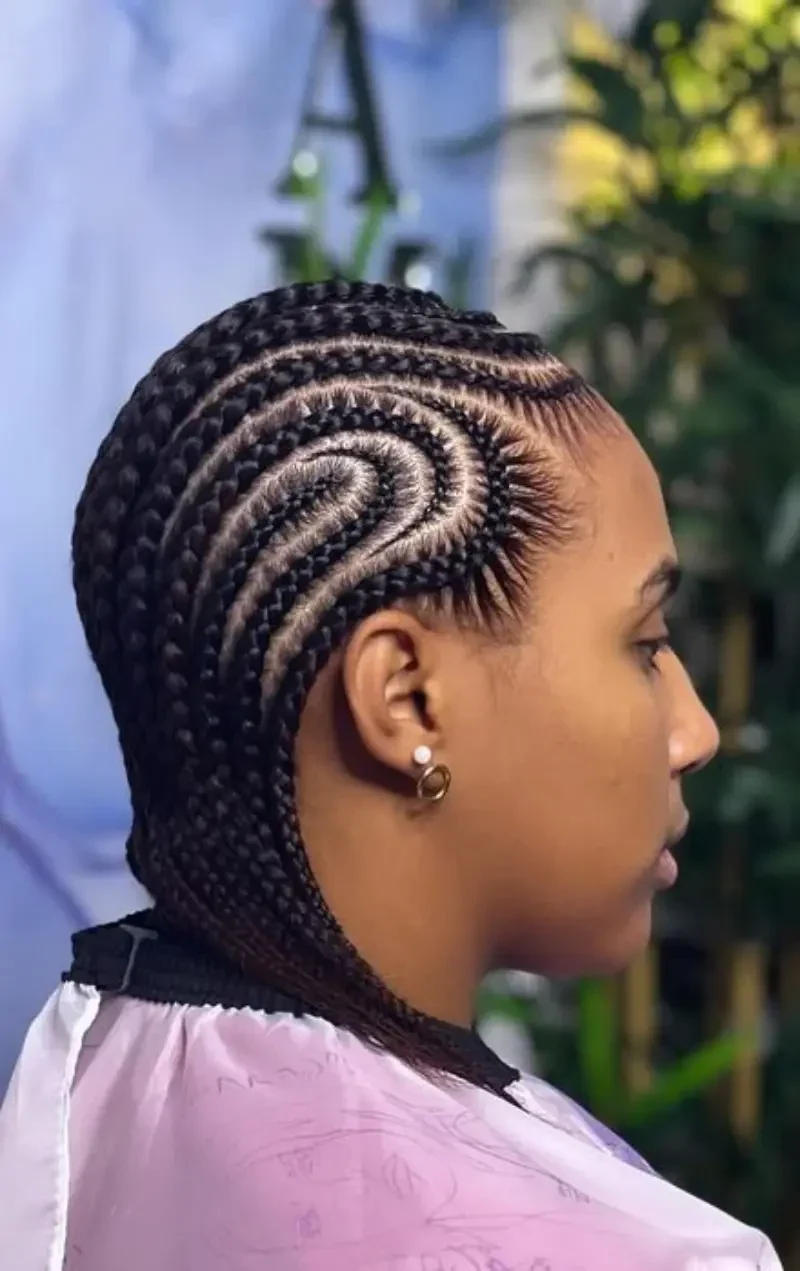
Looped Cornrows Above the Ear
A large loop above the ear gives this cornrow pattern a distinct side detail. The surrounding rows echo that curve before continuing toward the back.
- Shape
- Looped rows
- Detail
- Low back lengths
The braids stay close to the head through the temple, with longer lengths gathered behind the neck. The open parting lines reveal the pattern more clearly than a front portrait would.
Wearability note: Bring this side view if the loop is what you want to discuss. Ask how the shape can be adapted to your hair and preferred row size rather than expecting identical spacing.
Idea 06
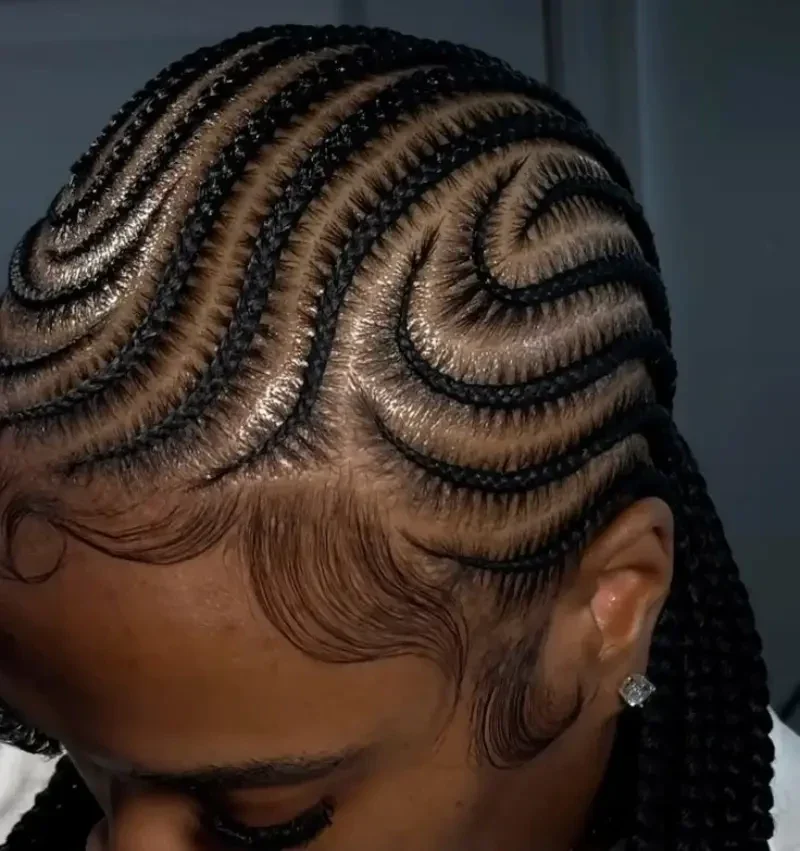
Wave-Shaped Cornrow Pattern
Wide wave-like curves turn these fine cornrows into a continuous pattern. The rows follow one another across the head rather than running in straight parallel lines.
- Shape
- Wave pattern
- Detail
- Fine rows
A smaller curved section sits near the temple, connecting visually with the larger sweep above it. The parting lines remain clearly visible between the close braids.
Wearability note: Choose this reference for the row direction, then discuss the lower lengths separately. The overhead view explains the pattern well but does not show how you may want the braids to finish at the back.
Idea 07
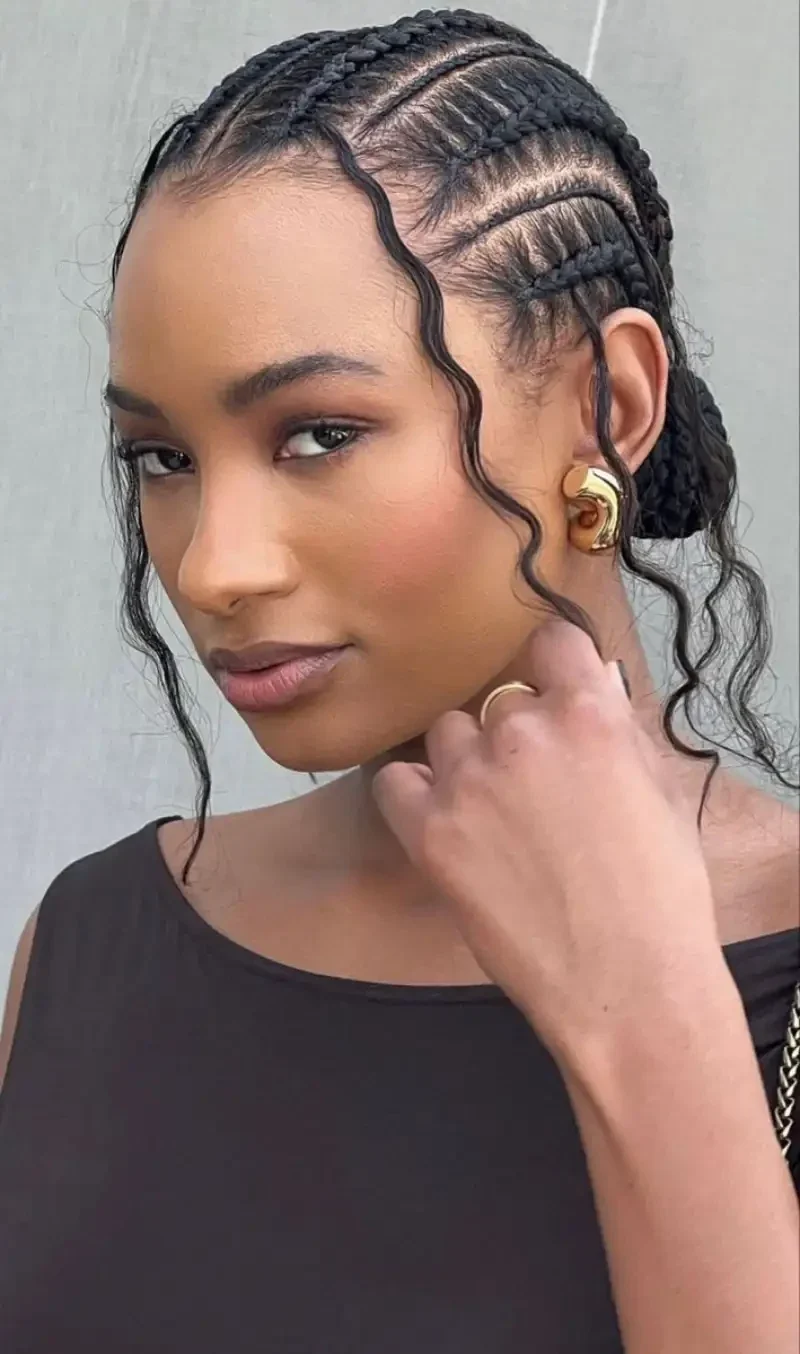
Straight-Back Rows With Loose Spirals
Straight-back rows keep the main hair gathered away from the forehead. Loose spirals beside the face soften the look and introduce movement outside the close braid pattern.
- Shape
- Straight-back rows
- Detail
- Loose spirals
The rows have clear spacing through the upper sides. The lower gathered hair sits behind the head, while the front curls extend well below the cheekbones.
Wearability note: Decide whether those long spirals suit your routine. A more contained front can preserve the same cornrow arrangement if you prefer less hair moving near the eyes or mouth.
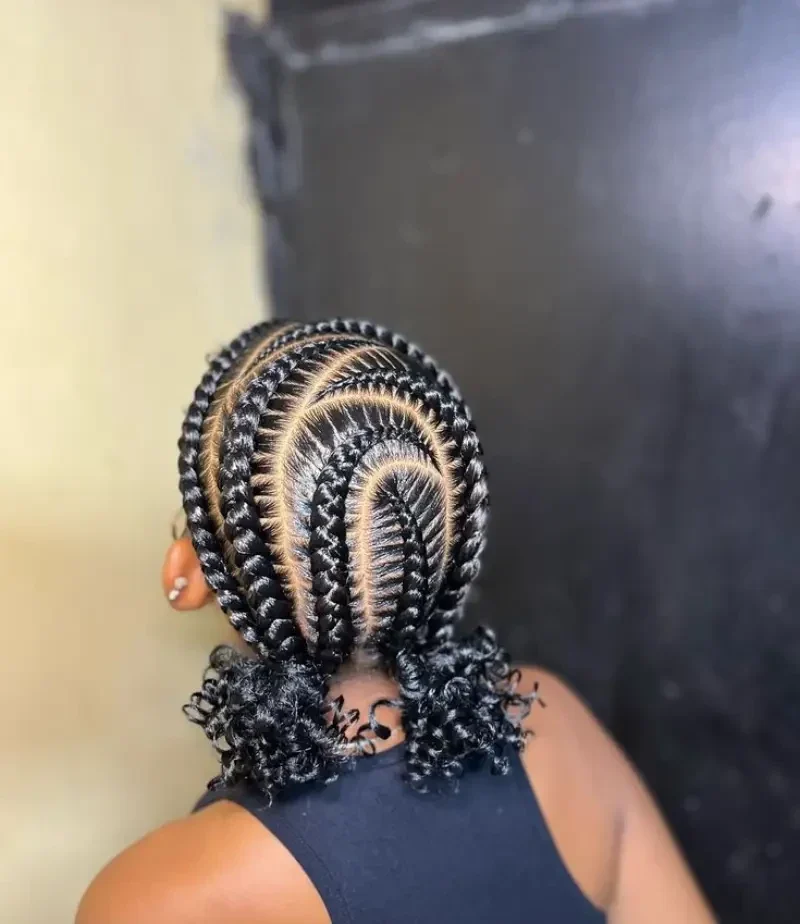
Idea 08
Curved Rows Into Short Curly Tails
Curved rows create an organized back pattern above two short curly tails. The lower length stays compact, giving the look a different outline from long straight-back braids.
- Shape
- Curved rows
- Detail
- Short curly tails
The rows sweep inward and then separate toward the lower sides. Loose curls remain below the joins, adding softness without covering the parting pattern above.
Wearability note: This back view is useful if you want the hair contained but prefer curls at the ends. Check the tail length against your collar and how much movement you want near the neck.
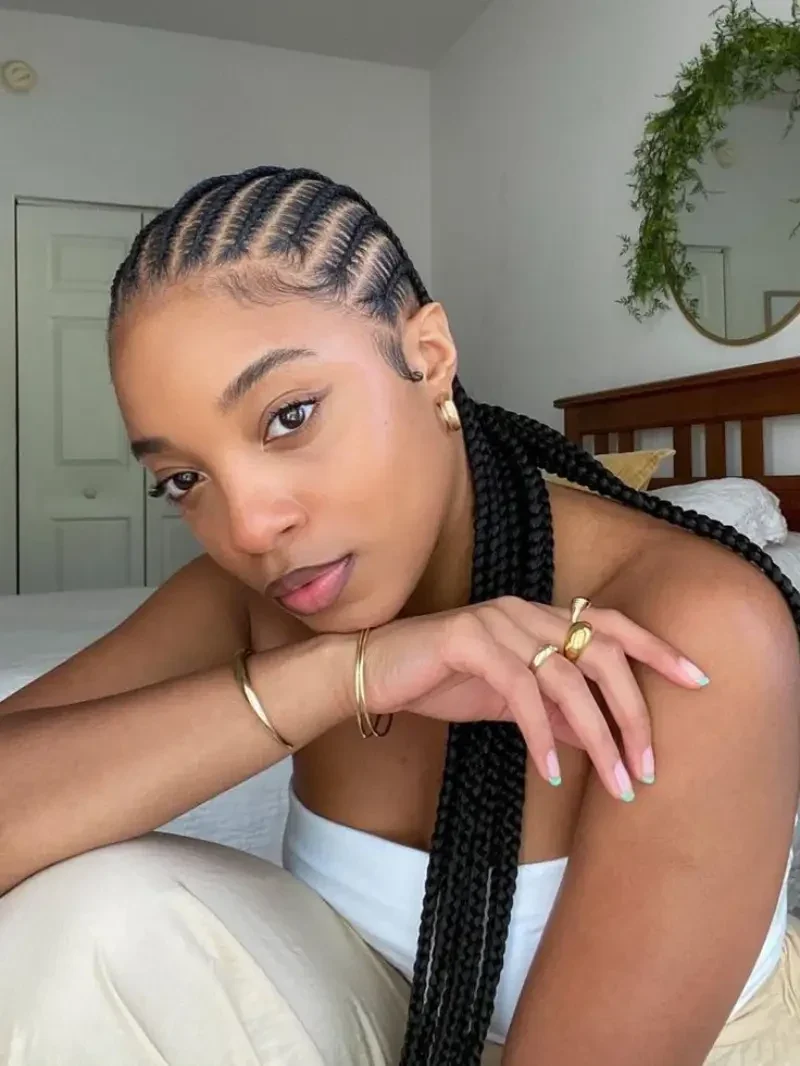
Idea 09
Simple Straight-Back Cornrows
Straight-back cornrows offer a clear, simple pattern without curved motifs or added accessories. The rows guide the hair away from the forehead and continue into long braids behind the shoulders.
- Shape
- Straight-back rows
- Detail
- Long braided lengths
The spacing is visible through the crown and sides. Small hairline curves soften the front, while the main silhouette stays close to the head.
Wearability note: Use this reference when row direction matters more than decoration. Discuss the braid size and finished length together, since both influence how substantial the overall style feels when worn loose.
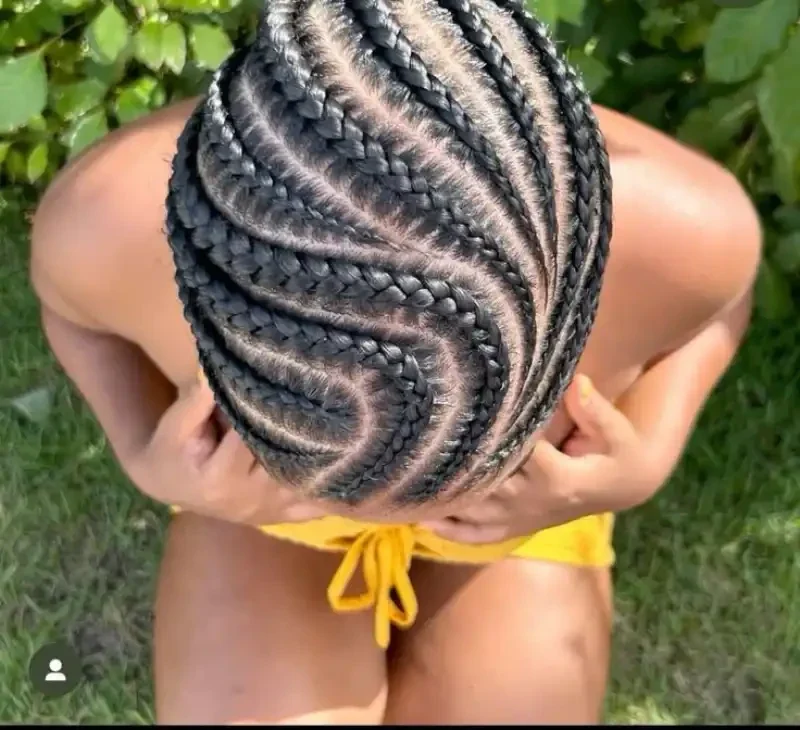
Idea 10
Broad Curves With Alternating Rows
Thicker braids alternate with finer rows in this curved cornrow pattern. The difference in size creates contrast without needing colored extensions or beads.
- Shape
- Broad curves
- Detail
- Alternating row sizes
The rows sweep diagonally across the head, changing direction through the center. The fine lines between the broader braids help define the larger curves.
Wearability note: Save the overhead image to explain the size contrast. Ask for comfortable spacing suited to your hair, and decide how much of the pattern you want visible from the front as well as above.
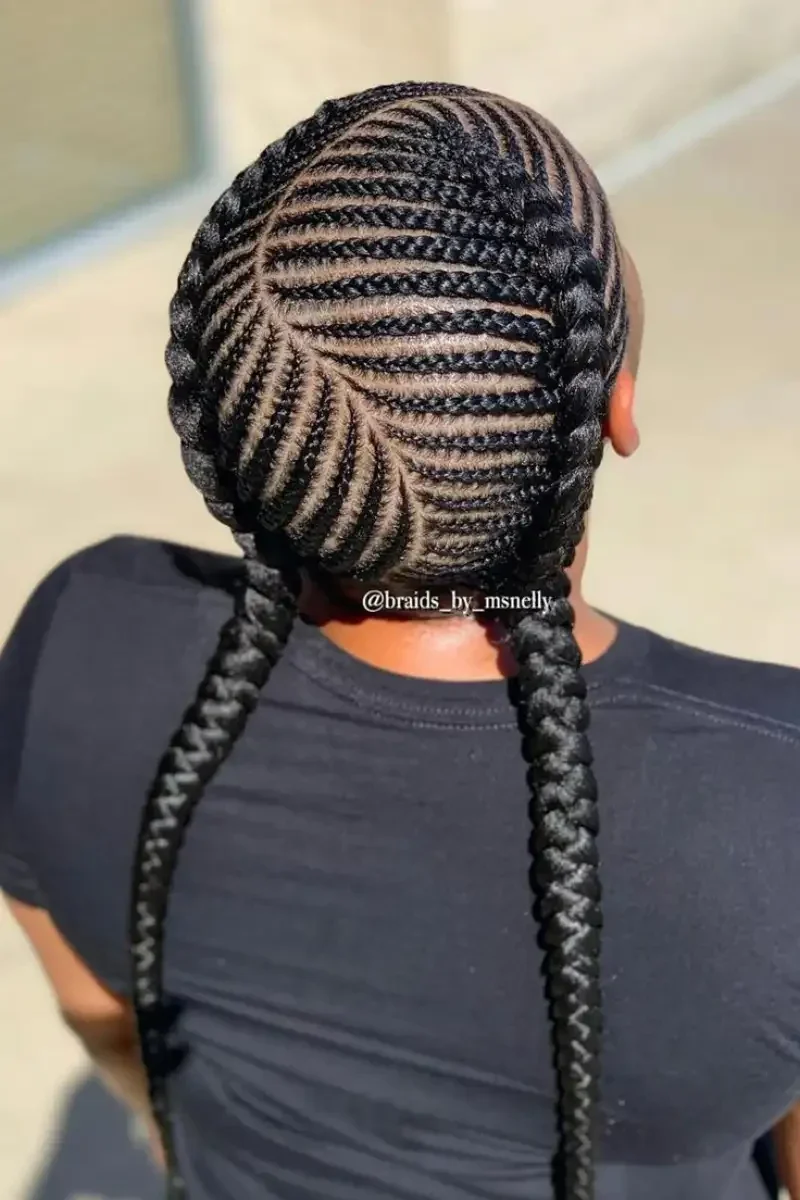
Idea 11
Feathered Rows Into Two Braids
Fine rows feed into two thicker braids, creating a feather-like pattern across the back. The design remains close to the head before the main braids extend below the nape.
- Shape
- Feathered pattern
- Detail
- Twin braids
The narrow rows meet the thicker lines at different angles. A central division keeps the overall shape balanced while the curved side sections add movement.
Wearability note: Choose this reference if you want the back pattern to be a main feature. Compare the thickness of the two lower braids with the amount of length and weight you prefer.
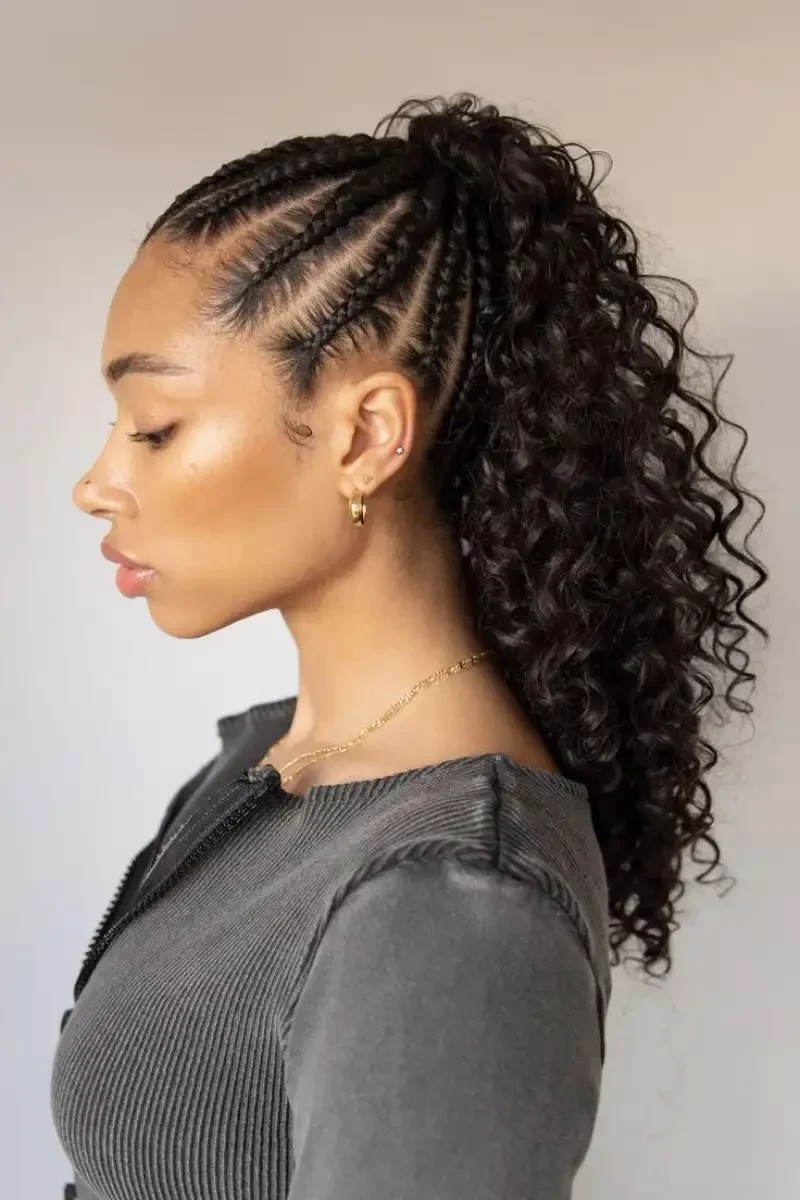
Idea 12
Cornrows Into a Curly Ponytail
A curly ponytail changes the silhouette of these cornrows from close rows to a full, moving tail. The gathered length sits high enough to leave the nape mostly open.
- Shape
- Cornrow ponytail
- Detail
- Loose curls
The side rows rise diagonally toward the ponytail. Loose curls begin behind the head and fall below the shoulders, contrasting with the clearly divided scalp pattern.
Wearability note: Compare the ponytail height with the length you want hanging behind you. A lower placement will change both the profile and how much hair rests against your neck and clothing.
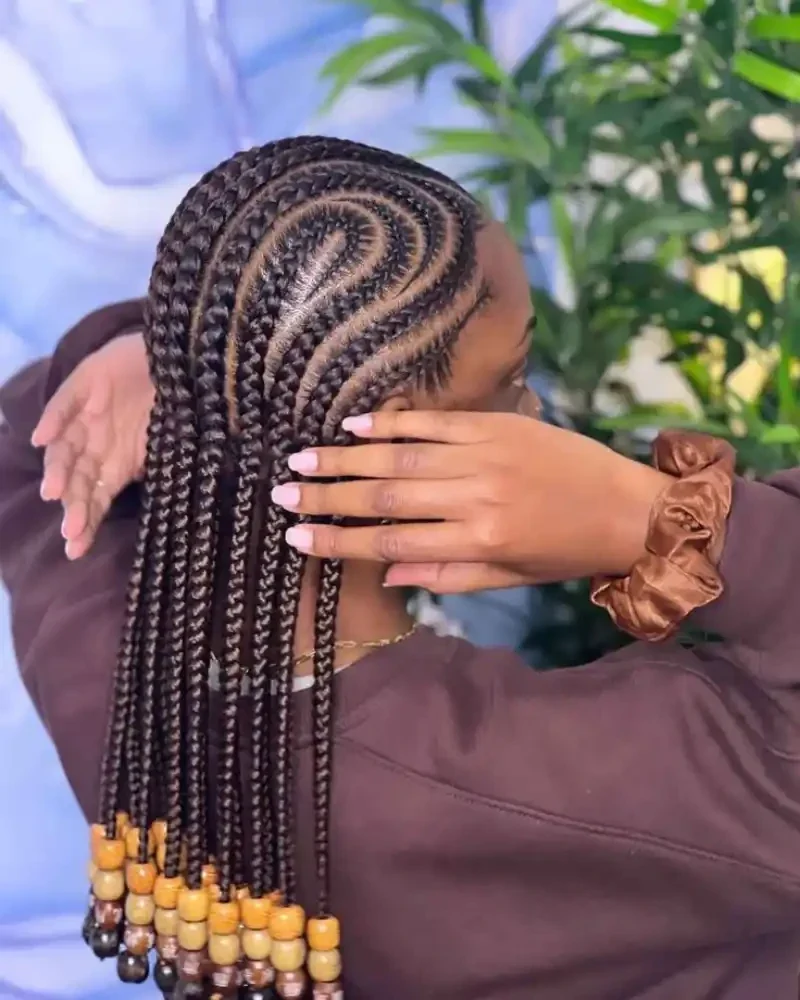
Idea 13
Curved Rows With Beaded Ends
Brown and golden beads define the ends of these curved cornrows. The hanging braids stop around the shoulders, giving the pattern a compact lower outline.
- Shape
- Curved rows
- Detail
- Beaded ends
A broad loop sits above the ear, with surrounding rows following its curve. The beads create a visible lower border instead of leaving long loose tails.
Wearability note: Think about bead weight and movement along with their appearance. You may prefer fewer or lighter accents if the ends will rest against your shoulders throughout the day.
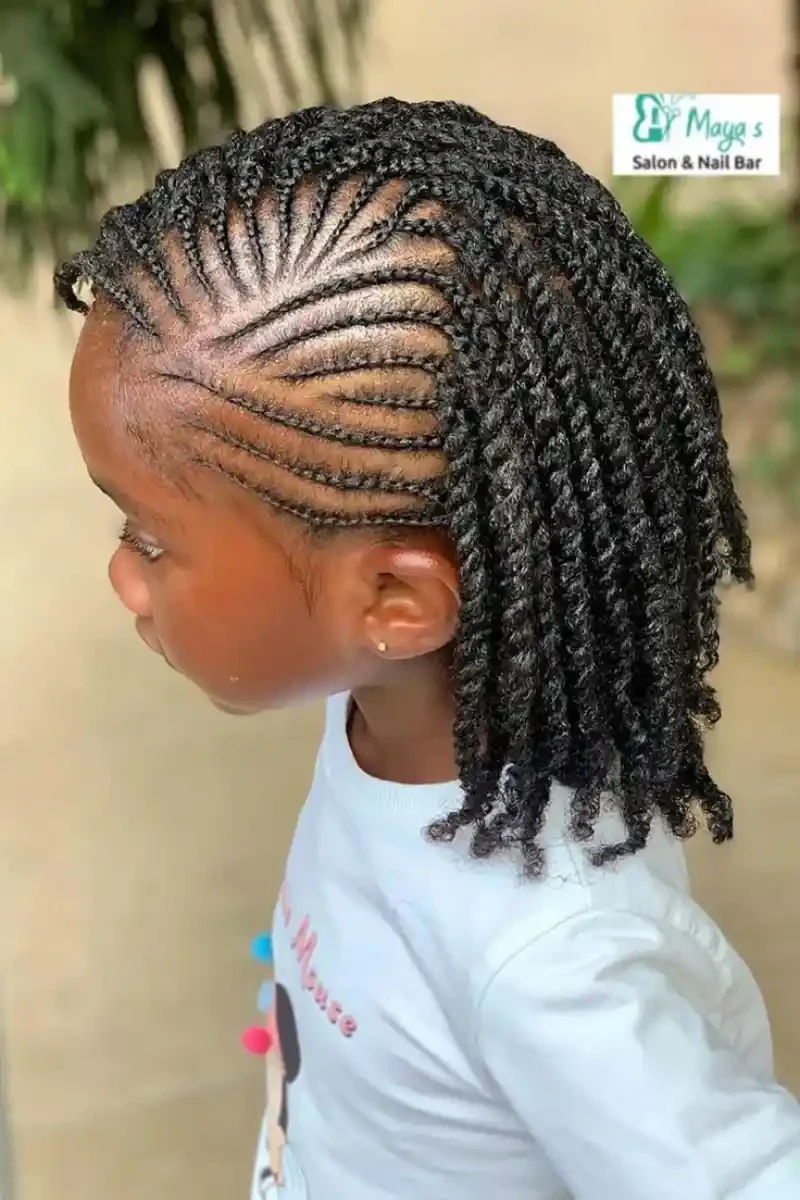
Idea 14
Fine Side Rows With Short Textured Ends
Fine curved rows give this child’s hairstyle a defined side pattern. The shorter textured lengths at the back keep the overall shape close to the shoulders.
- Shape
- Fine side rows
- Detail
- Short textured ends
The rows fan backward from the temple and become looser beyond the scalp section. This creates a clear contrast between the organized front and the softer lower outline.
Wearability note: For a child, choose the row size and lower length around comfort first. A simpler version of the fan pattern can keep the same side emphasis without needing every line to match.
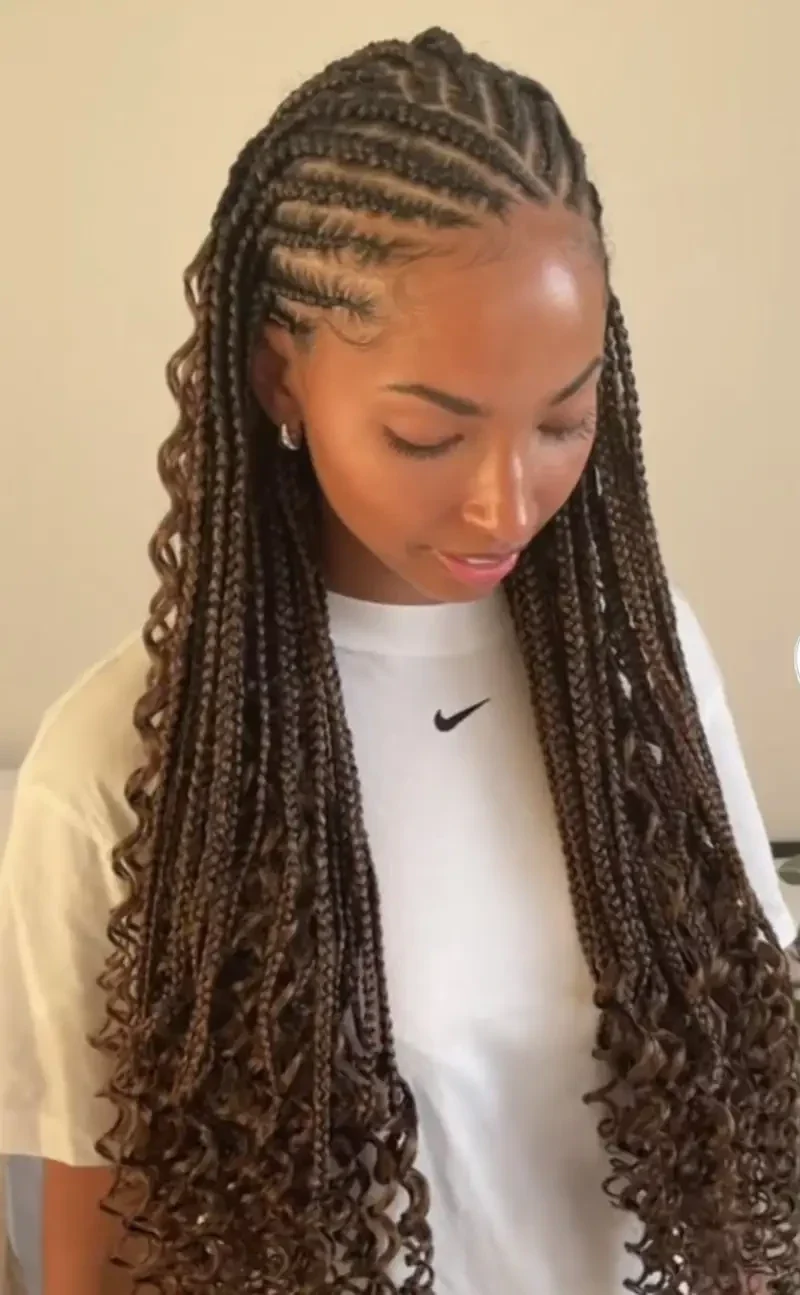
Idea 15
Curved Front Rows With Long Curly Ends
Curved front rows connect to long brown braids with curly ends in this look. The pattern stays visible above the forehead, while the lower lengths add volume around the body.
- Shape
- Curved front rows
- Detail
- Long curly ends
The side rows angle inward toward the crown. Curls become more prominent toward the lower half, softening the outline beyond the tightly organized scalp section.
Wearability note: Consider the overall length and volume before choosing this reference. If you prefer less hair around the shoulders, the same front pattern can be discussed with a shorter lower finish.
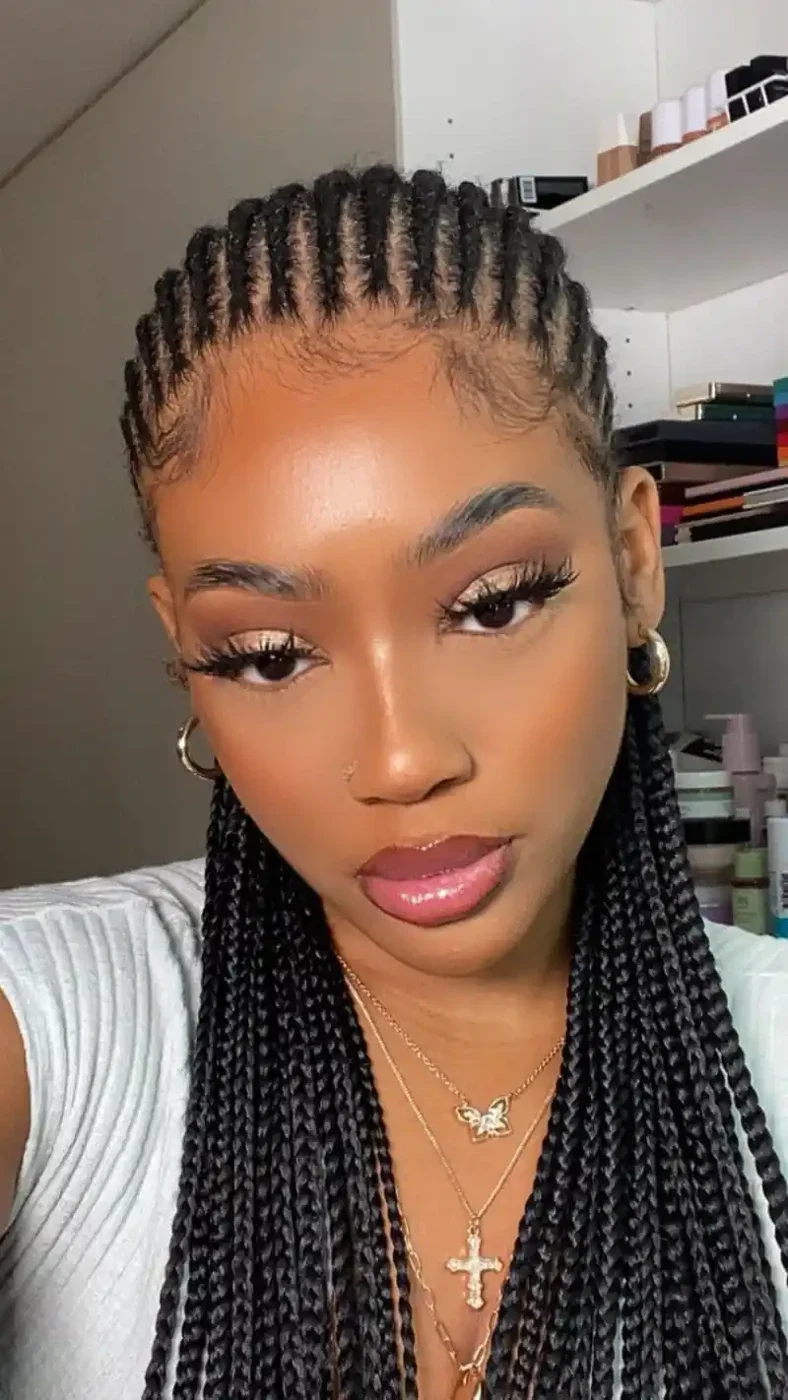
Idea 16
Narrow Straight-Back Rows
Narrow straight-back rows create a restrained pattern across the top. The forehead stays open, and the long braids fall behind the shoulders rather than forming a bun or high ponytail.
- Shape
- Narrow rows
- Detail
- Open forehead
The rows are relatively close together and follow a consistent direction. Small curved hairline pieces add softness without changing the main straight-back arrangement.
Wearability note: Compare this finer pattern with the broader rows nearby. The size you choose affects the visual texture, so discuss your preferred balance of narrow lines and larger braided sections.
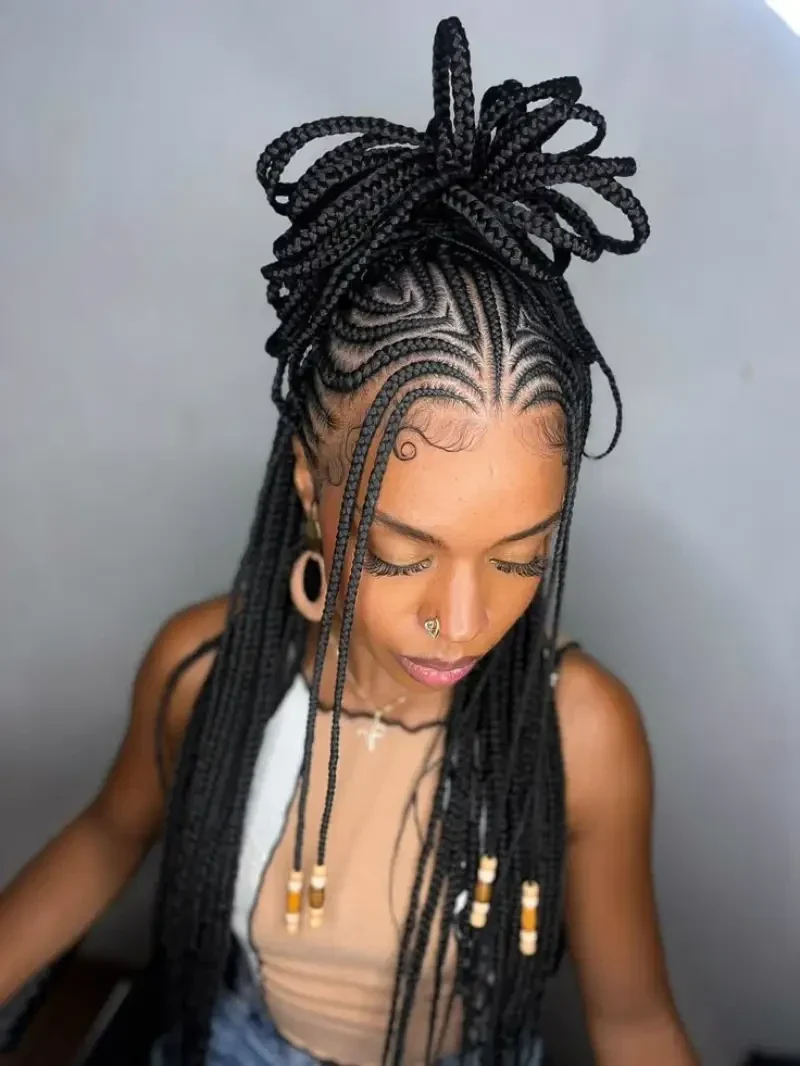
Idea 17
Curved Cornrows With a Braided Bow
A bow-shaped braided gather adds a playful upper detail to these curved cornrows. Long braids remain loose behind it, while slim beaded pieces frame the face.
- Shape
- Curved rows
- Detail
- Braided bow
The rows fan upward from the temples toward the gathered top. Their curved spacing stays visible beneath the larger bow loops, so the hairstyle has detail at both levels.
Wearability note: Decide how much height and decoration you want to wear. A smaller gather can keep the curved front pattern if a full braided bow feels too large for everyday use.
Bring the angle that shows the detail
If you like a particular curve, save the side or overhead view that makes it clear. A front portrait may show the finished style while hiding the pattern you actually want to discuss.
Choose row size, lower length and accessories together. A comfortable interpretation suited to the wearer is more useful than trying to reproduce every line or bead exactly.

About the author
Bella Ross
Bella Ross is the hairstyle editor behind Latest Easy Hairstyles. She curates practical haircut, braid, color, and styling ideas with a focus on looks that are easy to browse, realistic to recreate, and useful for everyday hair decisions.