
Before you choose
Compare coverage, edge and side blend
Start with how much visible hair you want to keep, then look at the forehead edge and the side. A natural hairline, squared corner, lower taper and high fade each change the outline. A few decorative examples are included so you can compare the plain cut with optional shaved accents.
The hairstyle gallery
18 buzz cut ideas to compare
Compare the visible length, shape, texture, and finish before choosing a salon reference.
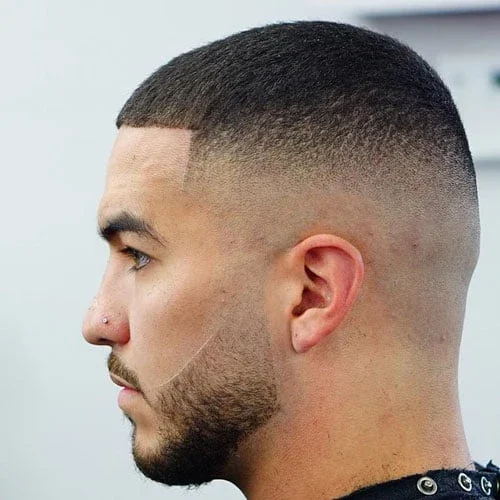
Idea 01
Buzz Cut With a High Fade
An even dark top meets a high fade in this side view. The short upper length follows the head closely, while the area around the ear becomes much lighter.
- Shape
- Even short top
- Detail
- High fade
The defined front corner makes the cut look particularly precise. The beard is separately edged, so its shape should not be confused with the boundary of the haircut.
Wearability note: Compare how high the fade starts with the lower-tapered examples. A high contrast finish can need more frequent attention if you want to keep this freshly outlined appearance.
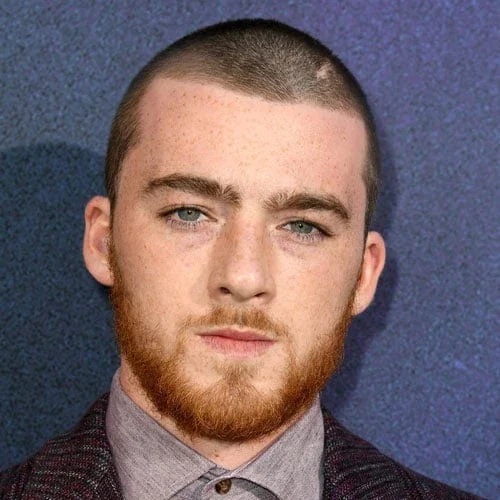
Idea 02
Soft Buzz With a Natural Front
This buzz retains a soft front edge instead of a sharply drawn line. A small amount of upper texture remains visible, with the sides kept short around the ears.
- Shape
- Soft buzz
- Detail
- Natural front edge
The front portrait shows the upper outline clearly without a raised section or fringe. The overall effect is less strongly contrasted than the skin-faded barber examples.
Wearability note: Choose this reference if you like a softer perimeter. The photo does not establish a clipper guard, so explain the visible coverage and edge you prefer rather than assigning it an exact number.
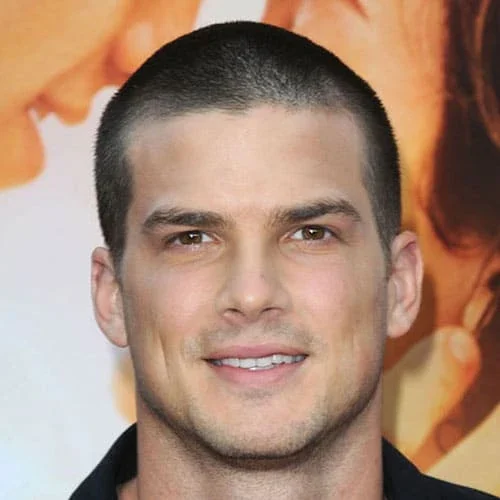
Idea 03
Dark Buzz With Fuller Sides
A dark buzz leaves visible coverage across the top and sides. The forehead stays open, but the side does not disappear into a pronounced skin-close fade.
- Shape
- Dark buzz
- Detail
- Fuller short sides
The simple upper outline follows the head without a crest or longer front section. This is useful for comparing a fairly even short shape with more dramatically tapered versions.
Wearability note: Look at the amount of side coverage you want to retain. You can use this outline without matching the model’s hair color, and a barber can help translate the visual length for your own hair.
Choose your direction
Keep a softer edge
Compare natural hairlines and fuller short sides.
Choose more contrast
Look at higher close fades and defined forehead corners.
Add a small detail
Compare curved shaved accents with a plain buzz.
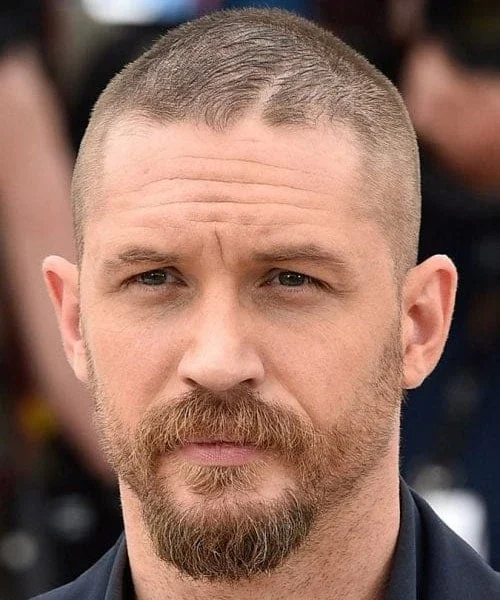
Idea 04
Close Buzz With a Subtle Front Point
A close buzz keeps the upper hair low while leaving the front hairline visible. A small center point gives the edge a different outline from the straight-lined examples.
- Shape
- Close buzz
- Detail
- Subtle center point
The sides remain short with no large contrast band. The frontal angle is most useful for judging the amount of visible coverage and the natural shape at the forehead.
Wearability note: Compare the perimeter with your own hairline rather than expecting the same edge. This image shows a finished appearance, not an exact guard length or a promise that every buzz will sit identically.
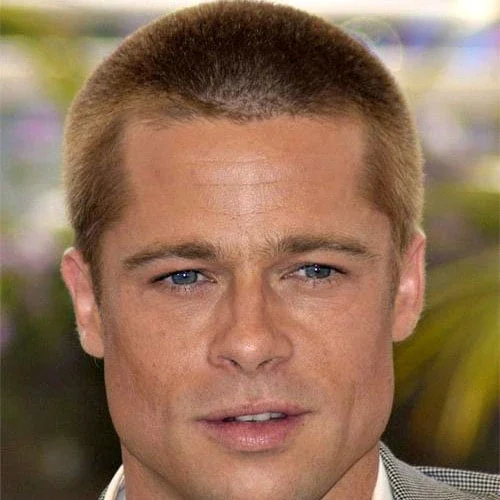
Idea 05
Fuller Light-Brown Buzz
This fuller buzz leaves enough upper length for a soft raised surface. The front stays very short, with no separate fringe or deliberately swept section.
- Shape
- Fuller buzz
- Detail
- Soft side transition
The sides retain visible hair and connect gently to the top. That makes the outline less stark than the high-fade examples, even though the overall cut is still compact.
Wearability note: Choose this if the closest buzzes feel too bare for your preference. Compare the visible fullness with a shorter reference, then discuss how much coverage you would like to keep.
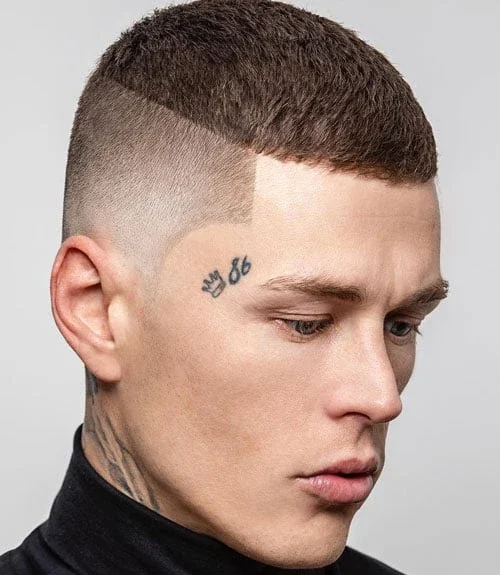
Idea 06
Textured Buzz With a Straight Fringe
A slightly longer buzz-style top creates a fine textured surface above the forehead. The straight front edge gives this example a more cropped outline than an almost uniform buzz.
- Shape
- Short textured top
- Detail
- Straight front edge
The sides fade close, leaving the upper section clearly darker. This three-quarter angle shows both the short front and the point where the side begins to narrow.
Wearability note: Use this as a comparison near the fuller end of the buzz range. If you prefer less visible fringe, contrast it with the closer examples rather than asking for the same length everywhere.
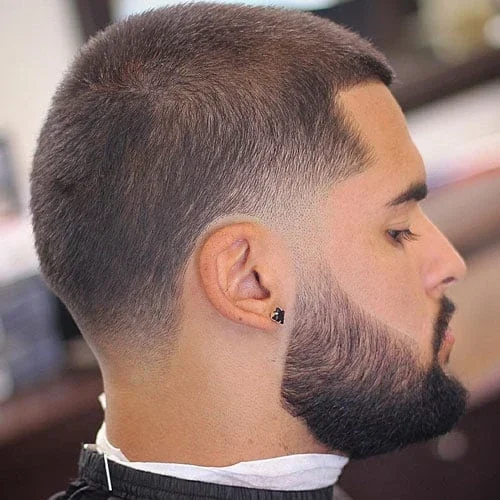
Idea 07
Soft Buzz With a Low Taper
A soft short top connects to a gradual side blend in this profile. The taper becomes most noticeable near the bottom of the nape rather than high above the ear.
- Shape
- Soft short top
- Detail
- Low nape taper
The upper hair retains a little texture, while the lower outline is neat and narrowed. The beard has a separate sharp edge that adds contrast below the haircut.
Wearability note: Compare the low taper with the higher fades to choose where you want the shortness concentrated. This angle is especially helpful for explaining neck coverage and the softer side transition.
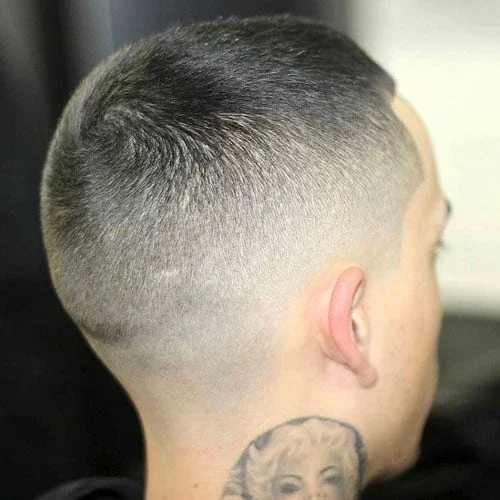
Idea 08
Close Buzz From the Back
This rear angle shows how a close buzz sits through the crown and back. The upper hair stays short, while the nape fades lighter toward the neck.
- Shape
- Close buzz
- Detail
- Faded nape
A small change in direction is visible at the crown rather than a completely featureless surface. That detail is easy to miss when choosing from front portraits alone.
Wearability note: Pair this with a front reference when discussing a buzz. It helps explain the rear blend, but the appearance of your own crown and growth direction will still influence the finished outline.
Idea 09
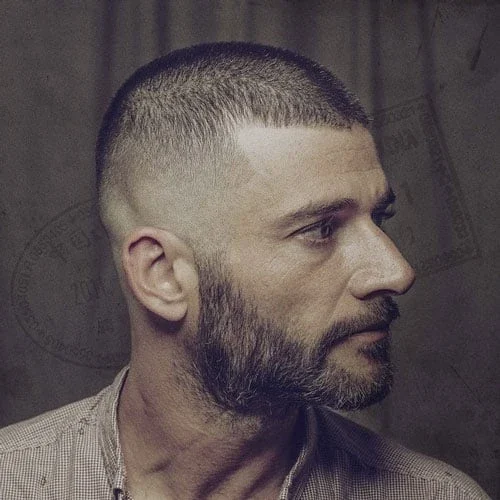
Very Short Buzz With Strong Contrast
Very little length remains above the fade, creating a narrow dark upper surface. The side sits close around the temple and ear, emphasizing the head shape.
- Shape
- Very short buzz
- Detail
- Close side fade
The front edge is defined, and no part or longer section interrupts the short outline. The photograph’s muted lighting makes the difference between the darker top and lighter side particularly clear.
Wearability note: Choose this for its closeness and contrast. Compare it with a fuller buzz if you would rather retain more coverage, and consider how often you want the fade refreshed.
Idea 10
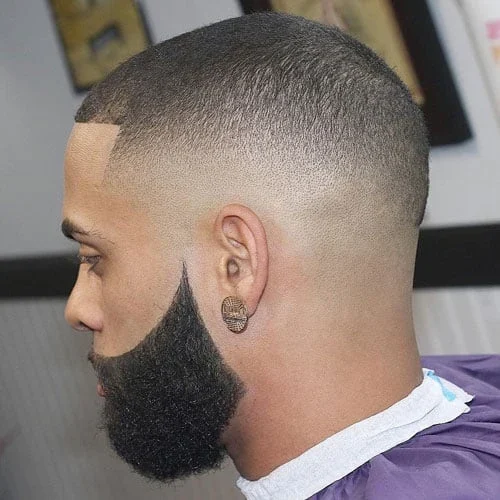
Fine Buzz With a Squared Front
A fine layer of hair remains across the upper head in this close buzz. A squared front corner makes the forehead edge more geometric than the natural-edged examples.
- Shape
- Fine close buzz
- Detail
- Squared front corner
The side fades very close above the ear. The sharply outlined beard forms a separate lower shape, giving the portrait more contrast than the haircut alone would create.
Wearability note: Use the photograph to specify the front corner and fade placement separately. A close buzz needs little positioning, while a crisp edged perimeter is an additional upkeep preference.
Idea 11
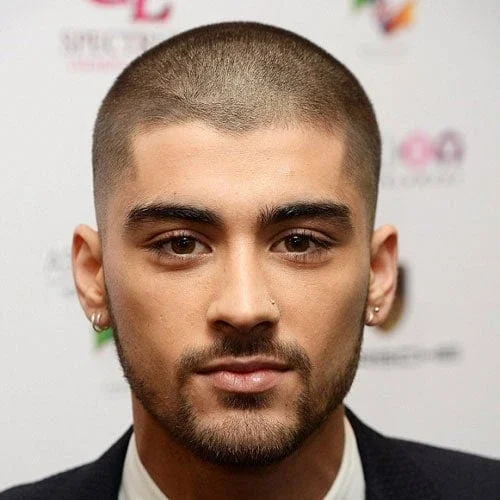
Even Buzz With a Soft Hairline
An even brown buzz creates a continuous short surface over the top. The front edge is softly curved, with no sharply carved corner or longer center section.
- Shape
- Even buzz
- Detail
- Soft front hairline
The visible sides stay short without a strong high-fade band. The front view makes this a useful comparison for a straightforward buzz with a less graphic perimeter.
Wearability note: Choose the overall softness rather than trying to copy another person’s exact hairline. A side or rear reference can then clarify how much taper you would like around the ears and neck.
Idea 12
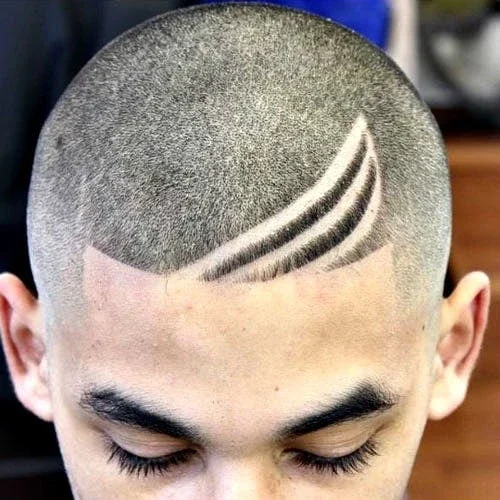
Buzz With Three Curved Lines
Three curved shaved lines add a decorative accent to an otherwise close buzz. They follow one side of the front rather than running across the whole top.
- Shape
- Close buzz
- Detail
- Three shaved curves
The overhead angle shows the short surface and the clean gaps that create the design. A defined hairline adds another sharp boundary below the patterned area.
Wearability note: Choose this if the design is part of what you want to wear. The lines become less distinct as hair grows, so compare their upkeep with the simpler plain buzzes before making the pattern a priority.
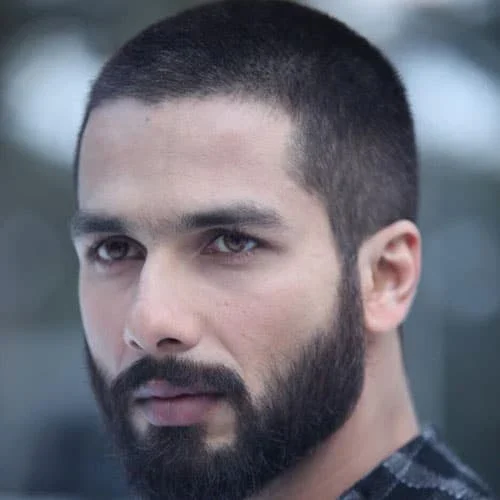
Idea 13
Dark Buzz With a Soft Temple
This dark buzz keeps visible hair across the top and temple. The edge around the forehead is defined by the natural outline rather than an elaborate shaved pattern.
- Shape
- Dark short buzz
- Detail
- Soft temple edge
The upper surface is compact and fairly even, with no longer front section. The fuller beard changes the portrait’s overall proportions but is separate from the short haircut.
Wearability note: Compare this amount of coverage with the very fine buzzes. You can ask for the short, even appearance while choosing a different beard length or a softer neckline that suits your own preference.
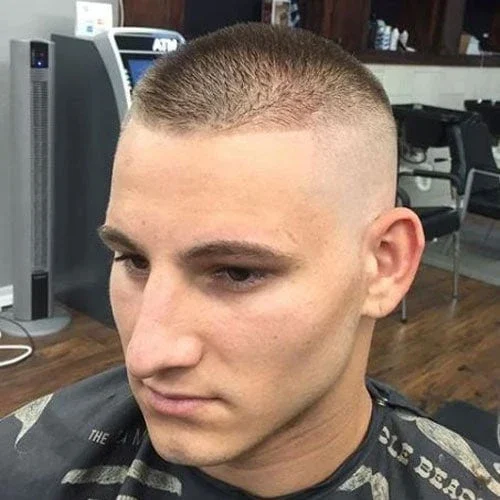
Idea 14
Short Top With a High Close Side
The top retains a little more length than the very close side. That difference creates a clear upper band without adding a raised front or a separate fringe.
- Shape
- Short even top
- Detail
- High close side
The high fade leaves much of the side exposed, while the front remains softly edged. This three-quarter view makes the height of the contrast easy to compare.
Wearability note: Choose the side placement deliberately, especially if you want a softer transition. A fuller buzz with a lower taper can retain a similar upper length while changing the amount of exposed side.
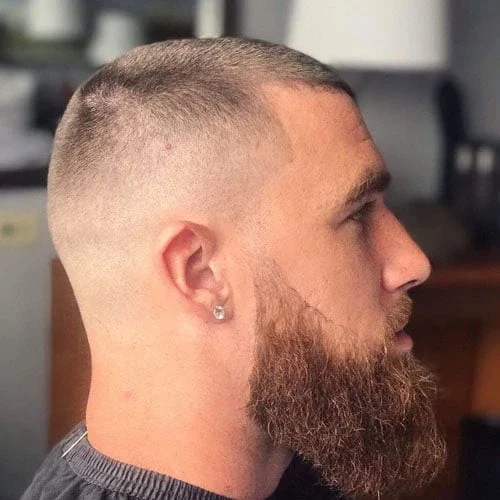
Idea 15
Very Close Buzz With a Full Beard
A very close upper cut leaves only a fine layer of visible hair. The side fades lighter above the ear, producing a compact outline with little upper height.
- Shape
- Very close top
- Detail
- Close side fade
The long beard creates most of the portrait’s lower volume. Keeping these two elements separate helps explain whether you like the haircut itself or the contrast with the facial hair.
Wearability note: Save this if you want to compare a particularly close top with a faded side. Choose any beard length independently, and discuss the amount of scalp visibility you are comfortable with.
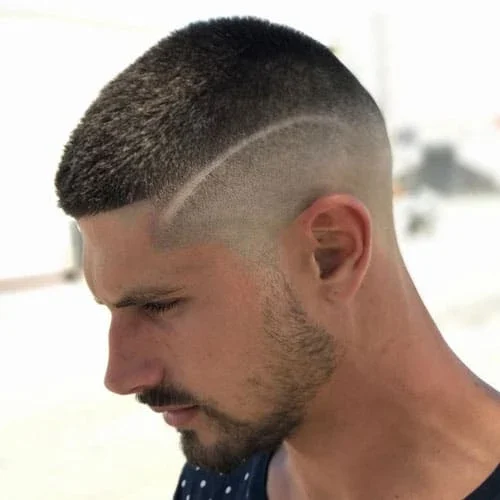
Idea 16
Short Buzz With a Curved Side Line
A single curved line separates the darker upper buzz from the close side. The top stays short and even, leaving the decorative arc as the main additional detail.
- Shape
- Short buzz
- Detail
- Curved shaved line
The line follows the side above the ear rather than forming a part through longer hair. The front remains compact with a clearly defined edge.
Wearability note: Compare this small accent with the multi-line example if you want a design. Decide whether keeping the arc crisp is worth the extra upkeep, or whether you mainly like the plain upper length.
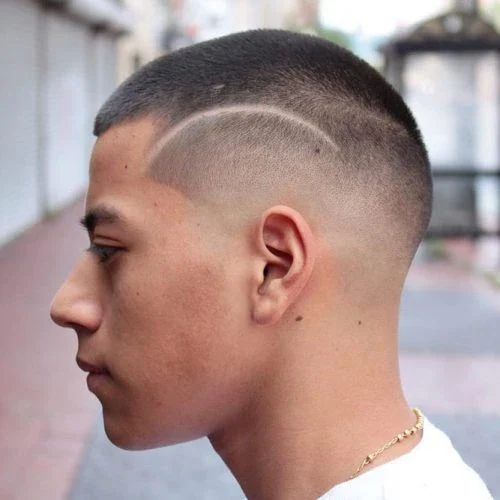
Idea 17
Buzz With a Single Curved Accent
A curved shaved accent sits below the darker upper buzz in this profile. The short top remains even, and the fade narrows toward the area around the ear.
- Shape
- Even upper buzz
- Detail
- Single shaved curve
The line curves upward toward the front without crossing the upper surface. This gives a different placement reference from the higher decorative arc elsewhere in the gallery.
Wearability note: Use the side view to compare where you want a line to sit. The cut also works as a plain buzz reference if you prefer the length and fade without maintaining a shaved accent.
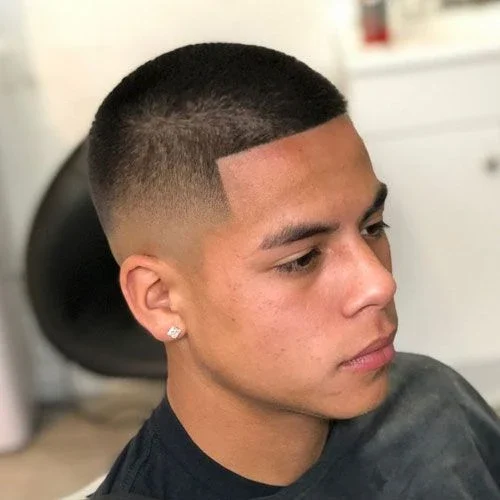
Idea 18
Close Buzz With a Clean Front Corner
A clean front corner gives this close buzz a squared outline above the temple. The upper hair stays very short, with a gradual fade making the side lighter.
- Shape
- Close buzz
- Detail
- Clean front corner
The head is turned slightly downward, which makes the top coverage and front edge easy to compare. There is no longer fringe or central raised section.
Wearability note: Choose this for the short coverage and perimeter rather than assigning a guard number from the photo. Compare a softer hairline example too if you want less emphasis on keeping the front freshly edged.
Take front and rear references
The front shows the hairline, while a side or rear view explains the blend around the ear, crown and nape. Saving both avoids making the whole decision from one portrait.
Describe the coverage you like instead of assigning an exact length from the image. A barber can account for your hair texture and growth pattern when translating that appearance.

About the author
Bella Ross
Bella Ross is the hairstyle editor behind Latest Easy Hairstyles. She curates practical haircut, braid, color, and styling ideas with a focus on looks that are easy to browse, realistic to recreate, and useful for everyday hair decisions.